


NYC Car Accident From Bad Roads: Can You Sue?
Every day, millions of vehicles travel New York City’s streets, highways, bridges, and parkways. While many collisions result from distracted driving, speeding, or other driver negligence, dangerous roadway conditions are another significant cause of serious motor vehicle accidents. A deep pothole, a defective traffic signal, a flooded roadway, a poorly designed intersection, a missing warning sign, deteriorated pavement, or a hazardous construction zone can cause a driver to lose control in a matter of seconds. Unfortunately, many injured victims assume another driver was solely responsible and never realize that the dangerous condition of the roadway itself may have contributed to the crash.
Road defect accident cases are among the most challenging personal injury claims in New York because they often involve governmental entities, public authorities, engineering issues, and strict procedural deadlines that do not apply in ordinary automobile negligence cases. Determining whether the City of New York, New York State, the New York City Department of Transportation (NYC DOT), a bridge or tunnel authority, or a private contractor bears responsibility requires a prompt and thorough investigation. Evidence can disappear quickly as roadway conditions are repaired, construction projects continue, or weather changes the accident scene.
At Greenstein & Pittari, LLP, we investigate every potential cause of an accident rather than simply accepting the initial police report or insurance company’s explanation. If a dangerous roadway condition contributed to your injuries, our attorneys will work to identify every responsible party and pursue the maximum compensation available under New York law. If you were injured in a car accident involving hazardous road conditions anywhere in New York City, contact Greenstein & Pittari, LLP today for a free consultation at 1-800-VICTIM2 (1-800-842-8462).
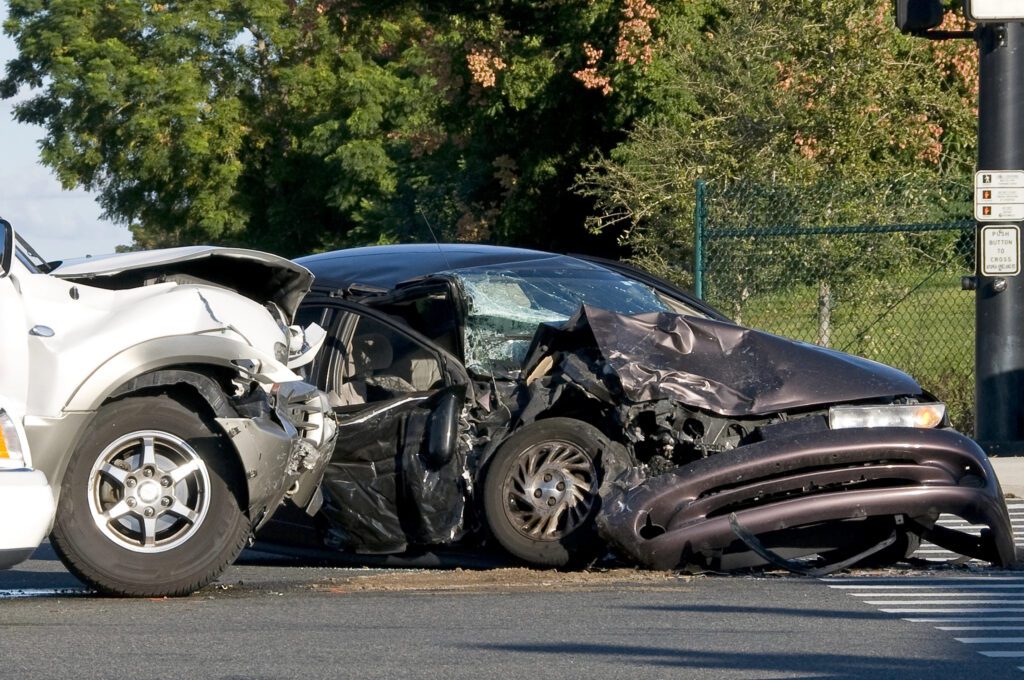
What Types of Road Defects Can Cause Car Accidents in New York City?
Dangerous roadway conditions extend far beyond potholes. New York City’s aging infrastructure, constant construction, harsh winter weather, and heavy traffic create countless opportunities for roads to become hazardous if they are not properly designed, inspected, repaired, and maintained. Common roadway defects include potholes, uneven pavement, deteriorated asphalt, missing or obscured traffic signs, malfunctioning traffic signals, poor drainage, flooding, loose debris, inadequate lighting, defective guardrails, faded lane markings, dangerous shoulder drop-offs, and improperly marked construction zones. These conditions are frequently identified as contributing factors in roadway defect litigation throughout New York.
Not every roadway imperfection creates legal liability. Roads naturally deteriorate over time, and municipalities are not automatically responsible for every accident. Instead, liability generally depends upon whether the roadway condition was unreasonably dangerous, whether the responsible entity knew or should have known about the defect, whether it had a reasonable opportunity to correct the condition, and whether the defect substantially contributed to causing the collision.
Road defects often become especially dangerous when combined with heavy traffic or adverse weather. Rain may expose defective drainage systems that allow standing water to accumulate across travel lanes. Freeze-thaw cycles rapidly enlarge cracks into dangerous potholes. Snow may conceal uneven pavement or roadway deterioration. Even careful drivers may be unable to avoid these hazards when traffic leaves little room to maneuver safely.
Can a Dangerous Road Condition Be the Legal Cause of a Car Accident?
Yes. A dangerous roadway condition may be the sole cause of a collision or one of several contributing causes. Many roadway defect accidents involve multiple negligent parties. For example, another driver may have been traveling too fast for conditions while a large pothole or flooded roadway made it impossible to maintain control. In other cases, a defective traffic signal, inadequate signage, or confusing lane configuration may create circumstances that make an otherwise avoidable collision far more likely.
Under New York’s comparative negligence laws, responsibility can be shared among multiple defendants. A negligent driver, governmental agency, public authority, or private construction contractor may each bear a percentage of fault for causing an accident. This makes it essential to conduct a complete investigation rather than focusing exclusively on another driver’s conduct.
Roadway defect cases frequently require accident reconstruction specialists, highway engineers, and roadway design experts to determine precisely how the dangerous condition contributed to the crash. These experts analyze vehicle dynamics, roadway geometry, maintenance records, traffic patterns, weather conditions, and physical evidence to establish whether safer roadway conditions would likely have prevented the accident.
Who May Be Responsible for a Road Defect Accident in NYC?
One of the first questions that must be answered is who owned, controlled, or maintained the roadway where the accident occurred. Many people assume every public road belongs to New York City, but responsibility is actually divided among numerous governmental agencies and public authorities.
Depending upon the location of the accident, responsibility may belong to the City of New York, the New York State Department of Transportation, the Port Authority of New York and New Jersey, the Triborough Bridge and Tunnel Authority, or another governmental entity. Certain highways, bridges, tunnels, service roads, and parkways are maintained by agencies entirely separate from NYC DOT. Private contractors performing roadway construction or utility work may also become responsible if unsafe work zones or negligent repairs contribute to a collision. Identifying the correct defendant is one of the most important aspects of any roadway defect case because each entity may be subject to different procedural requirements and deadlines. Roadway ownership and governmental responsibility are recurring issues in these claims.
In some situations, more than one defendant may be liable. A municipality may have failed to maintain the roadway, a contractor may have created an unsafe construction condition, or another driver may have reacted negligently after encountering the roadway hazard. Pursuing every potentially responsible party often maximizes the compensation available to an injured victim.
How Are Road Defect Cases Different from Ordinary Car Accident Cases?
Claims involving dangerous roadway conditions differ significantly from traditional automobile negligence cases. Most car accident claims focus on whether another driver violated the rules of the road. Road defect litigation, however, often centers on engineering standards, roadway maintenance practices, governmental immunity issues, inspection procedures, and whether the responsible entity had actual or constructive notice of the dangerous condition.
Unlike routine motor vehicle collision cases, roadway defect cases often require obtaining maintenance records, inspection logs, repair histories, engineering drawings, prior accident reports, photographs, 311 complaints, roadway design documents, and construction records. These documents frequently reveal whether the responsible agency had notice of the dangerous condition before the accident occurred.
Time is also far more critical. Road defects are often repaired shortly after serious accidents occur. Construction zones change daily. Standing water disappears. Temporary warning signs are relocated. Surveillance footage may be overwritten within days. The sooner an experienced attorney begins investigating the accident, the greater the likelihood that important evidence can be preserved before it disappears.
What Compensation Can You Recover After a Road Defect Accident?
If dangerous roadway conditions contributed to your accident, you may be entitled to recover compensation for both economic and non-economic damages. Depending upon the circumstances, compensation may include reimbursement for medical expenses, lost wages, diminished future earning capacity, rehabilitation costs, pain and suffering, permanent disability, property damage, and other accident-related losses. Where catastrophic injuries occur, future medical care and life care planning may represent a significant portion of the claim.
Because New York follows a comparative negligence system, compensation is not automatically barred simply because you may have shared some responsibility for the accident. Insurance companies frequently argue that drivers should have seen or avoided roadway hazards. An experienced attorney can present engineering evidence, accident reconstruction testimony, and roadway maintenance records demonstrating why the dangerous condition – not the driver’s conduct – substantially contributed to the collision.
Many roadway defect cases also involve New York’s No-Fault Insurance Law. Although Personal Injury Protection (PIP) benefits may initially cover certain medical expenses and lost wages regardless of fault, victims who satisfy New York’s serious injury threshold may also pursue damages for pain and suffering against legally responsible parties.
Why Is It Important to Contact an Attorney Quickly?
Roadway defect cases are among the most evidence-intensive personal injury claims. Every day that passes increases the likelihood that valuable evidence will disappear. Government agencies may repair the roadway. Construction contractors may remove temporary traffic control devices. Weather may alter the accident scene. Witnesses’ memories begin to fade, and electronic evidence may be lost.
Prompt legal representation also ensures that critical procedural deadlines are protected. Claims against governmental entities often require compliance with Notice of Claim requirements that differ dramatically from ordinary negligence cases. Missing these deadlines can jeopardize an otherwise meritorious claim regardless of the severity of the injuries.
Early investigation also allows attorneys to retain qualified experts before roadway conditions change. Engineers, accident reconstruction specialists, and roadway safety experts can inspect the location, preserve measurements, photograph hazardous conditions, and begin analyzing whether the roadway complied with accepted engineering standards before repairs occur.

Why Choose Greenstein & Pittari, LLP?
Roadway defect litigation demands far more than knowledge of ordinary automobile accident law. It requires attorneys who understand municipal liability, governmental claims, engineering evidence, accident reconstruction, roadway ownership issues, and the unique procedural rules governing lawsuits against public entities. At Greenstein & Pittari, LLP, we have decades of experience representing injured New Yorkers and handling complex personal injury litigation throughout New York City and the surrounding region.
Our legal team conducts comprehensive investigations, works with highly qualified experts, aggressively negotiates with insurance carriers and governmental defendants, and prepares every case as though it will proceed to trial. We understand that serious accidents affect every aspect of a person’s life, and we are committed to providing compassionate, responsive, and personalized representation while pursuing the maximum compensation available under the law.
We proudly offer free consultations, contingency-fee representation, and English- and Spanish-speaking staff. You pay no attorney’s fee unless we recover compensation for you.
If you or a loved one has been injured in a New York City car accident involving a dangerous roadway condition, defective pavement, pothole, flooding, poor road design, or another hazardous condition, contact Greenstein & Pittari, LLP today at 1-800-VICTIM2 (1-800-842-8462).
Don’t Be a Victim Twice.