


Who Is Liable When a Truck or Bus Hits a Motorcycle in NYC?
When a motorcycle is hit by a truck or bus, the injuries can be severe because these vehicles are much bigger and heavier. A rider might be thrown off, dragged, or even crushed in a crash with a tractor-trailer, delivery truck, box truck, MTA bus, school bus, or private charter bus. Even at low speeds, these accidents can lead to serious injuries like brain trauma, spinal cord injuries, broken bones, internal injuries, amputations, or lasting disabilities. These crashes often happen on New York City’s busy streets, where trucks and buses make wide turns, change lanes, enter intersections, and navigate around other people and vehicles.
If a truck or bus driver causes a motorcycle accident through negligence, the driver, the vehicle owner, the employer, or another party could be held responsible for the rider’s injuries. Commercial vehicle accidents are often more complex than regular car crashes because they can involve several parties, large insurance policies, complicated ownership, and important evidence held by trucking companies or transit authorities. For example, a delivery company might be responsible for its driver’s actions, a maintenance contractor could be at fault for a mechanical problem, or a public transportation authority might be liable for a bus driver’s mistake. Identifying the right parties and insurance coverage is key to getting compensation.
At Greenstein & Pittari, LLP, our motorcycle accident lawyers in New York City handle cases involving commercial trucks, delivery vehicles, tractor-trailers, MTA buses, school buses, and private buses. We look into driver negligence, company responsibility, vehicle maintenance, video footage, electronic records, and insurance coverage. Our team helps injured motorcyclists in Manhattan, Brooklyn, Queens, the Bronx, Staten Island, Long Island, and Westchester County. If you or someone you care about was hurt when a truck or bus hit your motorcycle, call 1-800-VICTIM2 (1-800-842-8462) for a free consultation. Don’t Be a Victim Twice.
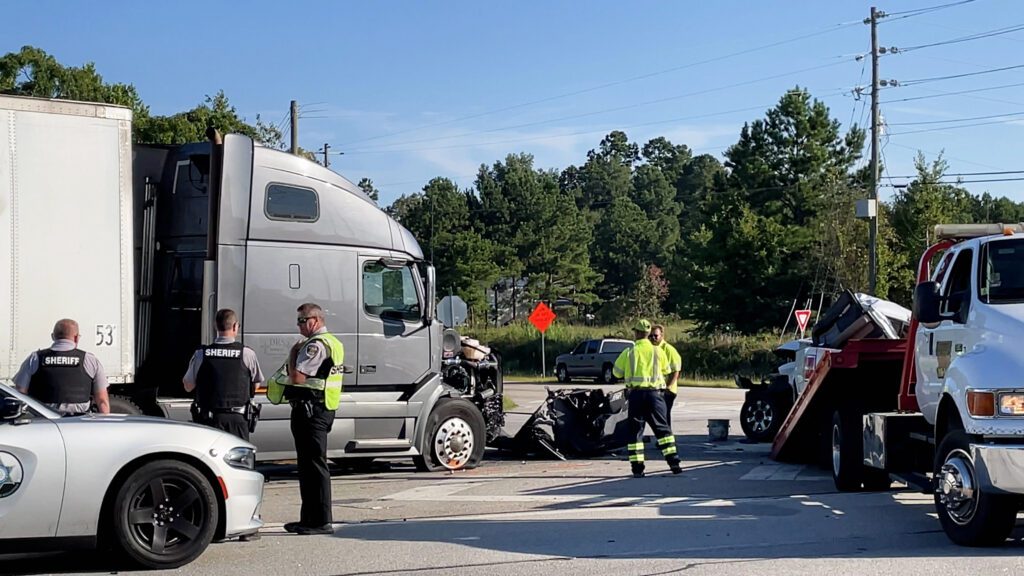
Who Is Responsible When a Truck Hits a Motorcycle in New York City?
Who is responsible for a truck-motorcycle crash depends on what caused the accident and how the parties are connected. The truck driver could be at fault for unsafe lane changes, failing to yield, distracted driving, speeding, or breaking traffic laws. The trucking company or employer might also be responsible if the driver was working at the time. Sometimes, the vehicle owner, maintenance contractor, cargo-loading company, or another party could also be to blame. But just because a big truck hits a motorcycle doesn’t mean the truck is always at fault. The motorcyclist’s actions and the traffic conditions matter too. A lawyer should review the driver, vehicle ownership, employment details, insurance, and physical evidence to determine who is legally responsible.
Can You Sue Both the Truck Driver and the Trucking Company?
Yes. If the evidence shows both the truck driver and the trucking company are at fault, an injured motorcyclist can sue both. The law says an employer can be responsible for an employee’s negligence while working. A trucking company can also be directly liable for its own mistakes, like poor maintenance, if the facts support it. But not every driver in a company vehicle is an employee, and not every company linked to a shipment is automatically at fault. Details like the driver’s job status, duties, route, and what they were doing at the time matter. A lawyer should check employment records, dispatch info, vehicle ownership, and insurance before deciding who to sue.
Is a Trucking Company Responsible if Its Driver Was an Independent Contractor?
A trucking company’s responsibility can be questioned if the driver is an independent contractor instead of an employee. In New York, whether someone is an independent contractor can affect liability, but what’s written in the contract isn’t always final. Courts look at how much control the company has over the work and other details. Other legal duties may also apply. Sometimes, a company can be liable for its own negligence even if the driver isn’t an employee. But a company isn’t always responsible for every accident involving a contractor. A lawyer should review contracts, dispatch records, operating authority, and evidence about the company’s control over the driver. These details help determine whether the company can be sued and whether more insurance is available.
Can a Truck Owner Be Liable Even if Someone Else Was Driving?
Yes. In New York, Vehicle and Traffic Law § 388 usually makes vehicle owners liable for negligence if someone else is driving with their permission, as long as certain rules and exceptions apply. This matters when a commercial truck is owned by one company but driven by someone working for another business. The registered owner can be held responsible even if they weren’t driving. But it’s important to check who owns the truck, who had permission to drive, what type of vehicle it is, and any exceptions. Federal law can also affect cases with rental or leasing companies. A lawyer should review registration, lease agreements, operating authority, and insurance to determine who may be responsible. Figuring out who owns the vehicle can be tricky, but it can help find insurance that might otherwise be missed.
What Are the Most Common Causes of Truck-Motorcycle Accidents in NYC?
Truck-motorcycle crashes often happen because of unsafe lane changes, blind spots, wide turns, failure to yield, distracted driving, speeding, improper backing, or not stopping in time. Big trucks need more space to move and take longer to stop than cars. If a truck driver doesn’t see a motorcycle before changing lanes, they might sideswipe the rider or push them into another vehicle. A wide right turn can hit a motorcycle riding next to the truck, and an unsafe left turn can put the truck right in the rider’s path. Problems like bad brakes or poorly maintained tires can also cause accidents. To determine what happened, it’s important to review the driver’s actions, road conditions, the truck’s condition, and any video or electronic evidence.
Are Truck Drivers Required to Check Their Blind Spots Before Changing Lanes?
Truck drivers must be careful before changing lanes and check that it’s safe. In New York, Vehicle and Traffic Law § 1128 says drivers can’t change lanes unless it’s safe to do so. Trucks have big blind spots, but that doesn’t excuse a driver from watching for other vehicles. Drivers should use their mirrors, cameras, and take other steps to check before moving over. Motorcycles in a truck’s blind spot can be hard to see, but the driver is still responsible. The motorcyclist’s position and actions can also matter when deciding who is at fault. A lawyer should look at how the mirrors were set up, how the vehicles moved, any video footage, and whether the driver had a fair chance to see the motorcycle.
Can You Sue if a Truck Changes Lanes Into Your Motorcycle?
Yes. If a truck changes lanes into a motorcycle and the driver didn’t make sure it was safe, the injured rider can file a negligence claim. Because trucks are so big, an unsafe lane change can push a motorcycle into other traffic, a guardrail, or something else. Vehicle and Traffic Law §§ 1128 and 1163 cover lane changes and signaling. The truck driver might say the motorcycle was in a blind spot, speeding, or came up suddenly. These claims should be checked against the actual evidence, not just taken at face value. Video footage, witness accounts, vehicle damage, road markings, and electronic data can help show what happened. A lawyer should also determine whether the truck driver was on the job and whether commercial insurance is available.
Who Is Liable When a Truck Makes a Wide Right Turn Into a Motorcycle?
A truck driver can be held responsible if making an unsafe right turn leads to a crash with a motorcycle. Large trucks need extra space to turn, especially on narrow New York City streets. Sometimes, a driver swings left before turning right or uses more than one lane to make a turn. If the driver does not see a motorcycle, the rider could be hit by the side or rear wheels. Liability depends on the road layout, traffic, signals, how the vehicles moved, and what both people did. If a motorcyclist tries to pass a turning truck from a risky spot, they might also be blamed. A lawyer should review the truck’s turning path, available space, the mirrors, any video footage, and whether the driver gave enough warning. Accident reconstruction can help if there is a disagreement about how the vehicles collided.
Can You Sue if a Truck Turns Left in Front of Your Motorcycle?
Yes. If a truck driver carelessly turns left in front of a motorcycle, the rider can seek compensation. Vehicle and Traffic Law § 1141 says that anyone making a left turn must yield to vehicles in the intersection or close enough to be a hazard. This rule applies to truck drivers too. Because large trucks take longer to turn, it can be more dangerous if the driver misjudges how close or how fast a motorcycle is. Sometimes, the driver might say the motorcycle was hard to see or was going too fast, but these claims need to be checked. Traffic signals, video footage, witness accounts, vehicle damage, and accident reconstruction can help show whether the truck driver failed to yield or whether the rider played a part in the crash.
Can a Truck Driver Be Liable for Following a Motorcycle Too Closely?
Yes. If a truck driver follows a motorcycle too closely and this leads to a rear-end crash, the driver may be at fault. Vehicle and Traffic Law § 1129 says drivers must not follow another vehicle more closely than is safe for the situation. Because trucks are big and heavy, they need more space to stop. If a truck driver doesn’t leave enough room, they might not be able to stop if the motorcycle slows for traffic, pedestrians, or an intersection. A rear-end crash often suggests the truck driver was careless, but the driver may have a valid reason that needs to be considered. Things like how the motorcycle braked, road conditions, traffic, and driver attention all matter. A lawyer should check dashcam videos, electronic records, witness statements, and the truck’s brakes.
What if a Truck Driver Was Distracted by a Phone or GPS?
A truck driver can be held responsible if being distracted leads to a motorcycle crash. Using a phone, GPS, dispatch screen, or other electronic device can take the driver’s attention off the road and cause them to miss a motorcycle. New York Vehicle and Traffic Law §§ 1225-c and 1225-d set rules for using phones and electronic devices while driving. Some federal rules may also apply to certain commercial drivers. Just having electronic equipment in the truck does not prove the driver was distracted. A lawyer should determine whether the driver was using a device at the time and whether that caused the crash. Evidence can come from witness statements, video footage, admissions, and legally obtained electronic records. If the facts support it, you may also need to review the trucking company’s rules and dispatch practices.
Can a Trucking Company Be Liable for Negligent Hiring or Training?
A trucking company can be directly responsible for poor hiring, supervision, or training if evidence supports the claim. For example, the company might have ignored safety issues or failed to fix known driving problems that led to a crash. But just because an employee caused an accident does not mean the company was negligent in hiring or supervision. New York law also limits some direct negligence claims if the employer admits the driver was working within their job duties, with some exceptions. A lawyer should look at the driver’s qualifications, driving history, company safety rules, training records, and whether any company mistake caused the accident. The goal is to identify legally valid claims, not assume every trucking accident means the company was negligent.
Can a Trucking Company Be Liable for Poor Vehicle Maintenance?
Yes. A trucking company, vehicle owner, or maintenance contractor can be held responsible if poor inspection, repair, or maintenance leads to a motorcycle crash. Trucks need working brakes, tires, steering, lights, and other safety parts. If something breaks, the truck could lose control, hit a motorcycle, or not stop in time. But a mechanical problem alone does not prove the company was careless. The investigation should determine whether the defect existed before the crash, whether it should have been found, and whether it caused or contributed to the accident. Maintenance records, inspection reports, repair bills, driver complaints, and expert checks of the truck can be important evidence. Save this evidence quickly because the truck may be repaired or put back on the road before everything is documented.
What if Improperly Loaded Cargo Caused the Motorcycle Accident?
A crash between a truck and a motorcycle can happen if cargo isn’t properly secured or loaded, causing it to shift, destabilize the truck, or fall onto the road. A motorcyclist might get hit by falling items, run into debris, or get hurt if the truck loses control because of a bad load. Responsibility can fall on the driver, trucking company, cargo loader, shipper, or someone else. But just because cargo was involved does not mean every company is at fault. A lawyer should check how the cargo was loaded, records of how it was secured, weight details, inspection papers, and who was supposed to handle the cargo. Federal rules about cargo securement may apply to some trucks. Physical evidence, photos, and expert opinions can help show if bad loading caused the crash and who was responsible.
What Is a Truck’s Black Box, and Can It Help Prove a Motorcycle Accident?
Some commercial trucks have electronic control modules, event data recorders, telematics, or other devices that can record crash details. Depending on the truck, the data might show speed, braking, engine use, throttle, or other information. Not all trucks have the same technology, and not all systems keep the same records. Electronic data can help show if the driver braked before hitting a motorcycle or how fast the truck was going. A lawyer should act quickly to save this data, since some systems erase or lose records during repairs or regular use. Experts may be needed to find, download, and understand the information. Investigators should review this electronic evidence alongside video footage, witness accounts, and physical evidence from the accident.
Can You Obtain a Truck Driver’s Hours-of-Service Records After an Accident?
Hours-of-service records can matter if driver fatigue played a role in a truck-motorcycle crash. Federal rules limit how long many commercial drivers can work, but which rules apply depends on the truck and the job. Some drivers and companies must keep electronic logs or other records. These records can show if the driver worked too long or did not get enough rest. Still, breaking these rules does not always mean fatigue caused the crash. If tiredness may be an issue, a lawyer should review the driver’s schedule, trip logs, electronic records, dispatch messages, and other evidence. Ask for these records quickly, since companies may not keep them for long. Experts may be needed if there is a question about the driver’s hours or alertness.
Who Is Responsible When an MTA Bus Hits a Motorcycle in NYC?
Responsibility for an MTA-related bus collision depends on the bus driver’s actions, the type of negligence involved, and which legal entity owns the vehicle. If a bus driver makes an unsafe turn, fails to yield, changes lanes without looking, or drives carelessly, a motorcyclist can be seriously hurt. Depending on which service and company are involved, your claim might be against the New York City Transit Authority, MTA Bus Company, or another group. These organizations are different, and their legal status can affect what notice you must give and how quickly you must file. An attorney should quickly identify the specific bus, route, driver, and employer. Evidence like onboard video, dispatch logs, bus location data, and witness accounts can help prove who is at fault. Claims against public transportation require close attention to special procedures that are different from regular car accident cases.
Do You Have to File a Notice of Claim After an MTA Bus Motorcycle Accident?
You may need to file a Notice of Claim after a motorcycle accident with the New York City Transit Authority or another public transportation group, depending on who is responsible and what law applies. For the New York City Transit Authority, you usually have to file this notice within 90 days, and the time to sue is shorter than normal. Other MTA-related companies might have different rules, so it’s important to know exactly who operated the bus. Don’t assume you have the usual three years to file a personal injury claim. The Notice of Claim must also include enough detail about what happened and your injuries. The public agency might ask for more information or require an official interview during the process. Since these deadlines can come up while you’re still in the hospital or recovering, it’s important to get legal help right away.
Can You Sue the MTA for a Bus Driver’s Negligence?
If you’re hurt in a motorcycle accident caused by a bus driver’s negligence, you can file a claim against the right MTA-related company. This could include not yielding, making an unsafe lane change, turning carelessly, or not paying attention. It’s important to figure out exactly which company is responsible, since different MTA services are separate legal entities. The rules for filing a Notice of Claim, deadlines, and other procedures depend on this. You also have to show that the bus driver’s actions caused the crash and your injuries. Evidence like onboard video, bus records, witness statements, and accident reconstruction can help prove your case. An attorney should act quickly to preserve evidence and confirm the specific legal requirements, rather than relying on the usual rules for private car accidents.
Can You Sue After a Motorcycle Accident Involving a NYC School Bus?
Yes. If a school bus driver’s negligence causes a motorcycle accident, the injured rider may have a claim against the driver, the bus owner, the employer, or another responsible party, depending on what happened. Private companies, school districts, and other operators can run school buses. Knowing who operated the bus matters because government-run buses have special deadlines and notice rules, while private companies follow different procedures. A school bus driver might cause an accident by failing to yield, making an unsafe turn, changing lanes without looking, or following too closely. An attorney should review who owns the bus, the operating contract, insurance, and the driver’s employment status. Evidence like surveillance video, route logs, witness statements, and inspection reports can be important. You must prove the rider’s injuries and losses separately from determining who is at fault.
Can You Sue a Private Charter Bus Company After a Motorcycle Accident?
Yes. If a private charter bus driver causes a motorcycle accident while working, the company may be responsible. Charter buses often drive near hotels, event venues, tourist spots, and busy roads in New York City. Because of their size and how they turn, they can be dangerous for motorcyclists if drivers don’t watch the traffic around them. A driver might be at fault for making an unsafe turn, changing lanes improperly, following too closely, or failing to yield. The bus company can be held responsible for the driver’s actions and, if there’s proof, for its own mistakes. An attorney should check the driver’s employment status, who owns the bus, maintenance records, insurance, and any applicable safety rules. Commercial insurance can be especially important if the rider has serious injuries.
Can a Bus Driver Be Liable for Making a Wide Turn Into a Motorcycle?
Yes. If a bus driver makes a wide turn that leads to a crash with a motorcycle, the driver can be held responsible. Big buses need a lot of space to turn, but that doesn’t remove their duty to be careful. A bus might swing into another lane, cross in front of a motorcycle, or hit the rider with its side or back during a turn. Where the rider is, the bus’s signals, traffic, and the road layout all matter when deciding fault. An attorney should check whether the bus driver was paying attention, yielded when needed, and made the turn safely. Evidence like onboard cameras, intersection videos, vehicle damage, and accident reconstruction can help show what happened. If the bus is public, there may be special legal deadlines to follow.
What if a Bus Pulls Away From a Stop and Hits Your Motorcycle?
A bus driver can be at fault if they pull away from a stop without checking the traffic around them and making sure it’s safe. A motorcyclist might be riding next to or approaching the bus when it moves into the lane. Determining responsibility depends on the road layout, traffic laws, signals, and how both vehicles moved. The bus driver might say the motorcycle was in a blind spot or tried to pass unsafely, while the rider might say the bus moved suddenly without warning. Before deciding, it’s important to review the evidence. Onboard video, outside cameras, witness statements, and bus location records can help show what happened. An attorney should also determine whether the bus was operated by a public agency or a private company, since that affects the claims process.
Can You Sue if a Bus or Truck Forces Your Motorcycle Off the Road Without Contact?
Yes. A motorcyclist can file a negligence claim if a known truck or bus driver causes a crash without actually hitting the motorcycle, as long as the driver’s careless actions led to the injuries. For example, a truck might change lanes unsafely and force the rider into a guardrail, or a bus might move into the motorcycle’s lane and make the rider lose control. Not having physical contact doesn’t automatically prevent a claim against a known driver. But the rider must show that the truck or bus caused the emergency and that their reaction was reasonable. Evidence like surveillance video, witness statements, road marks, and accident reconstruction can be important. If the vehicle isn’t identified and leaves the scene, different uninsured motorist rules may apply, and sometimes a claim requires physical contact.
What if the Truck or Bus Driver Blames the Motorcycle Rider?
Truck and bus drivers might claim that the motorcyclist was speeding, riding in a blind spot, lane splitting, following too closely, or making a risky move. If there’s proof, these claims can affect how much each person is at fault, but they don’t automatically clear the driver of responsibility. In New York, regular comparative negligence rules mean a rider can usually recover damages for the part of the accident caused by someone else’s negligence. For example, if a truck driver changes lanes without checking mirrors and the motorcyclist is speeding, both may share blame for the crash. An attorney should look at how the vehicles moved, traffic signals, electronic data, video footage, and witness accounts before deciding who is at fault. Truck and bus drivers still have to be careful, even if the rider also made mistakes.
Can You Recover Compensation if You Were Partly at Fault for the Truck or Bus Accident?
Yes. If a truck or bus driver’s negligence contributed to a motorcycle crash, an injured motorcyclist can still recover compensation, even if the rider was partly at fault. In New York, damages are usually reduced based on the rider’s share of responsibility. For instance, if total damages are $500,000 and the rider is 25 percent at fault, the other party would generally owe $375,000, before considering insurance limits and other rules. The exact split depends on the facts. A truck driver’s failure to yield, unsafe lane change, or inattention can be weighed against the rider’s speed or actions. The insurance company’s initial fault decision is not final, and an attorney should challenge any unsupported claims.
What Injuries Are Common When a Truck or Bus Hits a Motorcycle?
Truck and bus crashes can cause severe injuries to motorcyclists because riders have little protection from the size and force of these vehicles. Common injuries include traumatic brain injuries, spinal cord injuries, paralysis, broken bones, pelvic injuries, crushed limbs, amputations, internal bleeding, organ damage, and serious road rash. Some riders are left with permanent disabilities and may need wheelchairs, changes to their homes, ongoing medical care, or help with daily tasks. Others might need several surgeries, skin grafts, or long-term rehab. These injuries can keep a rider from working or doing normal activities. To show the full impact, you may need medical records, scans, surgery reports, rehab notes, and expert opinions. A strong injury claim should cover both current treatment costs and future medical and financial needs.
Who Pays Medical Bills After a Truck or Bus Motorcycle Accident?
After a truck or bus motorcycle accident, private health insurance, Medicare, Medicaid, or optional medical payments coverage may first pay medical bills. Motorcycle riders and passengers usually do not get New York’s standard No-Fault Personal Injury Protection benefits, even if the commercial driver caused the crash. The truck or bus insurance company may eventually pay for medical expenses through a settlement or court decision, but it does not pay bills as they come in. Serious injuries might need emergency surgery, hospital stays, rehab, and long-term care. An attorney should locate all insurance policies, track medical costs, and check for any claims or liens. Include future treatment needs if the rider has a permanent disability or needs additional procedures.
Can You Recover Lost Earnings and Future Income After a Truck or Bus Accident?
Yes. If a negligent truck or bus driver hurts a motorcyclist, they can seek compensation for lost wages and future earning potential, if there is enough evidence. Serious injuries like broken bones, spinal injuries, brain injuries, or lasting physical problems can keep a rider from going back to their old job. Since motorcycle riders usually do not get New York’s No-Fault wage replacement, losing income can cause immediate money problems. Past lost wages can be shown with employer records, tax returns, pay stubs, and doctor’s work restrictions. Future losses may require expert analysis, especially if the rider can no longer do physical work or must take a lower-paying job. An attorney should review the rider’s job, pay history, career plans, medical outlook, and all available evidence before evaluating the claim.
Can You Recover Compensation for Permanent Disability After a Truck or Bus Collision?
Yes. If a motorcyclist is left permanently disabled because of a negligent truck or bus driver, they can seek compensation for both financial and personal losses. Permanent injuries may mean ongoing medical care, special equipment, changes to the home, personal help, and long-term rehab. Someone with a spinal cord or serious brain injury might not be able to work again or live on their own. The claim can include future medical costs, lost earning ability, pain and suffering, and loss of enjoyment of life. Medical experts, rehab specialists, life-care planners, vocational experts, and economists may all help show what the rider will need in the future. The amount of compensation depends on who is at fault and what insurance or assets are available. An attorney should review all possible responsible parties and insurance policies before valuing a serious-injury claim.
Do Motorcycle Riders Have to Prove a Serious Injury to Sue a Truck or Bus Driver?
Motorcycle riders and passengers usually do not have to meet the Insurance Law Article 51 serious-injury rule that limits some car accident claims. Motorcycles are not included in the law’s definition of motor vehicle, and riders generally do not get standard No-Fault benefits. This means a motorcyclist can seek pain-and-suffering damages from a negligent truck or bus driver without proving a specific serious injury category. Still, the rider must show negligence, causation, and damages. Not meeting the threshold does not mean a big payout is certain. Medical records, treatment history, lasting problems, and how injuries affect daily life still matter. Claims against public buses may also have special rules and deadlines, no matter how serious the injuries are.
How Much Insurance Coverage Do Commercial Trucks Carry in New York?
Commercial truck insurance requirements depend on the vehicle type, what it carries, its weight, who operates it, and whether it travels between states or stays within New York. Some federally regulated trucking companies must have much higher insurance than the usual minimum for private cars in New York. For example, interstate carriers moving nonhazardous goods in larger trucks usually need at least $750,000 in coverage, and those carrying hazardous materials may need even more. But not every delivery truck or commercial vehicle in New York City has to meet these standards. Some companies buy extra insurance or umbrella policies, while others may be self-insured as allowed by law. An attorney should check the actual insurance policies and coverage details, instead of assuming all commercial trucks have the same limits.
How Much Insurance Coverage Do Buses Carry in New York?
Bus insurance requirements vary based on the type of bus, how many passengers it carries, who runs it, and whether it is private or public. Some federally regulated interstate bus companies must have up to $5 million in coverage for buses that carry more than 15 people, including the driver. Smaller buses or those not covered by these rules may have different requirements. These federal limits do not apply to every school bus, private charter, or MTA vehicle. Public transit agencies may also have different insurance or self-insurance setups. An attorney should determine who operates the bus and obtain the correct coverage details. Because serious motorcycle injuries can cost more than the available insurance, it is important to look for other responsible parties and policies.
Can You Recover More Than the Truck Driver’s Insurance Policy Limits?
A motorcyclist can sometimes recover more than a driver’s insurance policy limit if another responsible party, extra insurance, or another source of recovery exists. For example, a truck crash might involve the driver’s employer, the truck owner, a maintenance company, or another at-fault driver. The trucking company might also have extra or umbrella insurance above its main policy. But having more than one defendant does not always mean more insurance money is available, and each party’s responsibility must be proven. Some insurance policies cover several people under one limit. An attorney should review all primary and excess insurance, self-insured amounts, commercial coverage, and how the parties are connected. The goal is to find out the real coverage for the accident, not just rely on the truck driver’s insurance card.
Can You Sue New York City if a City-Owned Truck Hits Your Motorcycle?
Yes. If a motorcyclist is hurt by a New York City truck driven carelessly, they may have a claim against the City if the driver was working for the City at the time and all legal requirements are met. City vehicles can include sanitation trucks, Department of Vehicles trucks, maintenance trucks, and other municipal equipment. To bring a claim against the City, you usually need to file a Notice of Claim within 90 days under General Municipal Law § 50-e and start the lawsuit within one year and 90 days under § 50-i, unless an exception applies. The City may also require a statutory examination under General Municipal Law § 50-h. An attorney should quickly identify the vehicle, the agency involved, the driver, and all deadlines. City records, surveillance video, witness statements, and accident evidence can help prove who was at fault.
What Is the Deadline to Sue After a Truck or Bus Motorcycle Accident in NYC?
Most personal injury lawsuits for motorcycle accidents against private parties in New York must be started within three years under CPLR § 214(5). But if you are suing New York City, the New York City Transit Authority, or another government agency, you may need to file a Notice of Claim within 90 days and follow shorter deadlines. The exact deadline depends on who you are suing and which law applies. Wrongful death claims usually must be filed within two years from the date of death, depending on the law. Insurance claims may have their own notice rules. Because truck and bus accidents can involve government agencies, private companies, multiple vehicle owners, and insurance companies, it is important to identify the right defendants. Injured riders should get legal advice quickly instead of assuming the three-year deadline always applies.
What Evidence Should Be Preserved After a Truck or Bus Motorcycle Accident?
Key evidence can include police reports, photos, surveillance video, witness statements, vehicle damage, driver records, maintenance documents, dispatch logs, electronic data, and insurance policies. Commercial trucks may have electronic systems that record their use, and buses may have cameras or location records. Companies might also keep driver qualification files, inspection reports, trip logs, and other records about the crash. Not every record will exist in every case, and retention periods can vary. An attorney should quickly find out what evidence is available and send requests to preserve it. Keep the motorcycle and any damaged safety gear if their condition could help explain how the accident happened. In serious cases, experts may need to inspect the vehicles and other evidence. Act fast because commercial vehicles may be repaired or put back in service soon after a crash.
Can an Accident Reconstruction Expert Help Prove a Truck, Bus, or Motorcycle Case?
Yes. An accident reconstruction expert can help when there are disagreements about how a truck, bus, or motorcycle moved, the timing of a turn, speed, visibility, or what caused the crash. Experts examine vehicle damage, road measurements, electronic data, video footage, and other physical evidence to determine what happened. For example, in a wide-turn crash, the expert may assess the truck or bus’s turning path and whether the motorcycle was visible. In a rear-end crash, the expert may analyze stopping distances and braking. Experts can also address claims that the rider was speeding or in a blind spot. Their testimony must be based on reliable methods and sufficient evidence. Not every case requires an expert, but their analysis can be helpful if the insurance company disputes fault or if the crash was complicated.
What if the Trucking Company Refuses to Produce Its Accident Records?
A trucking company might not want to share records about a motorcycle accident, especially if they involve the driver’s actions, vehicle maintenance, electronic data, or internal reviews. Still, you can often obtain important documents through legal steps. In New York, CPLR Article 31 allows lawyers to request documents and other evidence. What must be shared depends on relevance, legal privileges, fairness, and court orders. An attorney can request maintenance records, driver qualifications, dispatch logs, electronic data, and insurance details if the law allows it. If a lawsuit is likely, the company must keep important evidence, and destroying it can have legal consequences. Lawyers should keep track of their efforts to preserve evidence and use legal discovery, not just rely on the company to provide records on its own.
Can Families File a Wrongful Death Claim After a Fatal Truck or Bus Motorcycle Accident?
Yes. If a motorcyclist dies in a crash with a truck or bus, the right personal representative can file a wrongful death claim against those legally responsible under New York law. The claim might be against the driver, their employer, the vehicle owner, or another party, depending on the facts. In New York, wrongful death damages usually cover financial losses suffered by certain family members, while a separate survival claim can cover damages the person suffered before death. The amount recovered often depends on insurance coverage and proof of fault. Wrongful death lawsuits usually must be filed within two years of death, but exceptions exist. If a government agency is involved, there may be extra notice steps and deadlines. Families should get legal help quickly to preserve evidence and determine who to sue.
How Can a New York City Motorcycle Accident Lawyer Help After a Truck or Bus Collision?
A New York City motorcycle accident lawyer can investigate the crash, identify who was driving the truck or bus, determine who should be sued, preserve key evidence, and confirm what insurance is available. The lawyer can collect video footage, witness statements, vehicle records, electronic data, and maintenance records. If needed, they can work with accident reconstruction experts, doctors, and financial experts to prove fault and the damages caused. Commercial vehicle cases can be complicated because of different employers, insurance policies, and safety rules. If a public transportation agency is involved, strict rules and shorter deadlines apply to filing claims. A lawyer should review medical bills, lost wages, future care, permanent injuries, and pain and suffering while identifying every possible responsible party. Getting a lawyer early matters, especially when a company controls evidence that may not be kept for long.
Why Choose Greenstein & Pittari, LLP?
Motorcycle accidents with trucks and buses can cause very serious injuries and lead to complex legal cases. Transportation companies and their insurers may argue over fault, blame the motorcyclist, or try to settle before all injuries are known. If a public bus or city vehicle is involved, strict deadlines can make things harder. At Greenstein & Pittari, LLP, our lawyers know how important it is to investigate these accidents quickly, preserve evidence, identify the right parties to sue, and review all available insurance.
Our firm has decades of experience helping injured New Yorkers with serious personal injury cases. We carefully investigate commercial vehicle crashes, review driver actions and vehicle records, determine which companies or public agencies are responsible, and assess the medical impact of severe injuries. When needed, we work with experts to handle accident reconstruction, future medical needs, and lost earning capacity. Our lawyers focus on gathering strong evidence, negotiating firmly, and being ready for trial if insurance companies or defendants do not offer fair settlements.
We believe that injured clients should get quick responses, personal attention, and clear explanations about their legal choices. Greenstein & Pittari, LLP helps motorcycle accident victims in Manhattan, Brooklyn, Queens, the Bronx, Staten Island, Long Island, and Westchester County. Our staff speaks English and Spanish to make legal help easier to access, and clients can reach us by phone, text, email, or through a secure online portal. We treat clients with respect, provide regular updates, and make sure they always know what is happening with their case.
If you or someone you care about was hurt when a truck, delivery vehicle, MTA bus, school bus, or private charter bus hit your motorcycle, don’t assume the driver’s insurance company will treat your claim fairly. Our lawyers can investigate the crash, identify everyone who may be responsible, review all insurance options, and work to get you compensation for your injuries and financial losses.
Call Greenstein & Pittari, LLP at 1-800-VICTIM2 (1-800-842-8462) for a free consultation. We are available 24/7.
Our Fee Guarantee: No Fee Unless Successful.
Don’t Be a Victim Twice.