


Can Families File a Wrongful Death Lawsuit After a Fatal NYC Motorcycle Accident?
Losing a loved one in a motorcycle accident is devastating. A spouse may suddenly lose a life partner and financial provider. Children may lose a parent who provided guidance, support, and care. Parents may face the unimaginable loss of a son or daughter. Along with the emotional devastation, surviving family members may face funeral expenses, unpaid medical bills, lost household income, and uncertainty about their financial future. Fatal motorcycle accidents occur throughout New York City, including on the Brooklyn-Queens Expressway, FDR Drive, West Side Highway, Belt Parkway, Grand Central Parkway, and neighborhood streets across the five boroughs. These collisions may involve drivers who fail to yield, make unsafe left turns, change lanes without checking for motorcycles, drive while distracted, or operate under the influence of alcohol or drugs. Some fatal crashes involve commercial trucks, buses, defective motorcycle components, or dangerous roadway conditions.
Yes. When a motorcycle accident causes a death because of another person’s negligence, the deceased motorcyclist’s personal representative may be able to file a wrongful death lawsuit under New York law. The claim can seek compensation for legally recognized financial losses suffered by qualifying surviving family members. A related survival claim may also recover certain damages the deceased person sustained before death, including conscious pain and suffering when supported by the evidence.
However, New York wrongful death law is complicated. The identity of the person authorized to bring the lawsuit, the types of damages available, the evidence required, and the filing deadlines can all affect the family’s rights. Wrongful death claims involving New York City, public transportation authorities, or other governmental entities may also involve special notice requirements and shortened deadlines.
At Greenstein & Pittari, LLP, our New York City motorcycle accident lawyers understand that no financial recovery can replace a loved one. Our role is to investigate what happened, hold negligent parties accountable, protect the family’s legal rights, and pursue the compensation available under New York law.
If your family lost a loved one in a motorcycle accident in Manhattan, Brooklyn, Queens, the Bronx, Staten Island, Long Island, or Westchester County, call 1-800-VICTIM2 (1-800-842-8462) for a free, confidential consultation, available 24/7. Don’t Be a Victim Twice.
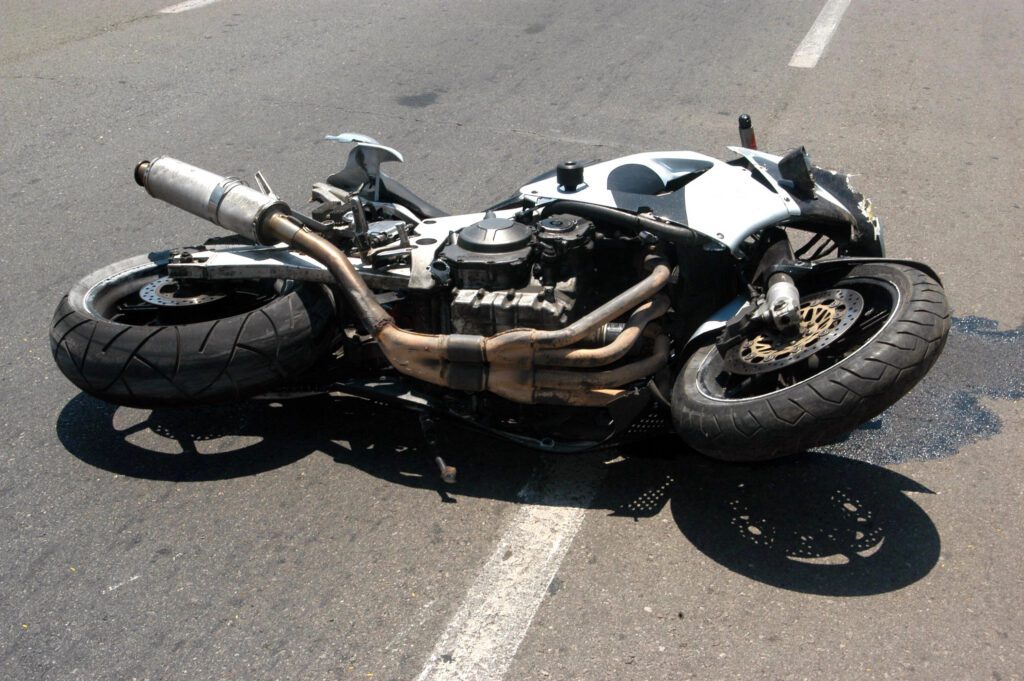
Can You File a Wrongful Death Lawsuit After a Fatal Motorcycle Accident in New York?
Yes. A wrongful death lawsuit may be available when a motorcycle rider or passenger dies because of another person’s wrongful conduct, negligence, or default. Under New York Estates, Powers and Trusts Law § 5-4.1, the deceased person’s duly appointed personal representative generally must bring the action. The claim requires proof that the defendant’s conduct caused the death and that the deceased person could have maintained an action for the underlying injury if death had not occurred. The lawsuit also seeks legally recognized losses resulting from the death. A fatal accident does not automatically establish wrongful death liability. An attorney must investigate the collision, identify responsible parties, establish causation, and determine which damages are recoverable. Prompt action is important because evidence may disappear and special filing deadlines may apply.
Who Has the Legal Right to File a Motorcycle Wrongful Death Lawsuit?
In New York, a wrongful death lawsuit generally must be filed by the personal representative of the deceased person’s estate, rather than directly by individual family members in their own names. The representative may be an executor appointed under a will or an administrator appointed through the appropriate Surrogate’s Court proceeding. The representative pursues the wrongful death claim for the benefit of the deceased person’s qualifying distributees. A surviving spouse, child, or parent may ultimately benefit from the recovery, but that does not necessarily mean the person can independently commence the action without the required appointment. The appropriate representative depends on the estate circumstances. An attorney can help the family understand the required estate proceedings, identify eligible beneficiaries, and coordinate wrongful death litigation with estate administration.
Can a Surviving Spouse Sue After a Fatal Motorcycle Accident?
A surviving spouse may be entitled to benefit from a wrongful death claim when a husband or wife dies in a motorcycle accident caused by negligence. However, the lawsuit generally must be brought by the deceased person’s duly appointed personal representative. The surviving spouse may serve in that capacity when properly appointed. Under New York law, wrongful death damages may include legally recognized pecuniary losses, such as the financial support and services the deceased spouse would reasonably have provided. The surviving spouse’s loss of companionship and emotional grief, standing alone, generally are not separately compensable under New York’s traditional wrongful death damages framework. Nevertheless, the financial consequences of losing a spouse may be substantial. An attorney should investigate household income, benefits, services, financial contributions, and the deceased person’s expected future support.
Can Children Recover Compensation After a Parent Dies in a Motorcycle Accident?
Yes. Children may be qualifying beneficiaries of a wrongful death recovery when a parent dies because of another person’s negligence. The personal representative generally brings the lawsuit on behalf of the eligible distributees. Children may suffer legally recognized pecuniary losses from the loss of financial support, parental guidance, nurture, education, and services. These losses can be particularly significant when the deceased parent was actively involved in raising young children. New York law recognizes that parental guidance and nurture may have economic value, even when the parent did not earn a substantial income. However, you must establish damages with appropriate evidence and under applicable legal standards. An attorney should investigate the deceased parent’s role in the children’s lives, financial contributions, household responsibilities, and the support reasonably expected had the parent survived.
Can Parents File a Wrongful Death Claim After Losing an Adult Child?
Parents may be qualifying beneficiaries of a wrongful death claim after an adult child dies in a motorcycle accident, depending on the deceased person’s family circumstances and New York’s laws governing distributees. The personal representative generally brings the lawsuit, and the parents’ entitlement to a share of the recovery depends on the applicable rules. A wrongful death claim involving an adult child may present difficult damages questions, particularly when the child did not provide regular financial support to the parents or guardians. New York’s traditional wrongful death framework focuses on legally recognized pecuniary losses rather than compensation for grief alone. An attorney should examine the deceased person’s family relationships, financial contributions, services, and other relevant circumstances. The availability and amount of recovery depend on the evidence and the beneficiaries’ legal status.
Can Parents Recover Compensation After a Child Dies in a Motorcycle Accident?
A parent may be entitled to benefit from a wrongful death recovery when a child dies in a motorcycle accident caused by another person’s negligence. The claim generally must be brought by the duly appointed personal representative. The damages analysis depends on the child’s age, family circumstances, and legally recognized pecuniary losses. In cases involving minors, courts may consider factors such as the child’s age, health, abilities, life expectancy, and the reasonable expectation of future assistance or support, subject to applicable legal standards. New York’s wrongful death law does not generally provide a separate award for the parents’ grief merely because the loss is profound. An attorney should carefully evaluate the available damages while ensuring the family understands the distinction between emotional devastation and the categories of compensation permitted by law.
Can a Motorcycle Passenger’s Family File a Wrongful Death Lawsuit?
Yes. Where a motorcycle passenger dies as a result of another person’s negligence, the passenger’s personal representative may bring a wrongful death claim against the parties who are legally responsible. Potential defendants could include the motorcycle operator, another driver, a vehicle owner, an employer, or another party whose conduct caused the collision. The passenger’s claim is separate from the operator’s claim. The passenger generally cannot control the motorcycle’s speed, steering, braking, or lane position, and the operator’s negligence is not necessarily imputed to the passenger simply because they were on the motorcycle at the time of the incident. That said, the passenger’s relevant conduct may be considered where the evidence supports it. An attorney would need to review the collision, identify the responsible parties, assess the available insurance, and determine what damages the passenger’s qualifying distributees are entitled to.
Who Can Be Held Liable for a Fatal Motorcycle Accident?
Potential defendants in a fatal motorcycle accident may include negligent drivers, vehicle owners, employers, trucking companies, bus operators, manufacturers, repair shops, contractors, and governmental entities. Liability depends on how the collision occurred. A driver who fails to yield may be liable for causing a motorcycle crash. A commercial employer may face liability for negligent conduct committed by an employee within the scope of employment. A manufacturer may be responsible when a legally defective product causes the fatal accident. A contractor may face liability when negligent roadway work creates a dangerous condition. However, the presence of a particular business or entity at the accident scene does not automatically establish responsibility. An attorney should investigate every potentially liable party, determine the applicable legal theories, and identify all available insurance coverage.
Can You Sue a Driver Who Made a Left Turn in Front of a Motorcycle?
Yes. A fatal motorcycle accident caused by an unsafe left turn may support a wrongful death lawsuit against the turning driver and other legally responsible parties. Under New York Vehicle and Traffic Law § 1141, a driver intending to turn left generally must yield to approaching vehicles within the intersection or close enough to pose an immediate hazard. A driver who turns across an approaching motorcycle’s path may violate that duty. However, the investigation must also consider the motorcycle’s speed, traffic signals, visibility, and other relevant circumstances. The defense may argue that the rider was traveling too fast or otherwise contributed to the collision. An attorney should obtain surveillance footage, witness statements, vehicle damage evidence, and, when appropriate, accident reconstruction to establish the cause of the fatal crash.
Can You File a Wrongful Death Claim After a Fatal Rear-End Motorcycle Accident?
Yes. A fatal rear-end motorcycle collision may support a wrongful death claim when another driver negligently struck the motorcycle. These crashes can occur when a driver follows too closely, gets distracted, fails to brake, or approaches stopped traffic too quickly. Motorcyclists are particularly vulnerable because a rear impact may throw the rider from the motorcycle or push the motorcycle into another vehicle. However, liability depends on the circumstances, including the motorcycle’s movement and any evidence of sudden or unexpected roadway conditions. An attorney should investigate vehicle damage, skid marks, surveillance footage, witness accounts, and available electronic vehicle information. The family may pursue legally recoverable wrongful death damages and, when supported, a separate survival claim for injuries sustained before death.
Can Families Sue After a Fatal Motorcycle Accident Involving a Truck?
Yes. A fatal motorcycle collision involving a commercial truck may support a wrongful death claim against the negligent truck driver and potentially other legally responsible parties. Truck accidents may involve blind-spot collisions, unsafe lane changes, wide turns, improper backing, distracted driving, fatigue, or mechanical failures. Depending on the facts, the driver’s employer, vehicle owner, maintenance provider, or another party may also be responsible. Commercial trucking cases may involve important evidence such as driver logs, dispatch records, electronic data, dashcam footage, maintenance records, and inspection reports. Some commercial carriers are subject to federal safety regulations, although the applicable rules depend on the vehicle and operation. An attorney should promptly investigate the trucking company and preserve available records before evidence is lost or overwritten.
Can Families Sue After a Fatal Motorcycle Accident Involving an MTA or NYC Bus?
A fatal motorcycle accident involving a public bus may support a wrongful death claim when the bus operator or another responsible party was negligent. However, the correct defendant and applicable filing requirements depend on which entity owned or operated the bus. New York City Transit Authority, MTA Bus Company, New York City agencies, and private bus operators are not interchangeable for legal purposes. Different statutes, notice requirements, and limitations periods may apply. A bus driver’s negligent turn, lane change, or failure to yield may cause a catastrophic motorcycle collision. An attorney should promptly identify the operating entity, preserve onboard camera footage, obtain relevant incident records, and investigate the driver’s conduct. Because claims involving public transportation entities may have shortened deadlines, families should obtain legal guidance immediately rather than assuming the ordinary three-year personal injury period applies.
Can Families Sue After a Fatal Motorcycle Hit-and-Run Accident?
Yes. A wrongful death claim may be available when a motorcyclist is killed by a driver who leaves the accident scene. If the driver is identified, the deceased person’s personal representative may pursue a claim against that driver and other legally responsible parties. If the driver remains unidentified, the family may need to investigate applicable uninsured motorist coverage or other potential sources of compensation. Claims involving unidentified vehicles can involve strict policy and statutory requirements, including reporting, notice, and physical contact conditions. The family should preserve any available vehicle description, license plate information, surveillance footage, and witness statements. An attorney should promptly investigate the collision and review all potentially applicable insurance policies. The driver’s disappearance does not automatically eliminate the possibility of compensation, but it may significantly complicate the case.
Can Families Sue if a Defective Motorcycle Caused the Fatal Accident?
Yes. A fatal motorcycle accident caused by a defective product may support a wrongful death lawsuit against a legally responsible manufacturer, distributor, seller, or another party. Potential defects may involve brakes, tires, steering components, suspension systems, or other critical equipment. A repair shop may also face liability when negligent service caused the mechanical failure. However, the occurrence of a malfunction does not automatically establish a product defect or negligent repair. The investigation must determine what failed, why it failed, and whether the failure caused the fatal collision. Preserving the motorcycle and failed components is essential because technical evidence may be necessary to establish liability. An attorney may work with qualified mechanical engineers, product specialists, and accident reconstruction experts to evaluate the failure and identify responsible parties.
Can Families Sue New York City After a Fatal Motorcycle Accident Caused by a Pothole?
A wrongful death claim involving a pothole or dangerous roadway condition may be available when New York City or another responsible party can be held legally liable. However, claims involving City roadway defects are subject to significant restrictions. New York City Administrative Code § 7-201(c)(2) generally requires prior written notice of certain roadway defects unless a recognized exception applies. A contractor that negligently creates a dangerous condition through construction or repair may face liability under different principles. A pothole alone does not establish that the City was negligent. Photographs, precise location information, prior written notice records, and construction or repair documents may be critical. Claims against municipalities also involve special notice and filing requirements that must be evaluated promptly, particularly when the accident resulted in death.
Can Families Sue if a Drunk Driver Killed a Motorcyclist?
Yes. A fatal motorcycle accident caused by an intoxicated driver may support a wrongful death lawsuit against the driver and potentially other legally responsible parties. Driving while impaired can affect judgment, reaction time, vehicle control, and the ability to recognize motorcycles. Evidence may include police reports, chemical test results, witness statements, surveillance footage, and criminal proceedings. However, the existence of criminal charges does not automatically establish every element of a civil wrongful death claim. The personal representative must establish liability, causation, and legally recoverable damages. In certain circumstances, New York’s dram shop laws may also warrant investigation when alcohol was unlawfully furnished or sold under conditions creating statutory liability. An attorney should evaluate these potential claims promptly while preserving evidence of the driver’s conduct and the events leading up to the collision.
Can Families Sue if a Distracted Driver Caused a Fatal Motorcycle Crash?
Yes. A wrongful death claim may be available when a distracted driver negligently causes a fatal motorcycle collision. Distractions may include texting, using a handheld electronic device, adjusting navigation equipment, or failing to observe surrounding traffic. A driver who looks away from the roadway may fail to notice a motorcycle approaching an intersection, slowing in traffic, or traveling in an adjacent lane. However, distraction must be established with evidence, not assumption. An attorney may investigate witness statements, surveillance footage, admissions, police findings, and phone records obtained through appropriate legal procedures. The driver’s actions must be connected to the collision. A thorough investigation may also reveal additional negligent conduct, such as speeding, unsafe lane changes, or failure to yield.
What Is the Difference Between a Wrongful Death Claim and a Survival Claim?
A wrongful death claim and a survival claim address different losses arising from a fatal motorcycle accident. A wrongful death claim generally seeks compensation for legally recognized pecuniary losses suffered by the deceased person’s qualifying distributees because of the death. A survival claim, under EPTL § 11-3.2, preserves certain causes of action the deceased person could have pursued had they survived. Depending on the evidence, a survival claim may include conscious pain and suffering experienced between injury and death, as well as other recoverable damages sustained during that period. These damages fall into different legal categories and may be distributed differently. An attorney should evaluate both claims because a fatal accident may create substantial losses before death as well as financial losses to surviving family members.
Can Families Recover Compensation for the Motorcyclist’s Pain and Suffering Before Death?
Yes. A survival claim may seek compensation for the deceased motorcyclist’s conscious pain and suffering between the accident and death when the evidence establishes that the person experienced such suffering. For example, a rider may survive for a period after the collision while undergoing emergency treatment, hospitalization, or surgery. Medical records, witness testimony, emergency personnel observations, and other evidence may help establish consciousness and suffering. However, the fact that the injuries were severe does not automatically prove conscious pain and suffering. The legal claim requires evidence supporting the deceased person’s awareness or other legally sufficient basis for recovery. An attorney should carefully review the medical timeline and determine whether the evidence supports a survival claim. These damages are distinct from the family’s wrongful death damages.
Can Families Recover Pain and Suffering if the Motorcyclist Died Instantly?
A claim for conscious pain and suffering may be difficult to establish when a motorcyclist died instantly without evidence of awareness or suffering. New York law generally requires proof supporting conscious pain and suffering rather than assuming it occurred because the collision was violent. However, an attorney should not conclude that no survival damages exist without reviewing the available evidence. Witness observations, emergency records, medical findings, and the sequence of events may be relevant. Other legally recoverable damages may also warrant investigation. Importantly, the absence of a viable conscious pain-and-suffering claim does not automatically eliminate a wrongful death claim for qualifying distributees’ pecuniary losses. An attorney should distinguish the separate legal claims and evaluate each under its own requirements.
Can Families Recover Funeral and Burial Expenses?
Yes. Reasonable funeral expenses may be recoverable in a New York wrongful death action under EPTL § 5-4.3 when the applicable legal requirements are satisfied. These expenses may include reasonable costs associated with funeral services and burial or cremation. The amount must be supported by appropriate documentation and evaluated under the governing law. Families should preserve funeral home invoices, receipts, and related records. However, the availability of funeral expenses does not mean that every expenditure associated with memorializing a loved one will necessarily be recoverable. An attorney should distinguish legally recoverable expenses from other costs and identify who paid them. Funeral expenses are only one component of a potential wrongful death recovery, which may also include the financial support and services the deceased person would have provided.
Can Families Recover the Deceased Motorcyclist’s Lost Future Income?
Yes. Lost financial support may be a significant component of a motorcycle wrongful death claim. The damages analysis may consider the income and benefits the deceased person would reasonably have contributed to qualifying family members had the death not occurred. Relevant evidence may include employment history, earnings records, tax returns, benefits, work-life expectancy, and the deceased person’s anticipated financial contributions. However, wrongful death damages are not necessarily equal to the deceased person’s entire projected lifetime earnings. The calculation must account for the legally recognized pecuniary losses of the qualifying distributees and applicable rules concerning the deceased person’s personal consumption and other factors. An attorney may work with economists and vocational experts, when appropriate, to evaluate future financial support and present evidence supporting the family’s losses.
Can Families Recover the Value of Lost Household Services?
Yes. A wrongful death claim may include the value of household services the deceased motorcyclist would reasonably have provided to qualifying family members. These services may include childcare, household maintenance, transportation, meal preparation, home repairs, and other contributions that have economic value. A deceased parent who cared for children or managed substantial household responsibilities may have provided valuable services even without significant employment income. The amount recoverable depends on the evidence and applicable legal standards. An attorney should investigate the deceased person’s daily responsibilities, family circumstances, and the services the surviving family members have lost. Testimony from relatives, employment records, household information, and appropriate expert analysis may help establish the economic value of these contributions without treating the claim as compensation for grief alone.
Can Children Recover Compensation for Lost Parental Guidance?
Yes. Under New York wrongful death law, children may recover legally recognized pecuniary damages associated with the loss of parental guidance, nurture, education, and care. These losses are distinct from an award for grief or emotional sorrow. A parent may provide instruction, supervision, developmental support, and other services that have economic value. The loss may be especially significant when the children are young and would reasonably have benefited from many additional years of parental guidance. However, courts must evaluate damages under applicable legal standards and support them with evidence. An attorney should document the deceased parent’s involvement in the children’s lives, responsibilities, and expected future contributions. The analysis may include testimony from family members and other evidence concerning the parent-child relationship.
Can a Surviving Spouse Recover Compensation for Loss of Companionship?
New York’s traditional wrongful death statute generally does not permit a separate award solely for a surviving spouse’s grief, sorrow, or loss of companionship. Instead, wrongful death damages focus primarily on legally recognized pecuniary losses, including financial support and services. This distinction can be difficult for families because the emotional loss of a spouse may be immeasurable. However, the law treats emotional loss and economic loss differently. A surviving spouse may have substantial recoverable damages based on the deceased person’s earnings, household contributions, and other legally recognized financial support. A separate survival claim may also be available for certain damages sustained by the deceased before death. An attorney should explain these distinctions carefully and evaluate every category of compensation permitted by the law applicable to the case.
Can Families Recover Compensation for Their Grief and Emotional Suffering?
Under New York’s traditional wrongful death framework, surviving family members generally cannot recover a separate wrongful death award solely for their grief, sorrow, or emotional suffering resulting from the death. The law primarily focuses on legally recognized pecuniary losses to qualifying distributees. This limitation does not diminish the seriousness of the family’s emotional devastation, but it affects the damages available in litigation. Separate legal claims for a survivor’s own emotional injuries may exist in limited circumstances when the independent requirements of those claims are satisfied, such as certain recognized zone-of-danger situations. Those claims should not be assumed merely because a family member witnessed the aftermath of a fatal accident. An attorney should evaluate the specific facts and distinguish the wrongful death claim from any independent cause of action supported by New York law.
Can Families Recover Punitive Damages After a Fatal Motorcycle Accident?
Punitive damages may be available in certain wrongful death cases when the defendant’s conduct satisfies New York’s demanding legal standards. EPTL § 5-4.3 permits punitive damages in appropriate wrongful death actions when they would have been recoverable had the deceased person survived. However, courts do not award punitive damages in every case involving negligence or a fatal accident. They generally require conduct so egregious that it justifies punishment and deterrence, not compensation alone. A fatal collision involving intoxication, reckless conduct, or other serious misconduct may warrant investigation, but no particular fact automatically guarantees punitive damages. An attorney should review the evidence, applicable law, and the defendant’s conduct before determining whether the claim is supportable. Punitive damages should not be presented as an ordinary or guaranteed component of a wrongful death recovery.
How Much Is a Fatal Motorcycle Accident Wrongful Death Case Worth?
There is no standard settlement amount for a fatal motorcycle accident in New York. The value depends on the deceased person’s age, earnings, expected financial contributions, household services, qualifying distributees, and other legally recognized pecuniary losses. A related survival claim may add damages for conscious pain and suffering or other recoverable losses sustained before death. Liability, comparative fault, available insurance coverage, and the financial responsibility of the defendants also affect the potential recovery. A case involving a young parent who provided substantial support to children may involve different damages from a case involving an unmarried adult without dependents. An attorney should obtain employment records, tax returns, family information, medical records, and appropriate expert opinions before estimating value. Families should be cautious about settlement figures offered before fully investigating their losses.
What if the Motorcyclist Was Partly at Fault for the Fatal Accident?
A wrongful death claim may still be available when the deceased motorcyclist was partly responsible for the accident. Under New York’s ordinary comparative negligence principles applicable to motorcycle negligence actions outside Insurance Law Article 51, the deceased rider’s legally established share of fault generally reduces otherwise recoverable damages. For example, a driver may make an unsafe left turn while the motorcycle operator was also speeding. The evidence may support allocating responsibility between them. However, the insurer cannot establish comparative fault merely by claiming that motorcycles are dangerous or that the rider should have avoided the collision. An attorney should investigate each party’s actual conduct through witness statements, surveillance footage, vehicle damage, and accident reconstruction. A rider’s partial fault does not automatically eliminate the family’s wrongful death claim.
What if the Motorcyclist Was Not Wearing a Helmet?
A motorcyclist’s failure to wear a required helmet may become relevant to a wrongful death case, but it does not automatically establish that the rider caused the accident. New York Vehicle and Traffic Law § 381 generally requires motorcycle operators and passengers to wear approved protective helmets. A defendant may argue that helmet nonuse contributed to the severity of particular injuries, including a fatal head injury. However, the legal effect of that argument depends on applicable law and competent causation evidence. Helmet nonuse does not necessarily explain why another driver ran a red light, failed to yield, or struck the motorcycle. An attorney should distinguish the cause of the collision from the cause and severity of the fatal injuries and evaluate any helmet-related defense carefully.
What if the Motorcyclist Did Not Have a Valid Motorcycle License?
A fatal motorcycle accident may still support a wrongful death claim even when the deceased rider lacked the required motorcycle license or endorsement. The licensing violation does not automatically establish that the rider caused the collision. For example, a driver who runs a red light or strikes a motorcycle from behind may still be negligent regardless of the rider’s licensing status. However, the defense may investigate whether the rider’s inexperience or unsafe conduct contributed to the accident. The applicable insurance coverage may also require review. An attorney should examine the rider’s actual operation of the motorcycle, the other driver’s conduct, and the available evidence. The family should not assume that an expired, suspended, or missing motorcycle license automatically eliminates the right to pursue compensation.
What if the Motorcycle Was Unregistered or Uninsured?
A motorcycle’s registration or insurance status does not automatically determine who caused a fatal collision. A driver who negligently strikes an unregistered or uninsured motorcycle may still be legally responsible. However, operating without required registration or insurance can create separate legal consequences and may significantly affect available insurance benefits. An uninsured motorcycle may lack its own liability or uninsured motorist coverage, and other policies may have limitations that affect coverage. An attorney should investigate the negligent driver’s insurance, vehicle ownership, potential employer liability, and any other legally available sources of compensation. The family should not assume that household automobile coverage automatically applies. The family must evaluate the wrongful death claim based on negligence, causation, damages, and applicable insurance and statutory requirements.
Does New York No-Fault Insurance Pay Benefits After a Fatal Motorcycle Accident?
Motorcycle operators and passengers generally are excluded from New York’s ordinary No-Fault Personal Injury Protection benefits because motorcycles are excluded from the relevant statutory definition of motor vehicle under Insurance Law Article 51. Consequently, the ordinary No-Fault death benefit and related PIP benefits generally are not available simply because a motorcycle occupant was killed in a collision. However, other insurance or benefits may be available depending on the circumstances, including applicable medical payments coverage, health insurance, life insurance, or liability coverage. A wrongful death lawsuit may seek legally recoverable damages from responsible parties. An attorney should review available policies and benefits rather than assuming ordinary automobile No-Fault rules apply to motorcycle occupants.
Can Uninsured Motorist Coverage Apply After a Fatal Motorcycle Accident?
Uninsured motorist coverage may provide benefits after a fatal motorcycle accident when an uninsured or qualifying unidentified driver caused the collision and the deceased person was insured under an applicable policy. However, coverage depends on the specific policy, statutory requirements, the motorcycle’s insurance status, and the circumstances. Hit-and-run claims may require strict physical contact, police reporting, and notice. A family should not assume that uninsured motorist coverage under a household automobile policy automatically applies to a motorcycle accident. An attorney should examine all potentially relevant policies and determine whether a qualifying claim exists. Investigate coverage issues promptly because missed notice requirements or improperly handled claims may affect available benefits.
Can Underinsured Motorist Coverage Help After a Fatal Motorcycle Accident?
Supplementary uninsured/underinsured motorist coverage may provide additional compensation when the negligent driver’s liability insurance is insufficient, and the applicable SUM policy covers the deceased motorcyclist. However, coverage depends on the policy, the insured person’s status, applicable limits, and New York’s statutory and contractual requirements. SUM claims may involve notice obligations, consent-to-settlement requirements, and other procedural conditions. A family should not settle with the negligent driver’s insurer without evaluating whether doing so could affect potential additional coverage. An attorney should obtain the relevant policies, identify all applicable limits, and determine whether SUM benefits are available. A fatal accident does not automatically guarantee coverage or payment of the full policy limits.
What Evidence Is Needed to Prove a Fatal Motorcycle Accident Case?
Important evidence may include police reports, surveillance footage, dashcam recordings, witness statements, photographs, vehicle damage, roadway evidence, and accident reconstruction findings. Medical records, emergency response records, autopsy findings when available, and other documentation may help establish the cause of death and any conscious pain and suffering before death. Financial records, tax returns, employment information, and family testimony may support wrongful death damages. In cases involving trucks or buses, electronic data, driver logs, maintenance records, and onboard video may also be relevant. An attorney should act promptly to preserve evidence because surveillance footage may be overwritten, vehicles may be repaired or disposed of, and witnesses may become difficult to locate. A complete investigation should address liability, causation, and damages.

Why Is Accident Reconstruction Important in a Fatal Motorcycle Case?
Accident reconstruction may be particularly important when the motorcyclist cannot provide an account of the collision and the surviving driver disputes responsibility. Qualified experts may analyze vehicle damage, impact locations, roadway markings, physical evidence, video footage, and other information to evaluate how the accident occurred. The analysis may address speed, vehicle movement, braking, visibility, and whether a driver had an opportunity to avoid the collision. However, reconstruction opinions must be based on reliable methods and sufficient evidence. Not every fatal motorcycle accident requires expert reconstruction, and an expert cannot replace missing facts with speculation. When appropriate, an attorney should preserve the motorcycle, other involved vehicles, and available electronic information. The objective is to establish the collision sequence through credible evidence rather than relying solely on the surviving driver’s account.
Can the Family Recover if There Were No Witnesses to the Fatal Accident?
Yes. A wrongful death claim may still be viable when no independent witness observed the collision. Liability may be established through physical evidence, vehicle damage, roadway conditions, surveillance footage, electronic data, and other circumstantial evidence. A fatal motorcycle accident may leave the surviving driver as the only person able to provide a direct account, making independent investigation particularly important. An attorney should examine whether nearby businesses, buildings, traffic cameras, or vehicles captured relevant footage. Accident reconstruction may also assist when sufficient physical evidence is available. New York law includes evidentiary principles applicable to cases involving deceased persons, but those principles do not eliminate the need to establish negligence and causation. The absence of eyewitnesses should prompt a thorough investigation, not an automatic conclusion that the family has no case.
What if the Police Report Blames the Deceased Motorcyclist?
A police report assigning fault to the deceased motorcyclist does not automatically determine civil liability. Officers may arrive after the collision and rely on statements from the surviving driver or other witnesses. The report may not reflect all available evidence, particularly when the rider cannot explain what happened. An attorney should review the officer’s direct observations, witness statements, roadway evidence, vehicle damage, and any available video. The defense may allege speeding, lane splitting, or another traffic violation, but those allegations should be supported by evidence and connected to the collision. Accident reconstruction may be useful when the circumstances are disputed. The family’s claim should be evaluated under the applicable negligence and causation standards, not based exclusively on an initial police report.
Can Families File a Wrongful Death Claim if the Driver Was Not Criminally Charged?
Yes. A wrongful death lawsuit may be available even when the driver was not arrested, ticketed, or criminally charged. Criminal and civil proceedings serve different purposes and use different standards of proof. A criminal prosecution may require proof beyond a reasonable doubt, while a civil negligence claim generally requires proof by a preponderance of the evidence. A driver may be civilly responsible for a fatal collision even when prosecutors do not pursue criminal charges. Similarly, a traffic ticket does not automatically establish every element of a wrongful death claim. An attorney should independently investigate the collision and evaluate the available evidence. The family’s right to pursue civil compensation does not depend solely on the police department’s or prosecutor’s decision.
What if the Driver Was Criminally Charged After the Fatal Motorcycle Accident?
Criminal charges may provide important information concerning a fatal motorcycle collision, but they do not automatically resolve the family’s civil wrongful death claim. The criminal case may involve allegations of intoxication, reckless driving, leaving the scene, or other offenses. Evidence obtained during the criminal investigation may be relevant to civil liability, subject to applicable evidentiary rules and procedures. However, the civil lawsuit has its own requirements concerning negligence, causation, damages, and responsible parties. A criminal conviction or plea may have legal consequences for related civil litigation, depending on the circumstances. An attorney should coordinate the civil investigation with any pending criminal proceedings while preserving independent evidence. The family should not assume that the criminal case will recover compensation on its behalf.
How Long Do Families Have to File a Motorcycle Wrongful Death Lawsuit in New York?
Under EPTL § 5-4.1, a New York wrongful death action generally must be commenced within two years of the deceased person’s death. However, the applicable deadline may depend on the defendant’s identity, special statutory requirements, and other circumstances. Claims involving governmental entities may require earlier notices and may be subject to different procedural rules. A related survival claim may have a different limitations analysis. Families should not assume that the ordinary three-year personal injury limitations period controls the wrongful death action. The personal representative may also need to be appointed before commencing the lawsuit. An attorney should identify the correct defendants, determine the applicable deadlines, and promptly begin the necessary estate proceedings. Waiting can jeopardize the claim and allow critical evidence to disappear.
Is a Notice of Claim Required After a Fatal Motorcycle Accident Involving New York City?
A Notice of Claim may be required when a fatal motorcycle accident involves negligence attributable to New York City or another entity subject to municipal notice requirements. Under General Municipal Law § 50-e, many municipal claims require notice within 90 days after the claim arises. However, wrongful death claims have specific accrual rules, and the notice period generally runs from the appointment of a representative of the decedent’s estate in cases governed by that provision. You must carefully review the applicable statute, defendant, and claim type. Separate lawsuit deadlines also apply. Public authorities and other governmental entities may have different requirements, so families should not assume that all public vehicle claims follow the same rules. Prompt legal review is essential because identifying the correct defendant and satisfying notice requirements can determine whether the claim may proceed.
What if the Family Missed the Notice of Claim Deadline?
Missing a required Notice of Claim deadline can create a serious obstacle to a wrongful death or related negligence claim against a governmental entity. In certain circumstances, a court may have authority to permit a late notice, but whether that relief is available depends on the applicable statute, time limits, and relevant factors. Courts may consider whether the governmental entity obtained timely knowledge of the essential facts, the reason for the delay, and whether it suffered substantial prejudice. However, late-notice relief is not automatic, and some deadlines cannot be extended once the applicable statutory period has expired. The rules may differ among New York City, public authorities, and other governmental defendants. An attorney should review the dates of death, estate appointment, notice, and proposed lawsuit immediately rather than assuming that an extension will be granted.
How Long Does a Motorcycle Wrongful Death Lawsuit Take?
The duration of a motorcycle wrongful death lawsuit depends on liability disputes, the number of defendants, the complexity of the evidence, insurance coverage, and the court’s schedule. Some claims may resolve through negotiations after the investigation and damages analysis are substantially complete. Others require extensive discovery, depositions, expert examinations, motions, mediation, or trial. Cases involving commercial trucks, public entities, defective products, or disputed accident reconstruction may take longer because of additional evidence and procedural requirements. Appointing an estate representative and obtaining any necessary court approvals may also affect the process. An attorney should provide realistic updates and explain the major stages of litigation. Families should be cautious about accepting an early settlement before investigating full financial losses and available insurance coverage.
Does a Motorcycle Wrongful Death Settlement Require Court Approval?
New York wrongful death settlements generally require judicial approval under EPTL § 5-4.6. The appropriate court must review the settlement and related matters under the applicable procedures. The process may involve the personal representative, counsel, estate proceedings, and allocating settlement proceeds among qualifying distributees. When minors are beneficiaries, additional protections may be required. A court may also need to address attorney’s fees, litigation expenses, and other issues associated with the settlement. The precise procedure depends on the case and the court with jurisdiction. An attorney should explain the approval process before settlement and prepare the necessary applications and supporting documents. An agreement with the insurance company does not necessarily mean that the funds can be distributed immediately.
How Are Wrongful Death Settlement Proceeds Distributed Among Family Members?
New York law distributes wrongful death proceeds based on the legally recognized pecuniary losses of qualifying distributees, rather than dividing them equally among surviving relatives. The personal representative generally pursues the claim for eligible distributees, and judicial approval or allocation procedures may apply. The distribution depends on the family structure, the beneficiaries’ legal status, and the evidence concerning their losses. For example, a surviving spouse and minor children may have different financial losses associated with the death. Proceeds attributable to a survival claim may be treated differently from wrongful death proceeds because the claims involve different legal interests. An attorney should explain these distinctions, identify the qualifying beneficiaries, and seek the appropriate court approval before distributing settlement funds.
What if the Deceased Motorcyclist Had No Will?
A wrongful death lawsuit may still be pursued when the deceased motorcyclist did not leave a will. The absence of a will does not automatically prevent the estate from obtaining a personal representative or bringing a wrongful death action. Without a will, an eligible person may seek appointment as administrator through the appropriate Surrogate’s Court proceeding. The administrator may then pursue the wrongful death claim on behalf of qualifying distributees, subject to applicable law. The appropriate administrator and beneficiaries depend on family circumstances and New York estate law. An attorney should help coordinate the necessary estate proceedings and wrongful death litigation. Families should not delay seeking legal advice simply because the deceased person had not prepared estate planning documents.
Can a Wrongful Death Lawsuit Be Filed if the Motorcyclist Was Unmarried and Had No Children?
Yes. A wrongful death claim may still be available when the deceased motorcyclist was unmarried and had no children. The appropriate personal representative may pursue the action on behalf of qualifying distributees under New York law. Depending on the circumstances, surviving parents or other relatives may be distributees. However, eligible beneficiaries and available damages depend on the deceased person’s family structure and applicable inheritance rules. The absence of a spouse or children may affect the evaluation of pecuniary losses, but it does not automatically eliminate a claim. A related survival action may also warrant investigation when the deceased person experienced conscious pain and suffering or sustained other legally recoverable damages before death. An attorney should review the family relationships, estate circumstances, and available evidence before assessing the claim.
Can Families Sue More Than One Defendant After a Fatal Motorcycle Accident?
Yes. A motorcycle wrongful death lawsuit may involve multiple defendants when more than one party’s legally actionable conduct contributed to the fatal collision. For example, a truck driver may make an unsafe turn while the trucking company failed to maintain critical safety equipment. A vehicle owner or employer may also face liability under applicable law. In another case, a negligent driver and a contractor responsible for a dangerous roadway condition may both require investigation. However, naming multiple defendants does not automatically establish liability against each one. The personal representative must establish the applicable legal basis for each claim. An attorney should investigate ownership, employment relationships, maintenance responsibilities, product defects, and available insurance coverage. Identifying all responsible parties can be particularly important when the financial losses exceed one defendant’s insurance limits.
What if the Negligent Driver Has Only Minimum Insurance Coverage?
A fatal motorcycle accident may cause financial losses far exceeding the negligent driver’s liability insurance limits. New York’s ordinary minimum automobile bodily injury liability limits are $25,000 per person and $50,000 per accident, with higher minimum limits for death claims under certain required coverage provisions. However, the actual coverage depends on the vehicle, policy, and applicable law. Commercial vehicles and other regulated vehicles may carry different limits. An attorney should obtain and review the available liability policies, investigate excess or umbrella coverage, and determine whether additional defendants or SUM coverage may be available. The family should not assume the amount one insurer initially discloses represents the total potential recovery. A thorough insurance investigation is important before evaluating settlement.
Can Families Recover More Than the Negligent Driver’s Insurance Limits?
Potentially, yes. The total legally recoverable damages in a wrongful death case may exceed the negligent driver’s insurance limits. However, a larger judgment does not guarantee you can collect the full amount. Additional recovery may depend on the defendant’s assets, other responsible parties, excess or umbrella policies, applicable SUM coverage, and other legally available sources. For example, a commercial employer may carry substantial liability insurance, or a vehicle owner may have separate coverage. An attorney should investigate all potentially responsible parties and insurance policies rather than relying solely on the driver’s initial coverage information. The availability of additional compensation depends on the facts, applicable law, and the responsible defendants’ financial resources or insurance.
What Should Families Do Immediately After a Fatal Motorcycle Accident?
Families should obtain accurate information concerning the collision, preserve available documents, and seek legal guidance promptly. Important materials may include the police report number, accident location, photographs, witness information, insurance documents, and communications from investigators or insurers. Preserve the motorcycle, helmet, protective equipment, and other physical evidence when possible. Families should avoid authorizing disposal or unnecessary alteration of the motorcycle before investigators determine the cause of the accident. It may also be important to identify nearby surveillance cameras and determine whether commercial vehicles retained electronic data. An attorney can help coordinate evidence preservation, identify responsible parties, evaluate insurance coverage, and address estate appointment requirements. Prompt action is especially important when a governmental defendant or strict insurance notice deadline may be involved.
Should Families Speak With the Negligent Driver’s Insurance Company?
Families should be cautious when communicating with the negligent driver’s insurance company after a fatal motorcycle accident. The insurer may request statements, financial information, medical authorizations, or an early settlement agreement. Some requests may be legitimate, but the family may not yet understand its legal rights or the full extent of recoverable damages. A recorded statement or broad authorization may create unnecessary disputes or expose information unrelated to the claim. Families should provide accurate information and avoid speculation about how the collision occurred. An attorney can communicate with insurers, investigate liability, obtain coverage information, and evaluate settlement proposals. Early legal representation may be particularly important when the deceased rider cannot explain the accident, and the insurer relies primarily on the surviving driver’s version of events.
Should Families Accept an Early Wrongful Death Settlement Offer?
Families should be cautious about accepting an early settlement offer before thoroughly investigating the collision, available insurance coverage, and legally recoverable damages. A settlement generally involves a release that can prevent additional claims against the released parties. The initial offer may not account for lost future financial support, household services, parental guidance, funeral expenses, or a viable survival claim. It may also fail to reflect additional defendants or insurance policies. New York wrongful death settlements generally require judicial approval, but that process does not replace the need for careful investigation and valuation. An attorney should obtain the necessary financial, medical, and liability evidence before recommending settlement. Families deserve a clear explanation of the proposed recovery, applicable expenses, and how settlement proceeds would be distributed.
How Can a New York City Motorcycle Wrongful Death Lawyer Help Your Family?
A New York City motorcycle wrongful death lawyer can investigate the fatal collision, identify legally responsible parties, preserve evidence, and pursue the claims available under New York law. The attorney may obtain surveillance footage, police reports, witness statements, medical records, vehicle data, and other evidence. Counsel can also coordinate with appropriate accident reconstruction, medical, vocational, and economic experts when necessary. The lawyer should evaluate both wrongful death and survival claims, investigate available insurance coverage, and determine whether special municipal or public authority deadlines apply. Estate appointment and court approval procedures may also require attention. Throughout the case, the attorney should communicate clearly with the family, explain the litigation process, pursue evidence-supported compensation, and treat the family’s loss with sensitivity and respect.
Why Choose Greenstein & Pittari, LLP?
Losing a loved one in a motorcycle accident changes a family forever. The surviving spouse may face financial uncertainty. Children may grow up without a parent’s guidance and support. Parents may struggle to understand how a preventable collision took the life of their child. During this difficult time, families should not have to confront insurance companies, investigate complex liability questions, or navigate unfamiliar court procedures without experienced legal guidance. At Greenstein & Pittari, LLP, we understand that wrongful death representation requires compassion, responsiveness, and determined advocacy.
Our firm brings decades of experience representing injured New Yorkers and families affected by serious accidents. We thoroughly investigate fatal motorcycle collisions, preserve available surveillance footage, obtain witness statements, review police reports, and identify potentially responsible drivers, vehicle owners, employers, and other parties. When necessary, we work with qualified experts to address accident reconstruction, disputed liability, lost financial support, and other legally recoverable damages. We prepare cases with an emphasis on detailed evidence, aggressive negotiation, and trial readiness when defendants or insurance companies refuse to resolve claims fairly.
We are responsive, aggressive, and local. Greenstein & Pittari, LLP serves families throughout Manhattan, Brooklyn, Queens, the Bronx, Staten Island, Long Island, and Westchester County. We believe that every client deserves respect, personal attention, and clear communication. A named partner works on the case, and our team provides proactive updates throughout the legal process. Clients can communicate with us by telephone, text, email, or secure client portal. Our English and Spanish-speaking staff helps ensure families can get information and assistance in the way that feels
most comfortable for them.
We also understand that financial concerns may make it difficult for families to seek legal representation. Our contingency fee arrangement means our attorney’s fee depends on a successful recovery, subject to the terms of the retainer agreement. We offer free consultations 24 hours a day, seven days a week so that families can understand their legal options without an upfront consultation charge.
No amount of money can replace a loved one. However, a wrongful death lawsuit may help provide financial security, establish accountability, and ensure that negligent parties are held responsible under New York law.
If your family lost a spouse, parent, child, or another loved one in a fatal motorcycle accident, contact Greenstein & Pittari, LLP to discuss your rights and the steps necessary to protect your family’s claim.
Call Greenstein & Pittari, LLP at 1-800-VICTIM2 (1-800-842-8462) for a free, confidential consultation, available 24/7.
Our Fee Guarantee: No Fee Unless Successful.
Don’t Be a Victim Twice.