


Who Is Liable in an NYC Truck Accident: Driver, Company, or Shipper?
In most NYC truck accidents, more than one party is liable.
The driver and the trucking company are responsible most often, and the shipper or loader can share the blame when the cargo caused the crash.
Who Is Liable in an NYC Truck Accident? A Quick Guide
Figuring out who is liable in an NYC truck accident starts with one question: what actually caused the crash?
Unlike a typical car accident, a truck crash often involves multiple parties, each with its own insurance company.
A tired driver, a skipped brake repair, and a badly loaded trailer each point to a different party. Here’s how responsibility usually breaks down under New York and federal law:
| Party | Usually liable when… | Legal basis |
|---|---|---|
| Truck driver | They speed, drive distracted or fatigued, or break traffic or federal safety rules | Negligence; federal safety rules (49 CFR Parts 392 and 395) |
| Trucking company | The driver was working for it, or it hired, trained or maintained poorly | Employer liability; negligent hiring and supervision |
| Truck owner | Someone was driving its truck with permission | Vehicle and Traffic Law § 388 |
| Rental or leasing company | Only if it was negligent itself, such as renting out a truck with known defects | Graves Amendment (49 U.S.C. § 30106) |
| Shipper or cargo loader | It loaded the truck and the loading defect was hidden from the driver | Negligence; the “Savage rule” |
| Freight broker | It carelessly hired an unsafe trucking company | Montgomery v. Caribe Transport II (U.S. Supreme Court, 2026) |
| Mechanic or manufacturer | A bad repair or a defective part, such as brakes or tires, caused the crash | Negligence; product liability |
| New York City | A City truck (such as Sanitation) caused the crash, or a dangerous road defect contributed | General Municipal Law § 50-e (90-day Notice of Claim) |
When Is the Truck Driver Liable?
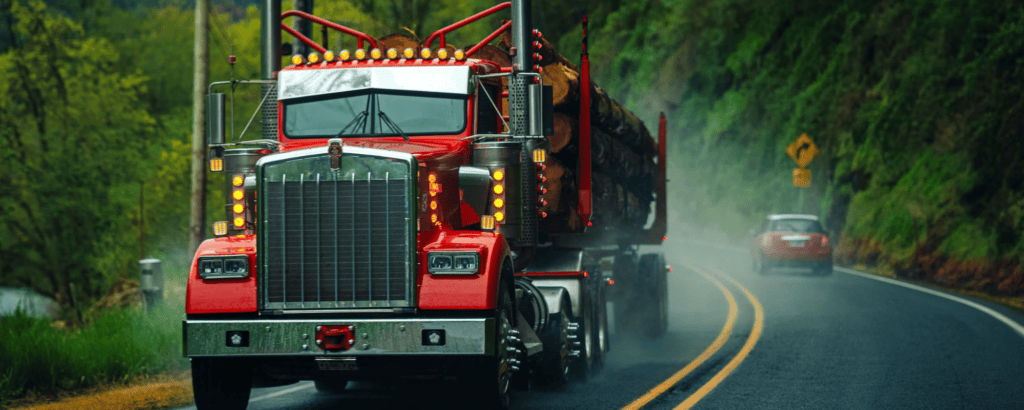
The driver is liable for their own careless driving, just like any other motorist. But truck drivers with a commercial license also have to follow federal safety rules, and a violation is strong evidence of negligence.
The ones that matter most in NYC crashes are:
- Hours of service: a truck driver can drive no more than 11 hours after 10 hours off duty, and can’t drive past the 14th hour after starting work (49 CFR Part 395). Driver fatigue is behind many rear-end and lane-drift crashes.
- Cargo checks: the driver must make sure the load is secured before driving and inspect it again during the trip (49 CFR § 392.9).
- Phones: commercial drivers can’t text or hold a phone while driving, and distracted driving is a leading cause of truck crashes.
- NYC truck routes: large trucks must stay on designated truck routes unless they’re making a local delivery (34 RCNY § 4-13). A truck on a residential side street with no delivery nearby is a red flag.
A driver’s negligence usually starts the case. Still, the driver is rarely the only party responsible. A driver’s personal insurance or assets almost never cover the cost of a serious truck crash, which is why the next question is who they were working for.
When Is the Trucking Company Liable?
In New York, a trucking company can be liable in three ways, and often more than one applies.
1. As the Driver’s Employer
If the driver was on the job when the crash happened, the company is generally liable for their negligence.
This is called vicarious liability. Companies often call their drivers “independent contractors” to avoid it. That label doesn’t decide the question.
Courts look at who actually controlled the work, such as the schedule, the route, and the truck, and federal leasing rules generally make the carrier operating the truck responsible for it.
2. As the Truck’s Owner
Under Vehicle and Traffic Law § 388, the owner of a vehicle in New York is liable when someone drives it with permission and causes a crash. This matters when the company owns the truck but disputes that the driver was its employee.
There’s one important exception. Under a federal law known as the Graves Amendment, a company that rents or leases vehicles isn’t liable just because it owns the truck. Rental box trucks are common in NYC, so this comes up often.
The rental company can still be liable if it was negligent itself, for example, by renting out a truck it knew had bad brakes.
3. For Its Own Negligence
The company is also directly liable when its own decisions contributed to the crash, such as:
- Hiring a driver with a poor record or no valid commercial license
- Skipping required drug and alcohol testing
- Skipping inspections or putting off vehicle maintenance
- Setting delivery schedules that force drivers to break the hours-of-service rules
- Ignoring complaints or prior crashes involving the same driver
When Is the Shipper or Loader Liable?
Improperly loaded cargo can make even an experienced truck operator lose control. A load that’s too heavy, unbalanced, or poorly secured can make a truck tip on a tight turn, jackknife when braking, or spill onto the road.
Who pays depends largely on who loaded the truck and whether the problem was visible. Courts in New York and elsewhere apply a long-standing principle called the “Savage rule”:
- If the shipper loaded the truck and the defect was hidden, such as a shifting load inside a sealed trailer, the shipper may be liable.
- If the problem was visible, such as an overhanging or obviously unsecured load, the driver and trucking company are generally responsible, because federal rules require the driver to check the cargo.
In many cases, both share the blame. Third-party cargo loaders, such as a warehouse or distribution center, can be held liable in the same way as a shipper when improper loading caused the crash.
Other Parties Who May Be Liable

Freight Brokers
Brokers arrange shipments and choose which trucking company will haul them.
On May 14, 2026, the U.S. Supreme Court ruled unanimously in Montgomery v. Caribe Transport II that injured people can sue a broker for negligently hiring an unsafe carrier. Before this ruling, many courts had dismissed these claims.
Mechanics and Manufacturers
A repair shop that did a careless brake job, or a truck manufacturer or parts maker that sold a defective tire or steering part, can be liable when that failure caused the crash.
New York City and Other Public Agencies
If a Sanitation truck or another City vehicle caused the crash, or a government entity left a dangerous road defect, the claim is against the City. These cases have a much shorter first step: a Notice of Claim within 90 days.
Why Truck Accident Claims Are Different From Car Accidents
A fully loaded tractor-trailer can weigh as much as 80,000 pounds, which is about 20 times heavier than most passenger cars. In crashes between trucks and cars, pedestrians, or cyclists, those outside the truck usually get hurt the most.
That’s why commercial truck accidents so often cause catastrophic, life-altering injuries, including:
- Traumatic brain injuries
- Spinal cord damage that can lead to paralysis
- Amputations and crush injuries
- Burns from fuel fires or hazardous materials
- Internal injuries that may not show symptoms right away
Truck Insurance vs. Car Insurance in New York
In New York, the minimum auto liability insurance is just $25,000 per person, which usually isn’t enough for serious injuries.
Commercial vehicles need much more coverage: at least $750,000 for interstate trucks carrying general freight and $5 million for many trucks carrying hazardous materials.
Many large trucking companies also buy extra insurance beyond these amounts.
Why Truck Accident Lawsuits Are More Complex
Truck accident lawsuits are more complicated than most car accident cases because they involve more parties and more layers of insurance.
Each insurance company tries to protect its own policy and often tries to place the blame on someone else.
Proving a Serious Injury and What You Can Recover
To get compensation for pain and suffering in New York, you must show you have a “serious injury” under Insurance Law § 5102(d), supported by medical evidence like MRIs, scans, or test results.
People with severe injuries from truck accidents often meet this requirement, but insurance companies may still challenge it.
In a truck accident lawsuit, you can ask for payment for medical bills, future medical costs, lost wages, pain and suffering, and property damage.
How Fault Is Shared in New York
When more than one party is at fault, two main rules determine how much you can recover.
Your share of the fault matters. If you were partly responsible, your compensation goes down by that percentage. For motor vehicle lawsuits filed on or after May 26, 2026, New York will not allow recovery if you are found more at fault than the other party, as the Department of Financial Services explains.
The defendants’ shares also matter. In motor vehicle cases, each defendant can usually be made to pay the full judgment, even if they were only partly at fault (CPLR 1602(6)).
This rule stayed the same in 2026. For example, if the trucking company is 70% at fault and the shipper is 30% at fault, and the trucking company cannot pay, you can still collect the full amount from the shipper.
Why naming every party matters: a party left out of the lawsuit can’t be made to pay. Identifying the shipper, broker or leasing company early can be the difference between a judgment you can collect and one you can’t.
Evidence That Shows Who Is Liable
In truck accident cases, most of the important evidence is controlled by the trucking company, and some of it can be lost quickly.
For example, federal rules only require companies to keep driver logs for six months, and black-box data may be erased when the truck is used again. Key evidence includes:
- Electronic logging device (ELD) records, which show hours driven and rest breaks
- Engine control module (“black box”) data, such as speed and braking before impact
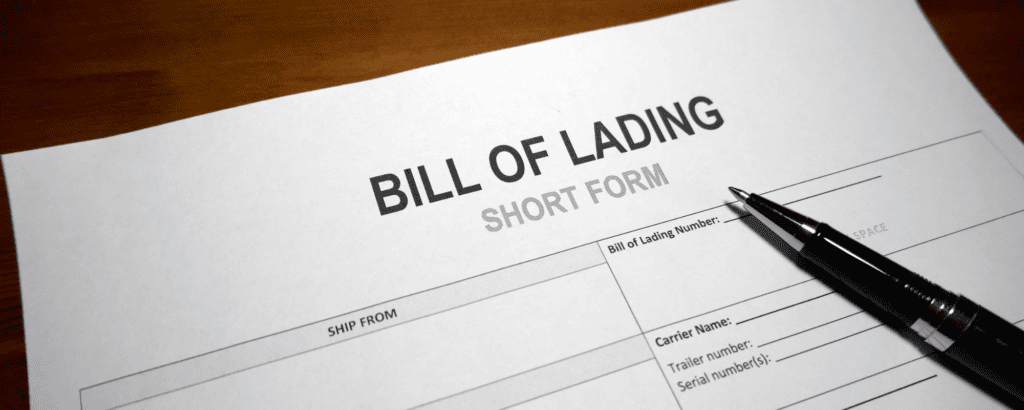
- Bills of lading and loading records, which show who loaded the cargo and how much it weighed
- Maintenance records and inspection reports
- The driver’s hiring file, license history, and drug and alcohol test results
- Dashcam, traffic camera, and nearby store video
- The police report and witness statements
A New York truck accident lawyer can send a preservation letter right away, which legally requires the company to keep this evidence.
How We Handle NYC Truck Accident Cases
We begin by asking an important question: who is responsible, and what insurance covers each party?
Federal rules require interstate trucks carrying general freight to have at least $750,000 in liability insurance. Shippers, brokers, and manufacturers usually have their own policies too. We look into all of them.
In a fatal truck accident we handled, our investigation showed the trucking company broke several safety rules and did not keep the truck in good condition. We were able to secure a significant settlement for the victim’s family.
Our truck accident attorneys manage every claim from the investigation stage through trial, if needed. Your first meeting is a free consultation, and you will speak directly with a lawyer.
If your injuries prevent you from coming to us, we will visit you at home or in the hospital. You can learn more about our NYC truck accident lawyers or our wrongful death services if you have lost a loved one in a truck crash.
Talk to a Lawyer About Who Is Liable in Your Truck Accident
If you’ve been in a truck accident, there may be more than one person or company responsible.
Act quickly, since evidence can disappear over time. Reach out to Greenstein & Pittari, LLP for a free and confidential consultation.
We help clients in Brooklyn, Manhattan, Queens, the Bronx, and Staten Island, and our staff speaks both English and Spanish. In qualifying cases, you won’t pay any attorney’s fees unless we win your case.
Call 1-800-VICTIM2 (1-800-842-8462). Don’t Be a Victim Twice.
Frequently Asked Questions
Answers to the questions people ask most about who pays after an NYC truck accident, from trucking companies and shippers to city trucks and deadlines.
1. Can I sue both the truck driver and the trucking company?
Yes. In most truck accident cases, you can sue the driver and the company together. The company is usually liable as the employer or owner, and it typically has far more insurance than the driver.
2. What if the driver was an independent contractor?
The label doesn’t automatically protect the company. Courts look at who controlled the work, and the company may still be liable as the truck’s owner under VTL § 388 or for its own negligence in hiring the driver.
3. Is the shipper liable if the cargo shifted or fell?
It can be. If the shipper loaded the truck and the problem was hidden from the driver, the shipper may be liable. If the problem was visible, the driver and trucking company are usually responsible, and often both share fault.
4. Can I sue a rental truck company?
Not just for owning the truck. Federal law protects rental and leasing companies from that kind of claim. But you can sue the company that rented the truck if it was negligent, for example, by renting out a truck with known safety defects.
5. What if a city truck hit me?
You must file a Notice of Claim with the City within 90 days of the accident, and the lawsuit within one year and 90 days. Missing the 90-day deadline can end the claim, so talk to a lawyer quickly.
6. How long do I have to sue after a truck accident in New York?
Generally, three years from the accident under CPLR 214. Claims against the City or a public agency have much shorter deadlines, and wrongful death claims must be filed within two years.