


Can You Sue for a Motorcycle Accident if You Did Not Have a Valid Motorcycle License or Registration in New York?
A serious motorcycle accident can leave an injured rider facing overwhelming medical expenses, lost income, permanent injuries, and uncertainty about the future. These concerns become even more stressful when the motorcyclist lacked a valid motorcycle license, rode with an expired registration, or failed to register the motorcycle properly. Insurance companies may use these violations to deny responsibility, argue the rider should never have been on the road, or pressure the injured person into accepting a reduced settlement.
Yes. You may still have the right to pursue compensation after a motorcycle accident in New York even if you did not have a valid motorcycle license, endorsement, or registration. A licensing or registration violation does not automatically establish that you caused the collision, and it does not automatically eliminate another driver’s responsibility for negligent conduct. However, the circumstances of the violation, whether it contributed to the accident, and the available insurance coverage can affect the case.
For instance, a motorcyclist without the required Class M or MJ license could be injured when a driver runs a red light or makes an unsafe left turn. The motorcyclist’s license violation is separate from whether the other driver caused the collision. If, however, the rider’s lack of training contributed to the unsafe maneuver, the defense could argue the rider was partly at fault. New York’s comparative negligence rules generally permit an injured motorcyclist to recover damages even if they were partly at fault, with the amount reduced in accordance with the rider’s legally determined degree of fault.
At Greenstein & Pittari, LLP, our New York City motorcycle accident lawyers represent injured riders across all five boroughs of NYC (Manhattan, Brooklyn, Queens, the Bronx, Staten Island), Long Island, and Westchester County. We review how the accident occurred, distinguish between licensing/registration issues and actual collision causation, and identify available insurance.
If you were injured in a motorcycle accident and are concerned that your license or registration status may affect your case, call 1-800-VICTIM2 (1-800-842-8462) for a free consultation. Don’t Be a Victim Twice.
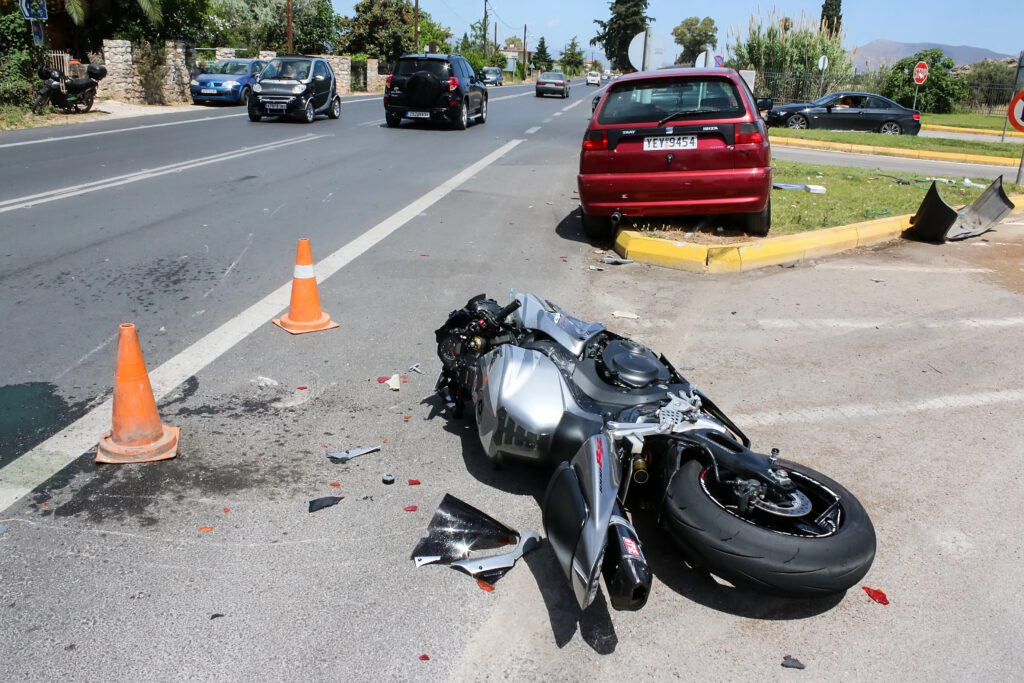
Can you sue after a motorcycle accident without having a valid motorcycle license?
Yes, a motorcyclist riding without the appropriate license can still pursue a personal injury claim if another person’s negligence caused the accident. In New York, a Class M or MJ license is generally required to operate a motorcycle (subject to the relevant learner permit rules). Riding without the required license will, of course, result in traffic or licensing penalties, but it does not establish that the rider caused the collision. A driver who runs a red light, fails to yield, or makes an unsafe lane change may still cause the accident. The motorcyclist must prove the defendant’s negligence, causation, and damages. The attorney would review the accident independently of the licensing issue and determine whether any of the motorcyclist’s conduct contributed to the accident.
Does riding without a motorcycle license automatically make you at fault?
No. Riding without the requisite motorcycle license doesn’t automatically make you liable for an accident. NY law distinguishes between breaching a licensing requirement and causing an accident through negligence. For instance, a lawfully stopped unlicensed rider could be rear-ended by a distracted driver. The rider’s lack of a license would not, by itself, have caused or contributed to the collision. The defense could still argue that the rider’s lack of training and experience led to some form of unsafe driving (e.g., inappropriate braking, inappropriate turning, etc.). Whether that argument is any good will turn on the evidence. The attorney has to look at the actual driving, the traffic laws, the witnesses, the CCTV and the circumstances of the accident rather than accept the insurer’s assumption that an unlicensed rider must be at fault.
What motorcycle license is required in New York?
NY generally requires a Class M license for adult motorcycle operators or a Class MJ license for qualifying junior operators. A person with a standard car driver’s license is not automatically entitled to operate a motorcycle. NY allows motorcycle learner permits (subject to restrictions and supervision requirements), and the applicable rules vary by the operator’s age, license classification, and permit status. Operating outside of those rules may lead to traffic or licensing consequences. The lack of the appropriate license classification does not, by itself, lead to civil liability in the event of an accident. If another driver is negligent and causes a collision, then the rider may still have a claim. An attorney would need to review the precise license or permit status and assess whether any breach of the rules causally contributed to the accident.
Can you sue if you had a driver’s license but no motorcycle endorsement?
Yes. A driver with a valid automobile license (i.e., a Class D) but without the required motorcycle authorization may still be able to recover if another party’s negligence caused the accident. A standard Class D license doesn’t generally permit you to ride a motorcycle in New York. Lacking a motorcycle endorsement or Class M authorization may be a licensing violation, but it doesn’t necessarily mean the driver was negligent in causing the accident. For instance, a driver who makes a left turn straight into the path of an oncoming motorcycle may be at fault. The defense could try to link the licensing violation to the driver’s ability to operate the motorcycle safely, but that would depend on the specific circumstances. An attorney would have to draw the line between the licensing violation and the actual acts which led to the collision.
Can You Sue if Your Motorcycle License Was Expired?
Yes. An expired motorcycle license does not, by itself, preclude a claim for negligence on the part of the injured rider. It may be a licensing offense, but the issue of negligence remains. A motorcyclist whose license has expired just before the collision may have extensive riding experience and may have been riding carefully when another vehicle hit the motorcycle. The rider’s conduct must still be assessed objectively, and the expired license should not be irrelevant. The insurer may consider whether the expired license affects any policy provisions or cover. An attorney would review the rider’s license history, the circumstances of the collision, and the relevant policy. The rider should not assume an expired license automatically bars them from getting compensation.
Can You Sue if Your Motorcycle License Was Suspended or Revoked?
A motorcyclist whose license was suspended or revoked may still have a negligence claim against another driver who caused an accident. However, operating while suspended or revoked can carry significant traffic or criminal consequences, depending on the circumstances. The licensing violation must be distinguished from the cause of the collision. For example, a driver who runs a stop sign and strikes a motorcycle may still be negligent even though the motorcyclist was not legally authorized to operate. The defense may nevertheless investigate whether the rider’s conduct contributed to the accident and whether the licensing status affects applicable insurance coverage. An attorney should evaluate these issues carefully and separately. The rider’s legal right to pursue damages depends on negligence, causation, and other applicable rules, not solely on a suspended license.
Can You Sue if You Were Riding With a Motorcycle Learner Permit?
Yes. A motorcyclist on a learner permit can pursue compensation if another person’s negligence caused the accident. New York has certain restrictions on learner permit holders for motorcycles, along with associated supervision requirements. Violating those restrictions may lead to licensing consequences, and the violation may be relevant if it contributed to the collision. For instance, the defense could look at whether there was a lack of required supervision or whether the rider had performed an unsafe maneuver as a result of inexperience. A permit violation does not, however, necessarily mean the other driver’s negligence is irrelevant. A driver who fails to yield or runs a red light may still be at fault. An attorney would need to review the permit conditions, the rider’s actions, and the evidence of how the collision occurred.
Can an unlicensed motorcyclist recover compensation for medical bills?
Yes, an unlicensed motorcyclist can seek compensation for medical expenses resulting from an accident caused by another party’s negligence. Recoverable medical expenses would include the types you’d normally see in an accident situation (e.g., emergency treatment, hospitalization, surgery, X-rays, physio, medication, and so on), as well as expenses reasonably established as necessary for future care. New York’s ordinary No-Fault Personal Injury Protection benefits generally do not cover the rider, regardless of whether they hold a motorcycle license. The rider will therefore rely on their private health insurance, Medicare, Medicaid, or any applicable optional medical payments coverage to cover the costs initially. A successful negligence claim may ultimately provide compensation for the medically recoverable expenses. The insurer may dispute liability or raise coverage issues, but the rider’s unlicensed status does not establish that they caused the accident. An attorney would have to look at liability, coverage, and medical expenses in isolation.
Can an unlicensed motorcyclist recover pain and suffering?
Yes. A licensed operator who does not have a valid license can recover for pain and suffering when another’s negligence caused the accident. The pain and suffering damages that may be recoverable include physical pain, the emotional consequences of the injuries, disfigurement, permanent physical limitations, and loss of enjoyment of life. A motorcyclist generally will not be required to meet the NY Insurance Law Article 51 “serious injury” threshold in the pursuit of a negligence claim based upon the motorcyclist’s own occupancy of the motorcycle. The motorcyclist still must prove liability, causation, and damages. The defense may argue that the motorcyclist’s negligent conduct contributed to the collision, which would reduce recovery under comparative negligence principles. An attorney would investigate the accident, obtain medical evidence, and determine whether the lack of a license contributed to the injuries.
Can you recover lost wages if you were riding without a license?
Yes, an injured motorcyclist can claim lost earnings when another’s negligence caused the injury. The rider’s lack of a valid motorcycle license won’t, by itself, bar a loss-of-earnings claim. The rider must prove the amount of earnings they have actually lost as a result of the injury. That could be evidenced by employer records, pay statements, tax returns and medical records showing the extent of the work restrictions. A self-employed rider would need their own business records to prove the loss of income. If the injury has resulted in a permanent inability to work, the claim may be for a loss of future earning capacity, supported by appropriate medical and vocational evidence. An attorney would, of course, have to separate the loss of earnings due to the injury from any other consequences of the lack of a license.
Does an unlicensed motorcyclist have to prove a serious injury?
Motorcycle operators generally don’t have to meet New York’s Insurance Law Article 51 serious injury threshold to recover pain and suffering damages in a negligence claim arising out of their motorcycle occupancy. That is true even if the operator did not have the required motorcycle license. Motorcycles are not included in the relevant statutory definition of “motor vehicle” and motorcycle occupants are generally not entitled to the ordinary No-Fault benefits. The absence of a serious injury threshold does not mean the claimant is not required to prove the other party was negligent and that their injuries resulted from that negligence. A licensing violation may still be relevant to comparative fault if it is causally connected to the collision. An attorney would have to review the law, the accident evidence, and the medical records before they could say whether there was any potential claim.
Can you sue if your motorcycle wasn’t registered?
Yes. A motorcyclist who is injured whilst riding an unregistered motorcycle can still go ahead and bring a claim in negligence against another party who caused the accident. New York generally requires that any motorcycle used on a public highway be properly registered. An unregistered motorcycle will, of course, result in some form of traffic or administrative penalty, but it doesn’t, by itself, mean the rider caused the collision. For instance, a rider on an unregistered motorcycle may be hit by a driver who runs a red light or makes a dangerous left turn. The motorcycle’s unregistered status does not explain why the other driver failed to follow the rules of the road. Other issues may arise from the rider’s insurance status and the facts of the accident. An attorney would need to review the collision, determine whether the motorcycle’s unregistered status contributed to the accident, and assess the available insurance coverage.
Does an expired motorcycle registration stop you from suing?
No, an expired motorcycle registration does not, by itself, bar an injured rider from making a claim. The registration question is whether the motorcycle was properly authorized to be on the road. The civil liability issue is separate and concerns the driver’s negligence in causing the collision. A driver who runs a motorcycle from behind may still be liable even if the motorcycle’s registration has expired. The rider will, of course, be subject to the relevant traffic penalties, and the insurer will review the registration and cover history. A solicitor would consider whether the motorcycle was insured, whether any policy exclusions or conditions were triggered, and whether the registration issue in any way affected the accident. The claim would be judged on the facts of the case, not on the assumption that an expired registration automatically precludes a claim.
What if the motorcycle was registered in someone else’s name?
A motorcyclist can still pursue a negligence claim even if the motorcycle is registered in somebody else’s name. Borrowed bikes are the norm. The bike being registered in another person’s name doesn’t preclude the operator from being liable in a collision. That said, ownership, permission to operate, and insurance are all potentially relevant. Under New York VTL § 388 a qualifying vehicle owner can be held liable for negligence arising out of permissive operation where the statutory requirements are met. The owner’s policy may also be relevant to coverage if another driver was at fault in the accident; that is a separate issue. An attorney would have to review ownership, registration, permission to operate, the insurance policies, and the actions of all drivers before they could say what claims were available.
Can You Sue if You Were Riding a Borrowed Motorcycle Without the Proper License?
Yes. A rider injured while operating a borrowed motorcycle without the required license may have a claim against another negligent driver. However, the circumstances can raise questions concerning permission, the motorcycle owner’s conduct, and insurance coverage. A person who lends a motorcycle to an unlicensed operator may face separate liability issues when the applicable legal requirements are satisfied, and the entrustment contributed to the accident. The absence of a license does not automatically establish negligent entrustment or prove that the rider caused the collision. The investigation should examine the rider’s experience, the owner’s knowledge, the terms of permission, and the other driver’s actions. An attorney should also review the motorcycle’s insurance policy and any potentially applicable exclusions or coverage limitations.
Can a Motorcycle Owner Be Liable for Letting an Unlicensed Person Ride?
A motorcycle owner may face liability in certain circumstances when allowing an unlicensed person to operate the motorcycle contributes to an accident. A negligent entrustment claim may arise when the owner knew or should have known that the operator was unfit or incompetent to ride and the entrustment caused injuries. However, the absence of a motorcycle license alone does not automatically establish every element of negligent entrustment. Can you sue if your motorcycle license was expired? establish every element of negligent entrustment. New York Vehicle and Traffic Law § 388 may also impose owner liability for negligence arising from permissive operation when its requirements are satisfied. The legal analysis depends on the owner’s knowledge, the rider’s ability, the circumstances of permission, and the cause of the collision. An attorney should evaluate these issues separately from any claim against another negligent driver.
Can You Sue if the Motorcycle Had No License Plate?
A motorcyclist riding without a license plate can still seek compensation if another person’s negligence caused the accident. Not having a plate may breach registration or display requirements, but that alone doesn’t mean the motorcyclist caused the collision. The defense could consider whether the bike was properly registered and insured, but that’s a different issue from whether the other driver failed to yield or obey a traffic signal. In a hit-and-run, the lack of a plate may make it harder to identify the driver and establish insurance. The solicitor would need to obtain proof of ownership, registration records, insurance records, photographs, the police report, etc. The rider’s right to pursue a claim will be determined by the evidence of fault and damage, not by whether a plate was on the bike.
Can You Sue if the Motorcycle Was Not Insured?
A motorcyclist riding an uninsured motorcycle may still have a negligence claim against the driver who caused the collision. However, riding an uninsured motorcycle will have significant legal and financial implications and will likely severely restrict the sources of compensation available to them. They will generally have no recourse under any non-existent motorcycle liability or uninsured motorist coverage. Other coverages may or may not apply depending on the terms of those policies, the statutory requirements, and the rider’s insured status. The absence of motorcycle insurance does not preclude the other driver from being negligent; it may just make it very difficult to get compensation. An attorney would review the other driver’s insurance, any other potentially liable vehicle owners or employers, and any other applicable coverages. The rider should not assume that their household auto policy will cover an accident involving an uninsured motorcycle.
Will the other driver’s insurance company deny your claim simply because you were unlicensed?
An insurer might try to use the fact that a motorcyclist was unlicensed to challenge liability or reduce the proposed settlement. That said, not having a valid motorcycle license doesn’t mean the rider caused the accident. The insurer will have to look at the facts of the case and consider the conduct of its insured driver, as well as any relevant conduct by the motorcyclist. For instance, a driver who makes an unsafe left turn may still be at fault even if the motorcycle operator was not in fact licensed. The insurer may also consider the rider’s inexperience. The insurer will need to establish what actually happened through the evidence. That evidence will include any available CCTV, witness statements, police reports, etc. The claim will be assessed on negligence and causation, not on the assumption that an unlicensed rider has no rights at all.
Can your own motorcycle insurance company deny you cover simply because you were unlicensed?
The impact of operating without the required motorcycle license will vary depending on the specific insurance policy, New York insurance law, and the facts of the claim. The insurer may review your license status and raise a defense to coverage, but the policy is not necessarily void in all circumstances. The extent of coverage may vary from policy to policy with respect to bodily injury liability, collision, medical payments, and uninsured/underinsured motorist benefits. The insurer’s obligations may also be dictated by statute and by the difference between coverage owed to a third party and the benefits the operator seeks. An attorney would need to review the full policy, the endorsements, the application, and the insurer’s stated basis for any denial. A rider should not accept a blanket assertion of no coverage without reviewing the full contractual and statutory basis.
Can you make an uninsured motorist claim without having a motorcycle license?
An injured motorcyclist may be eligible for UIM (uninsured motorist) benefits if an uninsured or qualifying unidentified driver caused the accident, and the rider is an insured person under a policy. That said, whether the benefits are available depends on the specific policy, statutory requirements, the status of the motorcycle’s insurance, and the facts of the case. The lack of a motorcycle license won’t necessarily settle the matter; the insurer may still consider it. A hit-and-run claim may well involve actual physical contact, a police report, and the requirement to give notice promptly. The rider should not assume that UIM benefits under a separate automobile or household policy will automatically be available. An attorney should review the relevant policies and determine whether coverage exists before making a claim or responding to a denial.
Can you make an underinsured motorist claim if you were unlicensed?
A motorcyclist without a valid license may still access additional uninsured/underinsured motorist (SUM) benefits if the policy and statutory requirements are met. The rider’s own insured status, the motorcycle coverage, the applicable limits, and the facts of the situation will all have to be considered. NY SUM coverage is subject to specific notice, consent to settlement, and other requirements. The insurer may also have questions about the operator’s license status or the motorcycle’s insurance. An attorney should review the full policy and relevant endorsements before concluding whether coverage is available. The rider should be careful about settling with the insurer of the at-fault driver before assessing their own SUM rights, as an improperly settled claim could affect any other coverage.
Can you sue if another driver ran a red light whilst you were unlicensed?
Yes, a motorcyclist without a license can sue a driver who ran a red light and caused the collision in terms of a negligence claim. Traffic signals create duties regardless of whether the motorcycle operator has a license. A driver who runs a red light may be negligent where that is the cause of the accident. The defense, of course, can consider whether the motorcyclist was speeding, entered the intersection improperly, or otherwise contributed to the collision. The fact that the motorcycle operator was without a license does not automatically establish any of those points. The solicitor would need to obtain the police report, witness statements, any CCTV, the traffic signal information, and photographs of the junction. The evidence would be needed to establish how the collision occurred and whether the lack of a license contributed to the injuries.
Can you sue if a car turns left in front of your unlicensed motorcycle?
Yes. An unlicensed motorcyclist could have a claim against a driver who negligently turned left into the motorcycle’s path. NYVTL § 1141 generally requires a driver making a left turn to yield to any vehicle approaching the intersection or close enough to be an immediate hazard. The driver’s duty to yield does not end simply because the approaching vehicle was an unlicensed motorcycle. The rider’s speed, the traffic signal, and the rider’s actions may all be relevant to comparative fault. In a case like this, an attorney would look at the evidence of the collision, including any available surveillance video, witness statements, the damage to the vehicles, and accident reconstruction, if appropriate, to determine whether or not the turning driver failed to yield and thereby caused the injuries. The rider’s lack of a license would not, by itself, be a basis for a finding of no liability.
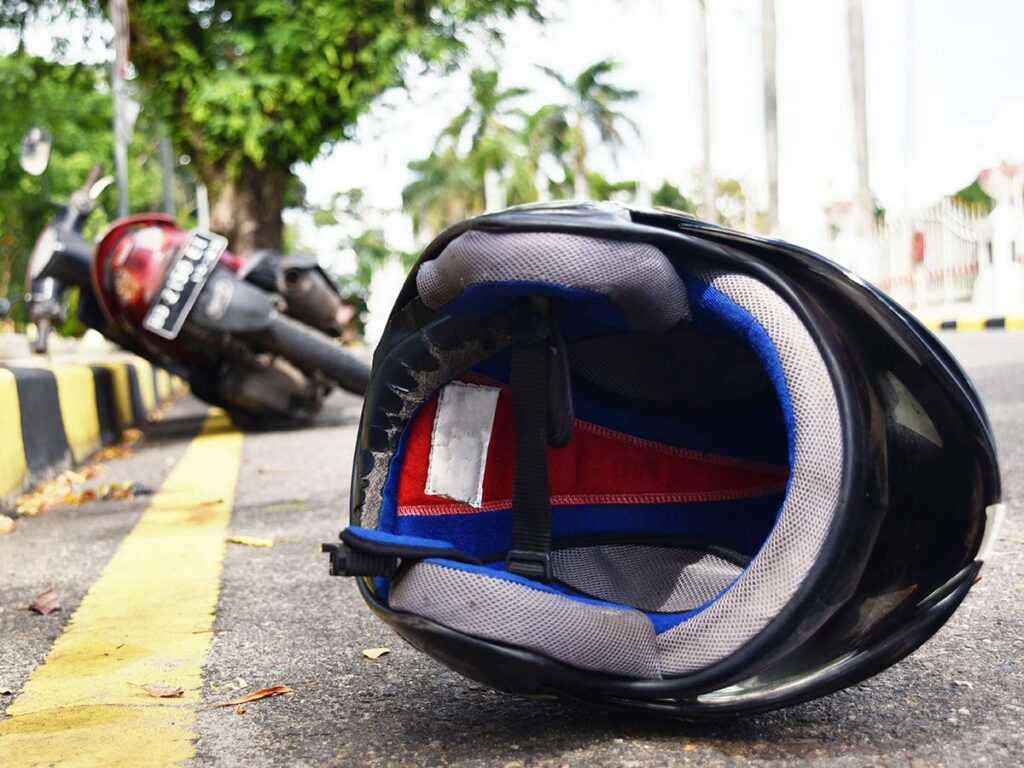
Can You Sue if a Driver Hit Your Unregistered Motorcycle From Behind?
Yes, a motorcyclist riding an unregistered motorcycle can bring a claim against a driver who struck the motorcycle from behind. A rear-end collision can result from following too closely, the other driver being distracted, going too fast, or failing to keep a safe distance. The fact that the motorcycle was unregistered is unlikely to be the reason why the other driver failed to stop in time. The defense could, however, examine whether the motorcycle’s brake lights were working, whether the rider suddenly stopped, or whether some other factor was at play. That will be a matter of evidence rather than speculation. An attorney would need to go to the scene of the accident and look at the damage to the vehicles, any CCTV, any witness statements, and the condition of the motorcycle. The unregistered motorcycle will, of course, be subject to a penalty in itself, but that won’t necessarily preclude a negligence claim.
What if the Unlicensed Motorcyclist Was Also Speeding?
Speeding may affect an injured motorcyclist’s recovery when excessive speed contributed to the accident. For example, a driver may make an unsafe left turn while the motorcycle approaches at a speed that reduces the rider’s ability to avoid the collision. The rider’s lack of a valid motorcycle license and excessive speed are distinct issues. The licensing violation does not automatically establish negligence in causing the crash, while proven speeding may be relevant to causation and comparative fault. Under New York’s ordinary comparative negligence framework applicable to motorcycle negligence claims outside Insurance Law Article 51, the rider’s legally established share of responsibility generally reduces otherwise recoverable damages. An attorney should investigate the motorcycle’s actual speed, roadway conditions, traffic controls, and the other driver’s actions before evaluating fault.
Can You Sue if You Were Lane Splitting Without a Motorcycle License?
Yes. A motorcyclist who lane-splits without the required license may still pursue compensation when another person’s negligence contributed to the collision. However, the licensing violation and the lane-splitting conduct may also be relevant to the defense. New York Vehicle and Traffic Law § 1252(c) prohibits operating a motorcycle between lanes of traffic or adjacent lines or rows of vehicles. A driver who makes an unsafe lane change or opens a vehicle door without exercising reasonable care may also be negligent. The rider’s lane splitting may contribute to comparative fault when it caused or contributed to the collision. An attorney should examine the motorcycle’s position, speed, traffic conditions, and the other driver’s actions. The rider’s claim is not automatically barred simply because multiple traffic violations occurred.
Does Comparative Negligence Apply to Unlicensed Motorcycle Riders?
Yes. New York’s ordinary comparative negligence principles generally apply to motorcycle accident negligence claims outside the No-Fault framework. Under CPLR § 1411, an injured person’s legally established culpable conduct generally reduces damages in proportion to that person’s share of fault rather than automatically barring recovery. For example, if a motorcyclist’s total legally recoverable damages are $200,000 and the rider is found 25 percent responsible, the damages attributable to the other party would generally be $150,000, before considering insurance limits and other applicable rules. However, the rider’s lack of a license does not automatically establish a percentage of fault. The defense must identify legally relevant conduct connected to the accident. An attorney should distinguish administrative violations from negligent actions that actually contributed to the collision.
Can an Unlicensed Motorcycle Rider Recover Compensation if the Other Driver Was Mostly at Fault?
Yes. A motorcyclist may recover compensation when another driver was primarily responsible for the accident, even if the rider also engaged in legally culpable conduct. New York follows a pure comparative negligence system for ordinary negligence claims, meaning recovery generally is not automatically barred merely because the injured person shares fault. The amount of damages may be reduced according to the rider’s established percentage of responsibility. For example, if a driver failed to yield and the motorcycle operator was also speeding, the evidence may support allocating fault between them. The rider’s lack of a license is not itself a substitute for proving negligent operation or causation. An attorney should investigate both parties’ actions, preserve objective evidence, and evaluate whether the defense’s proposed allocation is supported.
What if the Police Officer Issued You a Ticket for Riding Without a License?
A traffic ticket for operating without the required motorcycle license does not automatically establish that the rider caused the accident or eliminate a personal injury claim. The ticket may document a licensing violation, but civil liability depends on the negligent conduct that caused the collision. A rider may receive a citation after being struck by a driver who ran a red light or failed to yield. However, the legal effect of the ticket, any plea, and the outcome of related proceedings should be evaluated carefully. Statements made during traffic proceedings may have consequences in later litigation. An attorney should review the summons, police report, accident evidence, and applicable law. The rider should provide accurate information and obtain appropriate legal guidance before assuming that the citation determines the personal injury case.
Does a Traffic Violation Automatically Establish Negligence in New York?
A violation of an applicable New York statute may constitute negligence under established New York law when the relevant requirements are satisfied. However, the violation must still be causally connected to the injury. The legal effect may differ for statutes, regulations, and other rules. For example, a driver’s violation of a traffic signal requirement may be directly related to an intersection collision. By contrast, the absence of a valid motorcycle license may have no causal relationship to a rear-end collision caused by another driver’s distraction. Even when a statutory violation establishes negligence, the injured person must prove that the violation was a proximate cause of the accident and damages. An attorney should evaluate the statute’s purpose, the conduct involved, and the evidence of causation rather than treating every traffic violation as automatic responsibility for the collision.
Can an Unlicensed Motorcyclist Sue a Truck or Bus Driver?
Yes. A motorcyclist without the required license may pursue compensation if a negligent truck or bus driver caused an accident. Commercial vehicle operators must exercise reasonable care when turning, changing lanes, stopping, and operating near motorcycles. A truck or bus driver may cause a collision by failing to observe a motorcycle in a blind spot, making an unsafe turn, or failing to yield. The motorcycle operator’s licensing status does not eliminate these duties. However, the rider’s actual conduct may affect comparative fault. Claims involving commercial vehicles may also require investigation of employers, vehicle owners, maintenance records, and insurance coverage. If the accident involves a public bus or governmental entity, special notice and filing deadlines may apply. An attorney should promptly identify the correct defendants and preserve relevant evidence.
Can an Unlicensed Motorcyclist Sue New York City for a Road Defect?
An unlicensed motorcyclist may have a claim against New York City or another legally responsible party when a dangerous roadway condition caused the accident, and the applicable legal requirements are satisfied. However, claims involving potholes and roadway defects are particularly difficult because New York City generally requires prior written notice under Administrative Code § 7-201(c)(2), unless a recognized exception applies. A contractor that negligently creates a dangerous condition through construction or repair may face liability under different principles. The rider’s licensing status does not automatically eliminate a roadway defect claim, but the rider’s conduct may become relevant if it contributed to the crash. Municipal claims may require a Notice of Claim within 90 days and compliance with shortened lawsuit deadlines. Photographs, exact location information, and repair records are critical.
Can a Motorcycle Passenger Sue if the Operator Was Unlicensed?
Yes. A motorcycle passenger injured because of negligent riding may have a claim against the motorcycle operator even when the operator lacked the required license. The passenger may also pursue compensation from another negligent driver or other legally responsible parties. The operator’s licensing violation does not automatically establish that the operator caused the collision, but the rider’s conduct and competence may be relevant. The passenger generally does not control steering, braking, or acceleration, and the passenger is not automatically liable for the operator’s negligence merely because they were riding together. However, the passenger’s own conduct may be evaluated when legally relevant. An attorney should investigate liability, vehicle ownership, available insurance coverage, and any potential conflicts of interest between the operator and passenger.
Can Families File a Wrongful Death Claim if the Motorcyclist Was Unlicensed?
Yes. When a motorcyclist dies because of another person’s negligence, the appropriate personal representative may pursue a wrongful death claim even if the rider lacked the required motorcycle license. The licensing violation does not automatically establish that the rider caused the fatal accident. However, any legally relevant conduct by the deceased rider may affect comparative fault and the available recovery. New York wrongful death damages generally concern legally recognized pecuniary losses suffered by qualifying distributees, while a separate survival claim may address certain damages sustained before death. Wrongful death actions generally must be commenced within two years of death, subject to applicable statutory requirements and exceptions. An attorney should investigate the accident, identify responsible parties, evaluate insurance coverage, and preserve evidence before concluding that the licensing violation affects the claim.
What Evidence Can Help an Unlicensed Motorcyclist Prove the Other Driver Was at Fault?
Important evidence may include surveillance footage, dashcam recordings, witness statements, police reports, photographs, vehicle damage, roadway markings, and traffic signal information. The goal is to establish how the collision occurred rather than letting the case focus exclusively on the rider’s licensing status. For example, video may show that another driver ran a red light or made an unsafe turn. Witnesses may confirm that the motorcycle was traveling normally before being struck. Accident reconstruction may help determine speed, impact location, and the actions of the involved drivers. Medical records establish the injuries, while insurance documents identify potential sources of compensation. An attorney should preserve evidence promptly because surveillance footage may be overwritten and witnesses may become difficult to locate. A licensing violation should not replace a thorough accident investigation.
What Should You Do After a Motorcycle Accident if You Were Unlicensed?
An injured motorcyclist should prioritize medical treatment, report the collision as required, and preserve available evidence. When safely possible, take photographs of the scene, vehicles, roadway, and visible injuries. The rider should identify witnesses and retain medical records, insurance documents, and any traffic citations. Provide accurate information to police, medical providers, and insurers; the rider should not make false statements about licensing, registration, or insurance status. Because the accident may involve both civil liability and separate traffic or criminal issues, prompt legal advice may be important. An attorney can investigate the collision, review the applicable insurance policies, and explain how the licensing or registration violation may affect the claim. The rider should not assume that being unlicensed eliminates the right to seek compensation.
How Long Does an Unlicensed Motorcyclist Have to File a Lawsuit in New York?
Most negligence-based motorcycle accident personal injury lawsuits against private defendants in New York must be commenced within three years under CPLR § 214(5). The rider’s licensing or registration status does not generally change that ordinary limitations period. However, shorter deadlines may apply when the accident involves New York City, a public transportation authority, or another governmental entity. Certain municipal claims require a Notice of Claim within 90 days and commencement of the lawsuit within one year and 90 days, subject to applicable requirements and exceptions. Wrongful death actions generally must be commenced within two years of death. Insurance claims may also involve separate notice requirements. An attorney should determine the correct deadlines promptly because waiting may result in lost surveillance footage, unavailable witnesses, and other evidentiary problems.
Can You Still Recover Compensation if the Motorcycle Accident Was Partly Your Fault?
Yes. New York’s ordinary comparative negligence principles generally allow an injured motorcyclist to recover compensation when another person’s negligence contributed to the accident, even if the rider also bears some responsibility. The rider’s legally established percentage of fault generally reduces otherwise recoverable damages. However, a licensing or registration violation does not automatically determine comparative fault. The defense must establish legally relevant conduct and causation. For example, speeding may contribute to a collision, while an expired registration may have no connection to how the accident occurred. An attorney should evaluate the evidence concerning each party’s actions, including traffic violations, witness statements, surveillance footage, and accident reconstruction. The goal is to determine responsibility based on the actual collision, not unsupported assumptions about the motorcyclist.
How Can a New York City Motorcycle Accident Lawyer Help an Unlicensed Rider?
A New York City motorcycle accident lawyer can investigate the collision, distinguish licensing and registration violations from actual accident causation, and identify potentially responsible parties. The attorney may obtain surveillance footage, interview witnesses, review police reports, and examine vehicle damage. Counsel can also evaluate whether the rider’s conduct supports any comparative-fault allegations and whether the insurer’s position is consistent with the evidence. Because motorcycle occupants generally do not receive ordinary No-Fault benefits, the attorney should also investigate available medical payment options and liability insurance. When licensing or registration status creates coverage questions, the attorney can review the relevant policies and applicable law. Early legal representation may help preserve evidence, protect filing deadlines, and prevent an insurer from treating an administrative violation as an automatic defense to negligence.
Why Choose Greenstein & Pittari, LLP?
Motorcycle accident claims can become especially challenging when the rider lacked the required license, endorsement, registration, or insurance. Insurance companies may try to shift responsibility to the injured motorcyclist without adequately investigating the other driver’s negligent conduct. A licensing violation may be used to argue that the rider should not recover compensation, even when another driver ran a red light, failed to yield, or caused a rear-end collision. At Greenstein & Pittari, LLP, our attorneys understand the importance of separating traffic violations from the accident’s actual cause.
Our firm brings decades of experience representing injured New Yorkers in serious personal injury cases. We thoroughly investigate motorcycle collisions, preserve available surveillance footage, obtain witness statements, review police reports, and evaluate the medical consequences of serious injuries. When necessary, we work with qualified experts to address disputed liability, accident reconstruction, permanent disability, future medical needs, and lost earning capacity. Our attorneys prepare cases with an emphasis on detailed evidence, aggressive negotiation, and trial readiness when insurance companies refuse to resolve claims fairly.
We believe that injured clients deserve responsive communication, aggressive representation, and personal attention. Greenstein & Pittari, LLP serves motorcycle accident victims throughout Manhattan, Brooklyn, Queens, the Bronx, Staten Island, Long Island, and Westchester County. Our English- and Spanish-speaking staff help make legal representation accessible, and clients can communicate with our team by phone, text, email, or through our secure client portal. We are committed to treating clients with respect, providing proactive updates, and making sure they understand the progress of their cases.
If you were injured in a motorcycle accident and are concerned that an expired license, missing motorcycle endorsement, suspended license, or registration violation may affect your claim, do not assume that you have no legal options. Our attorneys can investigate the collision, evaluate available insurance coverage, identify responsible parties, and explain your right to pursue compensation.
Call Greenstein & Pittari, LLP at 1-800-VICTIM2 (1-800-842-8462) for a free consultation, available 24/7.
Our Fee Guarantee: No Fee Unless Successful.
Don’t Be a Victim Twice.