


Who is responsible for a motorcycle accident caused by defective brakes, tires, or repairs in New York?
A motorcyclist relies entirely on their brakes, tires, steering, and other mechanical components to stay safe on the streets of New York City. If one of those key components fails, the outcome can be catastrophic. You can have a motorcycle completely lose its brakes as you approach an intersection, a tire blow out on the highway, or a bike go completely unstable because of a bad replacement part. Unlike the occupants of a passenger vehicle, a motorcyclist has absolutely no physical protection in a crash caused by mechanical failure. The injuries that can result are potentially devastating: traumatic brain injury, spinal cord injury, multiple fractures, severe road rash, permanent scarring, and a host of other potential disabilities.
If the accident was caused by defective motorcycle brakes, tires, parts, or negligent repair, the injured rider may have a claim against the manufacturer, the repairer, the parts supplier, or another party legally responsible. This is a different type of case from the normal motorcycle accident as the cause may be a dangerous product or a dangerous mechanical condition rather than the conduct of another driver. In some cases, the manufacturer may be at fault. The repairer may be at fault in others (e.g. by fitting the brakes incorrectly, failing to properly tighten a critical fastener, returning the bike to the road in a dangerous condition etc). Establishing liability will involve identifying the precise failure, keeping the bike and then determining whether the failure was due to a product defect, a negligent repair, a failure to maintain the bike or some other cause.
At Greenstein & Pittari, LLP we are New York City motorcycle accident lawyers who look at serious motorcycle accidents involving defective products, negligent repairs and dangerous mechanical failures. We know how important it is to preserve the motorcycle, to go through the maintenance records, to identify the companies that may be at fault and to bring in the appropriate experts when there is a dispute as to the technical aspects. We represent injured motorcyclists throughout Manhattan, Brooklyn, Queens, the Bronx, Staten Island, Long Island and Westchester County. If you think your accident was caused by defective brakes, defective tires or improper repairs then call 1-800-VICTIM2 (1-800-842-8462) for a free consultation. Don’t Be a Victim Twice.
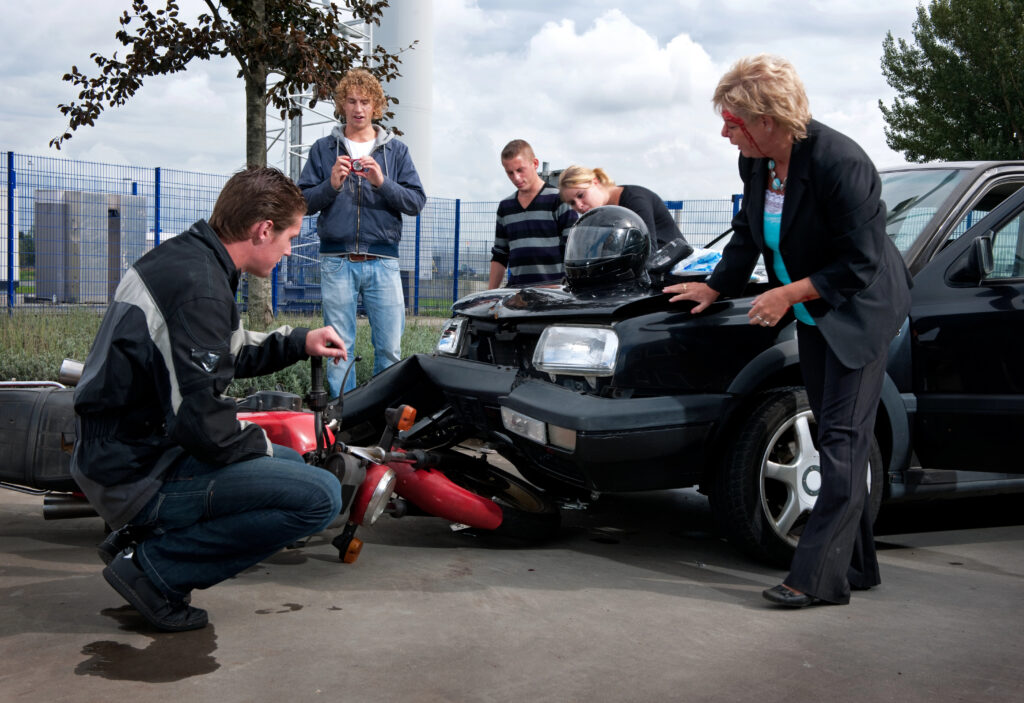
Can you sue if a mechanical failure caused your motorcycle accident?
Yes, a motorcyclist who is injured as a result of a mechanical failure can pursue a personal injury claim if the failure was due to a legally actionable product defect, a failure to repair or a failure to maintain by another party. A brake component for instance could have been defective when it was made, a replacement tyre could have been incorrectly fitted or a repairer could have failed to secure a vital component. The simple fact that a motorcycle has failed mechanically does not in itself establish that another party is at fault. A mechanical failure can also be the result of normal wear and tear, insufficient maintenance, misuse or damage which occurs after the motorcycle has been sold or serviced. An attorney will need to look at the condition of the motorcycle, its repair history, the specifications of the components and the circumstances of the accident. An expert may be required to establish what failed, why it failed and whether it was the cause of the collision and the resulting injuries.
Who can be held responsible in the event of a defective motorcycle accident?
Potentially responsible parties could be the motorcycle manufacturer, the component manufacturer, the distributor, the seller, the repair shop, the maintenance contractor or indeed any other party whose legally actionable conduct was a cause of the accident. A manufacturer could be held to product liability if a defective component rendered the motorcycle unsafe. A repair shop could be liable on the grounds of negligent workmanship (e.g. brakes not properly fitted, a wheel not properly secured). A parts supplier or seller could also be a party under product liability principles. For example, a brake component could have been defective when it was made, a replacement tire could have been fitted incorrectly, and the evidence. Not every business that was involved in the distribution or repair of the motorcycle will necessarily be liable. An attorney will need to establish what the defective component was, at what stage of the process (manufacturing, design, warnings, installation, maintenance) the defect arose, and then assess each party’s connection to the defect.
What is the difference between a defective motorcycle part and a negligent repair?
A bad motorcycle part is generally a problem with the part itself (i.e. a manufacturing defect, an unsafe design, an inadequate warning). A negligent repair is when a mechanic or service provider fails to act with reasonable care while inspecting, maintaining, installing, or repairing the motorcycle. For instance, a brake caliper could fail because of a manufacturing defect, or a perfectly good caliper could become dangerous because a mechanic installed it negligently. The distinction matters because the claims, defendants, and required evidence will differ. A product liability case will generally require a technical analysis of the component and its condition at the time it left the factory. A repair negligence case will tend to be one of service records, manufacturer’s specifications, workmanship and the accepted practice of the trade. There are of course instances where both theories will be involved, particularly where a defective part is in fact installed as part of a repair.
Can you sue a motorcycle manufacturer for defective brakes?
Yes, a motorcycle manufacturer can be held liable for product liability where defective brakes have led to an accident and the requisite legal elements have been established. The braking system on a motorcycle is a complex array of components (brake lines, master cylinder, calipers, rotors, pads and electronic systems on some models) and a fault in any one of those components can lead to a reduction in braking performance or to complete brake failure. It is not enough simply to establish that a brake failure occurred. The inquiry has to establish that the product was defective, that the defect was present at the time it was relevant and that the defect was the cause of the collision. The manufacturer may argue that the failure was due to poor maintenance, modification, wear or incorrect repair. It is of course vital to preserve the motorcycle and the failed components as it may be necessary for an expert to examine them in order to determine whether the fault was in the product or not.
Can you sue if your motorcycle brakes fail after a repair?
Yes, a motorcycle repair shop can be liable where negligent brake work leads to a mechanical failure and subsequent accident. This could be in the form of incorrectly fitted brake pads, loose caliper bolts, incorrectly connected brake lines, contaminated braking components or failure to carry out the requisite safety checks. A brake failure which occurs some time after the service has been carried out doesn’t necessarily mean that the mechanic was at fault. The rider would have to establish that the repair shop had failed to act with reasonable care and that the failure in the brakes was a contributory factor to the accident. The timing of the service, the work carried out, the repair invoices and the state of the brakes at the time of the accident would all be relevant. The full repair records should be obtained and the bike preserved prior to any further work being done as this could alter the evidence. A qualified motorcycle mechanic or engineering expert could be called upon to determine whether the work carried out was in accordance with accepted mechanical practice.
What if a motorcycle repair shop installed the wrong brake parts?
A repair shop can be liable where the installation of an inappropriate or incorrect brake part creates an unsafe condition which leads to a motorcycle accident. Brake systems on motorcycles are designed to work with specific dimensions, materials, hydraulic characteristics and performance. Installing a part that does not match the motorcycle’s design may adversely affect braking power or system reliability. The fact that an after market part has been used doesn’t in itself establish negligence. There are many instances where an after market part will be perfectly suitable provided it is the right part and it is correctly installed. The attorney will need to look at the manufacturer’s specs, the part number, the service records and the mechanical reason for the failure. The component manufacturer or supplier may also require examination if the part itself was defective. Expert opinion may be required to determine whether the wrong part was used, whether it was incorrectly installed, and how the failure ultimately led to the accident.
Can you sue if a motorcycle tyre blows out and causes a crash?
Yes, a motorcyclist injured as a result of a tire blowout may have a claim if the failure was due to a manufacturing defect, a defective design, negligent installation or some other condition which is actionable. Motorcycle tyres are of course absolutely critical to braking, steering and stability. A sudden loss of tyre integrity can lead to a rider losing control, particularly at highway speeds. A blowout however can also be the result of underinflation, overloading, a puncture, excessive wear, improper storage or a road hazard. A blowout in itself will not establish that the tyre manufacturer or installer were at fault. The tyre, wheel and motorcycle should be preserved and an investigation should be carried out into the age of the tyre, its maintenance history, inflation, installation and any physical damage. A tire failure analysis may well assist in establishing whether a defect or negligent service was the cause of the accident.
Can a tyre manufacturer be liable in a motorcycle accident?
A motorbike tyre manufacturer could be exposed to product liability where a defective tyre leads to an accident and the rider is able to establish the requisite elements of the claim. The potential defects could be tread separation, a structural defect, a manufacturing defect or an unsafe design. The manufacturer may put forward the argument that the tyre failed as a result of road damage, incorrect inflation, excessive wear or misuse. As to the actual cause of failure it will often be necessary to look at the tyre in some detail, including its physical condition, production markings, service history and the accident evidence. The rider should of course not throw the tyre away or allow it to be in any way modified prior to inspection. An advocate may be in a position to engage a suitable tyre or mechanical engineering expert to carry out the assessment. The key issue will be whether there was a defect which was of a type recognised by law and whether that defect was the cause of the accident, rather than simply that the tyre failed.
Can a motorcycle shop be liable for improper tyre fitting?
Yes, a motorcycle shop could be found to have been negligent where a crash is the result of improper tire installation. The potential problems could be with the mounting, the seating of the bead, damage during the installation process, incorrect inflation or failure to secure the wheel. The shop could also have fitted a tyre which was not in fact compatible with the motorcycle. However, the fact that a tyre fails after installation does not in itself establish that the work was negligent. The rider would have to show that the shop had failed to exercise reasonable care and that the failure of the tyre had caused or contributed to the accident. The service invoice, the tyre specification, the installation records and the physical state of the wheel and tyre would all be relevant. The rider would of course need to preserve the motorcycle and the relevant parts and obtain the repair shop’s records. Expert opinion may be required to determine whether the installation was in fact carried out properly.
What if a motorcycle wheel comes loose after service?
A motorcycle repair shop can be liable if as a result of negligent service a wheel becomes loose or comes off whilst the bike is in use. The fitting of a wheel involves the correct assembly and secure fitting of a number of key components. A loose axle, a fastener which has not been properly tightened or an incorrectly fitted wheel assembly can all lead to a total loss of control. The inquiry will have to establish why the wheel became loose and whether the condition was the result of negligent workmanship, a defective component, subsequent damage or some other factor. Repair invoices, service records, manufacturer’s specifications and the state of the remainder of the hardware may all be relevant. The bike should be kept in its present state without any unnecessary repairs or disassembly until it can be properly examined by qualified experts. Where the evidence supports it an action may be brought against the repair shop, the component manufacturer or some other party.
Can you sue if a motorcycle steering defect was the cause of the accident?
Yes, a steering defect can form the basis of a product liability or negligence claim where it results in the rider losing control and being injured. The motorcycle’s steering system is reliant on the handlebars, steering bearings, forks, suspension and all the associated bits and pieces. A defect or negligent repair to any of those components can result in instability, unpredictable steering or loss of control. It should be noted though that steering problems can also be the result of collision damage, lack of maintenance, modifications or simply worn out components. The claimant will need to establish that the mechanical problem was the cause of the accident rather than simply being found after the fact. The attorney will need to look at the motorcycle’s maintenance history, previous repairs, the condition of the components and the facts of the accident. An expert may be required to determine whether there was a defect in the steering system or whether it had been improperly serviced.
Can a defective motorcycle suspension lead to a personal injury claim?
Yes, a defective or negligently repaired suspension system can form the basis of a personal injury claim where the failure leads to a motorcycle accident. The suspension is there to keep the bike stable, to maintain tyre contact and to give you control over the ride over uneven surfaces. A failure of the suspension (whether that be the forks, the shocks, the springs or any of the associated hardware) could lead to unpredictable handling or a complete loss of control. That said suspension damage can also be the result of normal wear and tear, a previous accident, inappropriate modifications or simply impacts from the road. The key issue is whether there was a defect or a failure to repair which was both legally actionable and which actually caused the accident. The investigation will have to establish whether there was a defect or a failure to repair prior to the accident and whether that defect or failure to repair was the cause of the accident. Maintenance records, manufacturer’s specs, photographs and expert opinion will all be relevant in determining the state of the suspension at the time of the accident. An attorney will of course need to keep the bike and will need to identify who the various parties were that manufactured, sold, installed or serviced the suspension components in question.
Can you sue if a motorcycle throttle sticks or accelerates unexpectedly?
A motorcyclist who has been injured as a result of a sticking throttle or unexpected acceleration may have a claim if the fault was due to a defective component or to negligent repair. The possible causes could be a cable fault, an electronic control fault, an installation fault or interference from an aftermarket modification. Unexpected acceleration alone will not necessarily give rise to a manufacturing defect. The condition of the motorcycle, the maintenance history, the rider inputs and any modifications will all have to be considered. A repair shop could be liable if the fault was the result of negligent service and a manufacturer could be liable if the product contained a defect which was legally actionable. The motorcycle should be preserved, the service records obtained and any available electronic or diagnostic information gathered. It may be necessary to engage in the use of qualified experts to determine whether the throttle actually failed and whether that failure was the cause of the collision.
Can you sue if a motorcycle engine suddenly stalls in traffic?
A motorcycle engine which unexpectedly stalls can be a real hazard, particularly if the rider is in an intersection or in the middle of a traffic stream. A product liability or negligence claim may arise if the stall and the subsequent collision were the result of a defective part or a negligent repair. The possible causes could be anything from the fuel delivery to the ignition, the electrics or the electronic controls. It could of course also be the result of normal mechanical wear, a lack of fuel, poor maintenance or simply the way the rider was operating the bike. It is essential that the investigation establishes the cause of the failure and its link to the collision. A second driver may also be liable if they failed to take reasonable care of the situation after the bike had stalled/slowed down. The solicitor will need to look at the bike’s mechanical condition, the service history and the actions of any other drivers involved.
Can you sue if a defective motorcycle headlight was a contributing factor to an accident?
Yes, a defective motorcycle headlight could form the basis of a product liability or negligent repair claim where the lighting failure was a contributing factor to the collision. Motorcycles are all about visibility and a headlight failure can make a motorcycle significantly harder for other road users to see, particularly at night or in heavy traffic. A headlight failure does not of itself give rise to a claim however. The inquiry would have to establish whether the light had failed prior to the collision, whether the failure was the cause of the other driver’s actions and whether it was in fact a contributing factor. A negligent driver on the other side may also be to blame for failing to see the motorcycle or for breaching a traffic law. The lighting components would need to be preserved, the maintenance records examined and the conduct of all parties assessed.
Can you sue if a motorcycle’s anti-lock braking system fails?
A faulty motorcycle ABS system could form the basis of a product liability or negligence claim if it can be shown that there was a defect or negligent repair and that this defect/negligence was the cause of the accident. ABS is intended to assist in the management of wheel lockup under certain braking conditions and its performance will vary from bike to bike and from road situation to road situation. A malfunction could result in abnormal braking behaviour or in the generation of a warning light. The presence of an ABS warning light at the time of the collision or the fact that a collision occurred whilst braking does not in itself establish that the system was defective. The appropriate course of action would be to look at the diagnostic records, the manufacturer’s specifications, the service history, the electronic control unit and the physical condition of the brake system. An expert may be required to determine whether the system in fact operated as it should have and whether any failure of the system contributed to the rider’s loss of control.
What is a motorcycle product liability claim?
A motorcycle product liability claim is one seeking compensation for injuries resulting from a legally defective motorcycle or component. Under New York law the various theories of product liability may be: a manufacturing defect, a design defect and a failure to warn. A manufacturing defect generally occurs when the product departs from its intended design. A design defect is a defect in the product design itself which is alleged to be unsafe, and is assessed against the relevant legal standards. A failure to warn claim may arise where there was a failure to provide adequate warnings or instructions as to foreseeable risks. The elements of each of these theories will be different and not every mechanical failure will constitute a defective product. The injured rider will have to establish the defect, the causation of the defect and the damages. The attorney will need to investigate the design of the component, its manufacturing history, its maintenance, any modifications and its condition at the time of the accident. Expert testimony may be necessary in the more complex technical cases.
What is the difference between a manufacturing defect and a design defect?
A manufacturing defect is simply a product that has deviated from its intended design or specifications in some way (i.e. it’s different from a properly manufactured unit). A brake part on a motorcycle may be a good example of a manufacturing defect which would lead to early failure. A design defect is one where the safety of the product as designed is at issue rather than a defect in a particular unit. Under New York law a design defect claim will be based on a risk/utility analysis and other applicable requirements, including whether a feasible safer design was available. The distinction is important as the evidence and the expert analysis will be different. A manufacturing defect investigation will focus on the specific failed component and the production records. A design defect claim may require an analysis of the engineering decisions and the availability of alternative designs. An attorney will have to decide which of the two theories is supported by the evidence before they go any further with the manufacturer.
Can you sue for a motorcycle manufacturer’s failure to warn?
Yes. A manufacturer or other responsible party can be liable where inadequate warnings or instructions as to the product’s foreseeable risks result in injury. A component may require specific installation procedures, specific maintenance intervals and/or specific operating precautions. A failure to warn claim requires more than just the fact that an accident occurred and that a more detailed warning could have been given. The rider must establish a duty to warn, the inadequacy of the warning and a causal link between the failure to warn and the injury. The manufacturer may put forward that the risk was obvious, that sufficient instructions were provided or that a different warning would not have prevented the accident. The owner’s manual, product labels, installation instructions, technical bulletins and any other relevant correspondence should all be reviewed by an attorney. Expert evidence may be required to assess the alleged failure to warn.
Does a motorcycle recall automatically prove the manufacturer is liable?
A motorcycle recall may well be relevant as evidence of a potential safety issue, but it doesn’t in itself establish liability in a personal injury case. A recall may point to a defect or a safety related issue with a particular model or a particular production period. It doesn’t automatically mean that the motorcycle involved in the accident was in any way defective. The injured rider would still have to prove that the motorcycle/component in question was affected by the recall, that the defect in question actually existed and that it was the cause of the accident and the injuries. Some recalls will be for issues which have nothing at all to do with the collision. The manufacturer may also dispute the issue of causation or argue that the motorcycle in question had been modified or was otherwise not in a ‘factory condition’. An attorney would need to look at the recall notice, the VIN, the repair history and the failed component. The recall information may be useful in the course of the investigation, but the claim will still need to meet the product liability elements.
Can you sue if the motorcycle was recalled but never repaired?
A motorcyclist injured in an accident where an unrepaired recalled component was involved may have a claim against the manufacturer or another responsible party where the defect in the recalled component was the cause of the collision. The fact that the recall repair wasn’t carried out may be significant, though. The investigation would look at whether the rider was actually notified of the recall, whether the repair was available to them and whether the rider’s own conduct in any way contributed to the accident or the extent of the injuries. An unrepaired recall doesn’t of itself preclude a product liability claim and doesn’t in any way necessarily mean that the manufacturer is liable. The rider would have to prove the defect and the causation in accordance with the law. An attorney would need to obtain the recall notice, the manufacturer’s correspondence, the service history, and any evidence about the component’s condition. The timing of the recall and the availability of the repair may well be relevant to the analysis.
Can you sue if a motorcycle dealer sells you a defective motorcycle?
A motorcycle dealer could be on the hook for product liability or negligence in the right circumstances where a defective motorcycle is the cause of an accident. Under NY law, a seller in the product chain may be subject to certain product liability theories even if the seller didn’t manufacture the defective part. A dealer could also be liable for negligent repair, negligent inspection or other negligent conduct which is supported by the evidence. Of course the issue of liability will depend on the dealer’s role, the nature of the defect and the applicable law. The dealer may argue that the motorcycle was altered after the sale or that the condition arose from subsequent maintenance or misuse. An attorney would review the sales records, inspection records, repair history, warranty work, and the motorcycle’s condition. The manufacturer and the component supplier could also be potential defendants.
Can you sue if a used motorcycle had a dangerous mechanical defect?
A rider injured because of a mechanical defect in a used motorcycle may have a claim against a legally responsible seller, repair shop, manufacturer, or other party (depending on the circumstances). A used motorcycle can have a complex maintenance history, may have aftermarket bits and pieces, may have had prior collision damage, may have worn components, etc. The mere existence of a dangerous condition doesn’t necessarily create liability for the previous owner or seller. The inquiry will have to establish whether the defect existed at the time in question, whether there was a breach of a legal duty, and whether the defect caused the accident. A dealer who performed negligent repairs will be in a very different position than a private seller. An attorney will need to obtain the purchase documentation, service records, inspection records, and any communications related to the bike’s condition. An expert examination may help determine whether the defect was pre-existing, the result of damage after the sale, or normal wear.
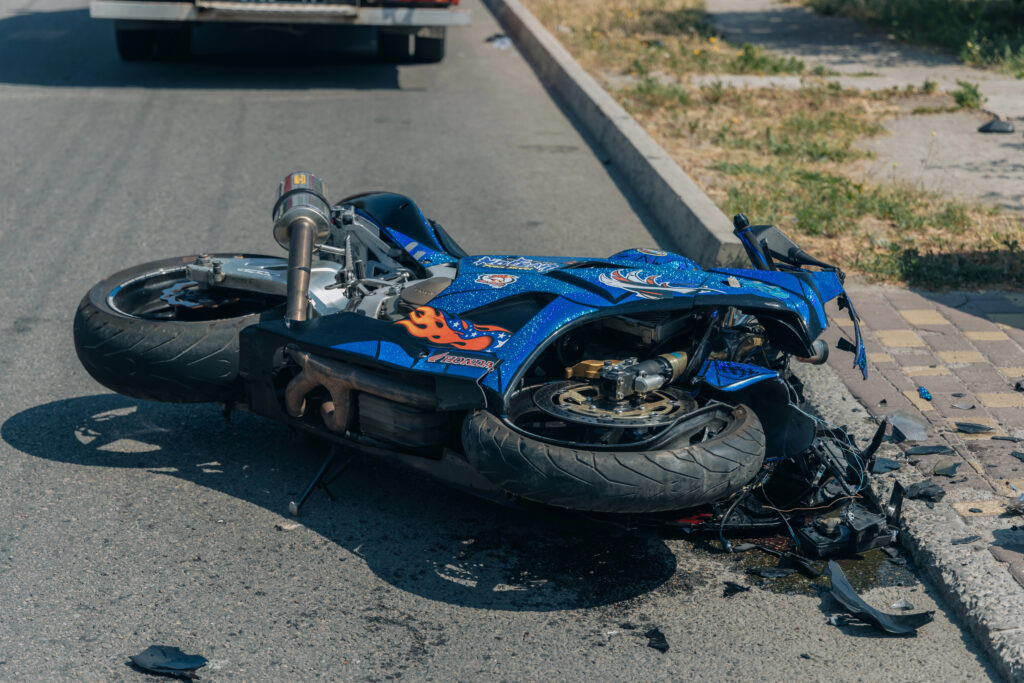
Can you sue if an aftermarket motorcycle part caused the accident?
Yes, a defective aftermarket motorcycle part can give rise to a product liability claim if the part was defective and the defect caused the collision. Aftermarket parts can include brake parts, handlebars, suspension, wheels, tires, and all sorts of other accessories. Some aftermarket parts are designed to meet or exceed the original equipment specifications; others may be totally inappropriate for a particular bike or may have been incorrectly installed. The fact that it’s an aftermarket part in itself doesn’t mean it’s defective. The solicitor would need to consider the manufacturer, the part’s design, its compatibility with the bike, the installation, and the maintenance history. The liable party could be the part manufacturer, the part seller, the installer, or another party, depending on the evidence. Expert opinion may be required to determine whether the failure resulted from a product defect, improper installation, or an incompatible modification.
Can you sue a mechanic for failing to discover a dangerous condition?
A motorcycle mechanic can be liable for failing to identify a dangerous condition where there was a duty to inspect or rectify it, reasonable care was not exercised, and injuries resulted. The nature of the work is obviously important. A shop engaged to do a full safety inspection will have a very different duty of care than a mechanic engaged to do a specific repair on a particular component. The dangerous condition may have been latent or may have developed after the work was carried out. The attorney will need to review the work order, customer complaints, the inspection checklist, the repair invoice, and the relevant mechanical standards. The rider must establish that the mechanic should have reasonably identified the condition and that failing to do so contributed to the accident. Expert testimony may be required to establish the appropriate scope and standard of care.
What if the Repair Shop Claims the Motorcycle Was Safe When It Left the Shop?
A repair shop may defend a negligence claim by arguing that the motorcycle was safe when returned to the rider and that the mechanical failure occurred later for unrelated reasons. The timing of the failure may matter, but it does not, by itself, establish or defeat negligence. An attorney should investigate the work performed, service records, condition of the failed component, mileage after repair, and any intervening maintenance or damage. A failure occurring shortly after service may warrant careful examination, but the rider must still prove negligent artistry and causation. The shop may also argue that the rider modified the motorcycle or ignored warning signs. Preserving the motorcycle and obtaining an independent expert inspection may be essential to resolving these disputes. The claim should be based on mechanical evidence rather than assumptions about the repair.
What if the Motorcycle Rider Performed Their Own Repairs?
A rider’s repair or modification work may affect a defective motorcycle accident claim when it contributed to the mechanical failure. A manufacturer or repair shop may argue that improper installation, modification, or maintenance caused the accident rather than a defective product or negligent professional service. However, rider-performed repairs do not automatically eliminate liability for an unrelated defect. The investigation must identify the specific failed component and determine whether the rider’s work caused or contributed to the failure. Under applicable comparative-fault principles, the rider’s legally culpable conduct may reduce recoverable damages. An attorney should examine the repair history, component condition, manufacturer instructions, and expert findings. The objective is to distinguish the actual cause of the accident from unsupported allegations that the rider was responsible because the motorcycle had been modified.
Can You Recover Compensation if Poor Maintenance Contributed to the Accident?
A motorcyclist may still have a claim when another party’s negligence or a defective product contributed to the accident, even if the rider’s maintenance practices also played a role. For example, a defective brake component may fail on a motorcycle that also had overdue routine maintenance. The legal analysis must determine whether the defect, maintenance issue, or both caused the collision. Under New York’s ordinary comparative negligence principles applicable to motorcycle negligence actions outside Insurance Law Article 51, a rider’s legally established share of fault generally reduces otherwise recoverable damages. However, poor maintenance is not automatically causally relevant to every accident. An attorney should investigate the specific component failure, service history, and expert evidence before determining whether the rider’s conduct contributed to the injuries.
What if Another Driver Was Also Responsible for the Motorcycle Accident?
A defective motorcycle accident may involve negligence by another driver as well as a mechanical failure. For example, a car driver may make an unsafe left turn while a motorcycle’s defective brakes prevent the rider from stopping. In that situation, the driver and a manufacturer or repair shop may both be potentially responsible, depending on the evidence. The motorcyclist may pursue claims against multiple parties when each party’s legally actionable conduct contributed to the collision. However, allocating responsibility and applying recovery rules can be complicated. An attorney should investigate the traffic collision and mechanical failure together rather than treating them as separate events. Surveillance footage, witness statements, vehicle damage, maintenance records, and expert analysis may help establish causation and comparative fault.
What Evidence Is Needed to Prove a Defective Motorcycle Accident?
Important evidence may include the motorcycle itself, failed components, repair invoices, maintenance records, purchase documents, recall information, photographs, surveillance footage, and witness statements. The motorcycle’s physical condition is often critical because an expert may need to determine whether a component failed before the collision or was damaged during the impact. Manufacturer specifications, technical bulletins, service manuals, and component identification information may also be relevant. An attorney should seek preservation of the motorcycle and potentially responsible parts before repairs, disposal, or destructive testing. When necessary, experts may examine braking systems, tires, steering components, or electronic controls. Medical records establish the injuries, while accident reconstruction may help connect the mechanical failure to the collision. The evidence must support both the alleged defect or negligence and causation.
Why Is It Important Not to Repair or Dispose of the Motorcycle After the Accident?
The motorcycle may be the most important evidence in a defective-product or negligent-repair case. Repairing, disassembling, selling, or disposing of it may alter or destroy the condition needed to determine why the accident occurred. A failed brake component, damaged tire, loose fastener, or electronic control system may contain evidence that cannot be recreated later. Courts may impose consequences when relevant evidence is improperly destroyed or altered, depending on the circumstances and applicable law. An injured rider should notify an attorney promptly before authorizing unnecessary repairs or disposal. If a tow yard or insurance company holds the motorcycle, you may need to make appropriate preservation arrangements. Coordinate expert inspection carefully, especially when multiple parties may need an opportunity to examine the evidence. Preserving the motorcycle can be essential to proving the claim.
Can an Engineering Expert Help Prove a Motorcycle Defect?
Yes. A qualified mechanical engineer, motorcycle specialist, tire expert, or other technical professional may help determine whether a defect or negligent repair caused the accident. The appropriate expert depends on the component and alleged failure. A brake system case may require examining hydraulic components and installation procedures, while a tire case may require analyzing structural damage and failure patterns. Experts may review physical evidence, service records, manufacturer specifications, photographs, and accident reconstruction materials. Their opinions must be based on reliable methods and sufficient facts. Not every case requires expert testimony, but technical evidence is often important when the manufacturer or repair shop disputes the cause of the failure. An attorney should arrange for appropriate preservation and inspection before the motorcycle’s condition changes.
Can You Sue if the Motorcycle Was Destroyed in the Accident?
A motorcyclist may still pursue a claim if the motorcycle was severely damaged or destroyed in the collision, but proving a mechanical defect may be harder if critical evidence is unavailable. The investigation may rely on surviving components, photographs, towing records, repair history, witness statements, surveillance footage, and other evidence. In some cases, experts may examine remaining parts or evaluate the accident using available documentation. However, without the failed component, it may be difficult to distinguish a preexisting defect from collision damage. An attorney should determine whether the motorcycle or its parts remain in a tow yard, salvage facility, or insurer’s possession. Make preservation requests promptly when appropriate. The claim’s viability depends on whether sufficient evidence remains to establish the defect, causation, and damages.
Does New York No-Fault Insurance Cover a Defective Motorcycle Accident?
Motorcycle operators and passengers generally are excluded from New York’s ordinary No-Fault Personal Injury Protection benefits because motorcycles are excluded from the relevant statutory definition of motor vehicle under Insurance Law Article 51. This exclusion generally applies even when a defective motorcycle component or negligent repair caused the accident. As a result, an injured rider may need to rely initially on private health insurance, Medicare, Medicaid, or applicable optional medical payments coverage. A successful product liability or negligence claim may ultimately provide compensation for legally recoverable medical expenses and other damages. However, liability insurance does not necessarily pay treatment bills automatically while the case is pending. An attorney should investigate available benefits, potential reimbursement obligations, and the responsible parties’ insurance coverage.
Do You Have to Prove a Serious Injury to Sue for a Defective Motorcycle Accident?
Motorcycle operators and passengers generally do not have to satisfy New York’s Insurance Law Article 51 serious-injury threshold to pursue pain-and-suffering damages arising from motorcycle occupancy. However, the absence of that threshold does not eliminate the requirements of a product liability or negligence claim. The injured rider must still establish a legally actionable defect or negligent act, causation, and compensable damages. A relatively minor injury may support a claim, but the value depends on the medical evidence and actual consequences. More serious injuries involving fractures, surgery, traumatic brain injury, permanent disability, or disfigurement may support greater damages. An attorney should evaluate the technical evidence concerning the motorcycle and the medical evidence concerning the injuries before estimating compensation.
Can You Recover Medical Expenses and Lost Wages After a Defective Motorcycle Accident?
Yes. An injured motorcyclist may pursue compensation for medical expenses and lost earnings when a defective product or negligent repair caused the accident and the applicable legal requirements are satisfied. Recoverable medical expenses may include emergency treatment, hospitalization, surgery, rehabilitation, medication, and reasonably established future care. Lost earnings may include income missed during recovery and diminished future earning capacity when the injuries permanently affect employment. Because motorcycle occupants generally do not receive ordinary No-Fault benefits, these losses may create significant financial pressure. An attorney should obtain medical records, billing documentation, employer records, tax returns, and evidence of work restrictions. In catastrophic injury cases, medical specialists, vocational experts, and economists may help establish future losses. The available recovery depends on liability, damages, insurance coverage, and the responsible parties’ ability to satisfy a judgment.
Can You Recover Pain and Suffering After a Defective Motorcycle Accident?
Yes. A motorcyclist injured because of a defective motorcycle component or negligent repair may pursue compensation for pain and suffering when the legal claim is established. Damages may include physical pain, emotional consequences associated with the injuries, permanent limitations, disfigurement, and loss of enjoyment of life. Motorcycle occupants generally are not subject to the ordinary Insurance Law Article 51 serious-injury threshold. However, the rider must prove the defect or negligence caused the injuries and that the evidence supports the claimed damages. The value depends on injury severity, treatment history, recovery, permanent impairment, and other relevant factors. A rider who suffers multiple fractures or a spinal injury may face substantial long-term consequences. An attorney should document the medical treatment and daily limitations while investigating the mechanical cause of the accident.
How Long Do You Have to Sue for a Defective Motorcycle Accident in New York?
The filing deadline depends on the legal claim and responsible defendant. Many personal injury claims arising from defective products or negligent repairs are subject to New York’s three-year limitations period under CPLR § 214(5). Still, different claims, parties, and circumstances may raise additional rules. A breach-of-warranty claim may involve different requirements and deadlines, including rules under the Uniform Commercial Code. Claims involving governmental entities may require a Notice of Claim and shorter limitations periods. Wrongful death actions generally must be commenced within two years of death, subject to applicable law. The rider should not assume that a pending recall, warranty repair, or insurance investigation extends the lawsuit deadline. Prompt legal review is especially important because the motorcycle and failed components may be repaired, discarded, or altered before the cause of the accident can be established.
Can Families File a Wrongful Death Claim After a Fatal Motorcycle Defect Accident?
Yes. When a defective motorcycle component or negligent repair causes a fatal accident, the appropriate personal representative may pursue a wrongful death claim against legally responsible parties under New York law. Potential defendants may include a manufacturer, repair shop, component supplier, or another party whose legally actionable conduct caused the death. New York wrongful death damages generally cover legally recognized pecuniary losses suffered by qualifying distributees. A separate survival claim may cover certain damages sustained by the deceased before death. The claim requires proof of the defect or negligence, causation, and legally recoverable damages. Wrongful death actions generally must be commenced within two years of death, subject to applicable requirements and exceptions. Preserving the motorcycle and failed components is particularly important because technical evidence may be essential to establishing liability.
How Can a New York City Motorcycle Accident Lawyer Help With a Defective Product or Repair Claim?
A New York City motorcycle accident lawyer can investigate the mechanical failure, identify potentially responsible manufacturers or repair shops, preserve the motorcycle, and evaluate the legal theories supported by the evidence. The attorney may obtain service records, purchase documents, recall information, manufacturer specifications, and relevant communications. When necessary, counsel can work with qualified mechanical engineers, tire specialists, accident reconstruction experts, and medical professionals. The attorney can also investigate whether another driver contributed to the collision and whether multiple insurance policies or defendants may provide compensation. Product liability and negligent repair cases may involve extensive technical discovery and disputes concerning the cause of the failure. Early representation can help preserve critical evidence and allow the injured rider to pursue compensation for medical expenses, lost earnings, pain and suffering, and permanent injuries.
Why Choose Greenstein & Pittari, LLP?
Motorcycle accidents caused by defective brakes, tires, steering components, or negligent repairs can be difficult to investigate because the evidence often involves complex mechanical questions. Manufacturers and repair shops may argue that the rider failed to maintain the motorcycle, modified the vehicle, or caused the failure through improper operation. Insurance companies may also try to resolve the claim before they understand the mechanical cause and the full extent of the injuries. At Greenstein & Pittari, LLP, our attorneys understand the importance of preserving the motorcycle, obtaining relevant records, and investigating every potentially responsible party.
Our firm brings decades of experience representing injured New Yorkers in serious personal injury litigation. We thoroughly investigate motorcycle accidents, examine available evidence, identify responsible manufacturers and service providers, and evaluate the medical consequences of serious injuries. When necessary, we work with qualified experts to address disputed mechanical failures, accident reconstruction, future medical needs, and diminished earning capacity. Our attorneys prepare cases with an emphasis on detailed evidence, aggressive negotiation, and trial readiness when defendants or insurance companies refuse to resolve claims fairly.
We believe that injured clients deserve responsive communication, aggressive representation, and personal attention. Greenstein & Pittari, LLP serves motorcycle accident victims throughout Manhattan, Brooklyn, Queens, the Bronx, Staten Island, Long Island, and Westchester County. Our English and Spanish-speaking staff help make legal representation accessible, and clients can communicate with our team by phone, text, email, or through our secure client portal. We are committed to treating clients with respect, providing proactive updates, and making sure they understand the progress of their cases.
If you believe defective brakes, tires, steering components, or negligent motorcycle repairs caused your accident, do not allow the motorcycle to be repaired or discarded before we properly evaluate the evidence. Our attorneys can investigate the mechanical failure, identify potentially responsible parties, and explain your legal options.
Call Greenstein & Pittari, LLP at 1-800-VICTIM2 (1-800-842-8462) for a free consultation, available 24/7.
Our Fee Guarantee: No Fee Unless Successful.
Don’t Be a Victim Twice.