


Can you sue after a motorcycle dooring accident in NYC?
A motorcycle dooring accident can happen in a heartbeat. A motorcyclist could be riding along a busy New York City street when a driver or passenger suddenly opens a car door straight into the path of the rider. There’s no time to react and the motorcyclist can either hit the door, be thrown over the handlebars or swerve into oncoming traffic. The result can be several serious injuries including broken wrists, shoulder tears, spinal injuries, traumatic brain injury, severe road rash and scarring. Dooring is particularly hazardous to motorcyclists because the door opens at approximately the height of the rider’s body.
Yes. A motorcyclist injured when someone negligently opens a vehicle door may be entitled to compensation under New York law. Vehicle and Traffic Law § 1214 generally prohibits opening a vehicle door on the side available to moving traffic unless it is reasonably safe to do so and does not interfere with traffic. This law can apply to drivers and passengers. However, liability depends on the circumstances, including the motorcycle’s position, speed, the movement of the door, and whether the person opening it exercised reasonable care. Even if the motorcyclist was lane splitting or otherwise violated a traffic law, that conduct does not automatically eliminate a claim against another negligent party.
At Greenstein & Pittari, LLP our New York City motorcycle accident lawyers handle motorcycle dooring accidents (where a parked car, taxi, rideshare, delivery vehicle or other vehicle opens a door and hits the rider). We look at the collision, we identify who opened the door, we preserve the surveillance footage and we determine which insurance policies may be available to compensate the rider. If you’ve been injured in a motorcycle dooring accident in Manhattan, Brooklyn, Queens, the Bronx, Staten Island, Long Island or Westchester County then call 1-800-VICTIM2 (1-800-842-8462) for a free consultation. Don’t be a victim twice.
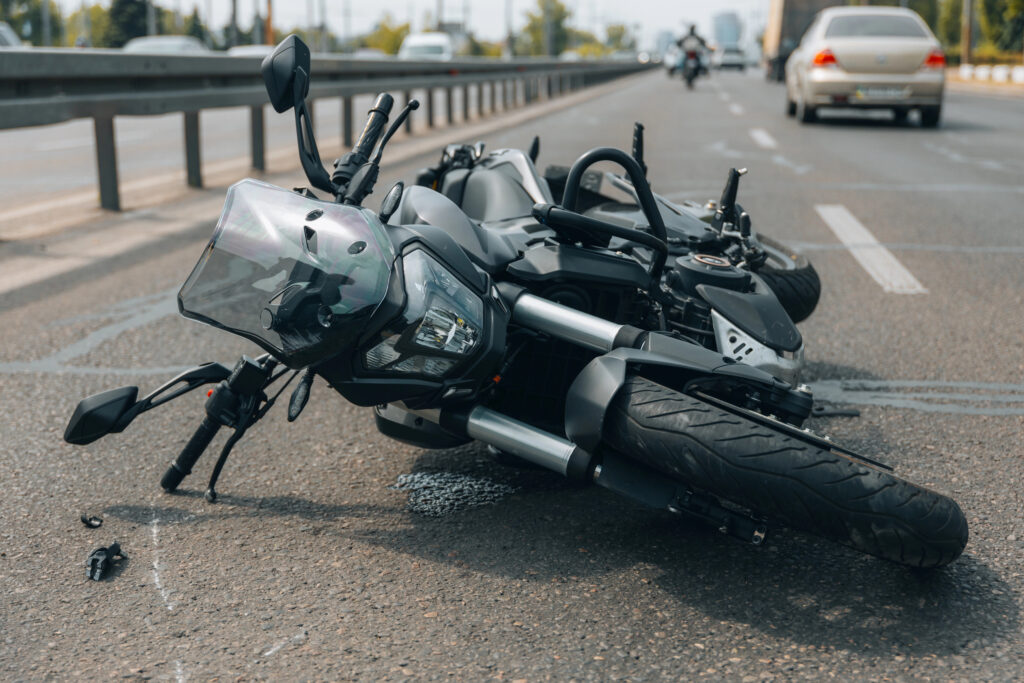
What is a motorcycle dooring accident?
A motorcycle dooring accident is one where a vehicle door opens into the path of a motorcycle, resulting in a collision or the rider having to swerve. The door may be opened by a driver who is getting out of a parked car or by a passenger getting out of a taxi, a rideshare vehicle or some other car. The motorcyclist can either hit the door directly, hit the car or swerve into something else or a moving vehicle. They are quite common in curbside parking lanes, at restaurants and businesses, outside of houses and flats and in areas where there is a lot of passenger pick up and drop off. The issue is whether the person opening the door was acting reasonably and whether the motorcyclist’s own conduct in any way contributed to the accident. Photos, witness statements, CCTV and the state of the vehicles will all be relevant in establishing how the accident occurred.
Is it illegal to open a car door into traffic in New York?
New York Vehicle and Traffic Law § 1214 generally prohibits a person from opening a motor vehicle door on the side available to moving traffic unless it is reasonably safe to do so and the door can be opened without interfering with traffic. The statute also restricts leaving a door open on the traffic side longer than necessary to load or unload passengers. A driver or passenger who opens a door directly into an approaching motorcycle’s path may violate this law. However, a statutory violation does not automatically determine every issue in a personal injury lawsuit. The motorcyclist must establish that the conduct caused the
Who is to blame when a car door hits a motorcycle?
The person who negligently opened the door could be the one at fault for a motorcycle dooring. That could be the driver or a passenger. There may be further liability in the case of the vehicle owner, the employer or indeed another party where the relevant legal requirements are met. However, vehicle ownership does not in itself make every person associated with the vehicle liable for the actions of a passenger. The actions of the motorcyclist must also be looked at. For instance, if the rider was travelling at an excessive speed or was illegally between lanes at the time of the incident they could be subject to a comparative fault claim. An attorney would need to establish who opened the door, whether it was reasonably safe to do so and what the movement of the motorcycle was immediately prior to the impact. The insurance coverage available may well turn on who the responsible party is.
Can you sue the driver who opened a car door into your motorcycle?
Yes, a motorcyclist can sue a driver who negligently opens a car door into the path of the motorcycle. V & T Law § 1214 sets out a specific safety requirement with respect to doors which are opened on the side which is available to moving traffic. A driver who fails to look in his mirrors, fails to observe any approaching vehicles and fails to determine that it is safe to open the door is potentially negligent. The motorcyclist will still have to prove that the driver’s conduct was the cause of the accident and the resulting injuries. The driver may of course contend that the motorcycle was speeding or was approaching from an unexpected position. That would be a matter for the evidence to determine (surveillance footage, witness statements, photographs, vehicle damage etc.). The driver’s liability insurance would be an issue for the attorney to look at and also whether there is any additional coverage available through the vehicle owner or another responsible party.
Can you sue a passenger who opened the car door?
Yes, a vehicle passenger can be personally liable for negligently opening a door into the path of an approaching motorcycle. Section 1214 of the Vehicle and Traffic Law applies to anyone opening a motor vehicle door and is not restricted to drivers. A passenger getting out of a parked car, a taxi or a rideshare vehicle must exercise the requisite degree of care before opening a door on the side which is in the path of moving traffic. The issue of who the passenger is and what insurance they may have can be more complicated than simply bringing a claim against the driver. The driver’s automobile policy will not necessarily cover any independent negligent act of a passenger. An attorney would need to look at who the passenger is, the circumstances of the door opening, the vehicle’s insurance and any other possible coverage. The passenger’s personal liability and their own insurance would have to be assessed separately.
Can the vehicle owner be liable in the event of a motorcycle dooring accident?
A vehicle owner can be liable in some dooring situations, but the owner’s liability will be dependent upon the facts and the law. NYVTL §388 generally deals with owner liability for negligence in the permissive operation of a vehicle. Whether or not that statute applies to a particular dooring incident will depend upon the facts and the nature of the relationship between the person who was negligent and the operation/use of the vehicle. An owner may also be liable for their own negligence where that is supported by the evidence. The owner is not, however, automatically liable for the acts of an unrelated passenger simply because that passenger opened a door on the owner’s vehicle. An attorney would need to look at the issue of vehicle ownership, the person who opened the door, the issue of permission, insurance and the basis of any claim against the owner.
Can you sue after a taxi passenger opens a door into your motorcycle?
Yes. A motorcyclist injured when a taxi passenger negligently opens a door into traffic may have a claim against the passenger and potentially against others who may be legally responsible. Taxi dooring accidents can happen when a passenger exits at an intersection, a restaurant, a hotel or some other busy spot without looking for a motorcycle coming. The driver’s conduct may also need to be looked at in some cases (e.g. if the driver stopped in an unsafe spot or told a passenger to get out into traffic which was moving). The driver and taxi owner are not automatically liable in all circumstances for the actions of a passenger. The relevant insurance coverage will be a matter of the facts and the nature of the relationship between the various parties. An attorney would need to obtain the taxi details, establish who the passenger is, preserve any CCTV, and determine whether the driver or some other party was in any way at fault.
Can you sue after an Uber or Lyft passenger opens a door into your motorcycle?
A motorcyclist injured by a door being opened by an Uber/Lyft passenger may have a claim in negligence against the passenger and possibly others. There’s a danger in the scenario of a rideshare pickup or drop-off where the vehicle stops in the path of moving traffic and the passenger gets out without looking. The driver’s conduct may also be relevant if they stopped in a way which was unsafe or if they in any way encouraged the passenger to get out into traffic. The mere fact of a rideshare trip being involved doesn’t mean that the rideshare company or its insurance will be liable for the negligence of the passenger. That will depend on the facts of the case, the driver’s status, the policies in place and the basis of liability. An attorney will need to preserve the trip details, identify the passenger and driver, determine where the vehicle stopped and look at the available insurance.
What if a taxi or rideshare driver stopped in an unsafe location?
A taxi or rideshare driver can be negligent where their stopping in an unsafe location leads to a motorcycle dooring. A driver may be deemed negligent for stopping in a moving traffic lane, at an intersection, or elsewhere where a passenger is likely to open their door into oncoming traffic. The driver’s duties will be dictated by the relevant traffic laws and the circumstances. An unsafe stop may be a contributory factor to the collision even if the passenger is the one who actually opened the door. It is not in itself sufficient that a vehicle has been stopped in an awkward place to establish that the driver caused the accident. The motorcyclist’s behaviour, visibility, the amount of space available and the passenger’s actions will all be relevant. An attorney will need to review the road markings, traffic controls, any CCTV, and witness statements to determine whether the stopping location was a contributory factor in the collision.
Can you sue if a delivery driver opens a door into your motorcycle?
Yes. A delivery driver who negligently opens a door into the path of a motorcycle can be liable for the injuries that result. Delivery drivers all the time stop along the busy streets of New York City to deliver packages, food and all sorts of goods. A driver who opens a door without looking for traffic is in breach of Vehicle and Traffic Law §1214. If the driver was acting within the scope of employment the employer could also be liable under the applicable principles of liability. The employer/employment relationship and scope of employment will have to be established. An attorney would need to look at the ownership of the delivery vehicle, the driver’s employment status, the commercial insurance coverage and the circumstances of the door being opened. Surveillance, delivery records, photos and witness statements may be of assistance in establishing the accident and identifying the responsible party.
What if a parked car door was already open when the motorcycle hit it?
A collision between a motorcycle and a door which was already open could still be a case of negligence. It would depend on how and when the door was opened and whether leaving it open in that position had any effect on the flow of traffic. Section 1214 of the Vehicle and Traffic Law covers both the unsound opening of a door and the leaving of a door open on the traffic side for an excessive period of time (i.e. longer than is necessary for loading or unloading passengers). The amount of time the door was left open, its visibility, the speed of the motorcycle and the opportunity of the rider to avoid it would all be relevant. A door which opens suddenly straight into the path of the rider is a different situation from a door which was plainly visible for a length of time. An attorney would have to look at the witness statements, any CCTV, the state of the road and the damage to the vehicles to determine whether the person who was in charge of the door was negligent and whether the rider in any way contributed to the collision.
Can you sue if the door opens suddenly and you’ve got no time to react?
Yes. A sudden door opening can be very strong evidence of negligence where the person opening the door didn’t appreciate that it was safe to do so. A motorcyclist travelling lawfully may have absolutely no time at all to brake or swerve out of the way of a door which suddenly swings into the travel lane. The rider may hit the door directly or be forced into the vehicle behind. The timing of the door opening and the approach of the motorcycle may be in dispute. The defence could say the door was in view or that the rider was going too fast. CCTV, witness statements, the extent of the impact damage and accident reconstruction can all be used to establish whether the rider actually had a reasonable opportunity to avoid the collision. An attorney should look at the evidence and not just accept either side’s version of events as true.
Can you get compensation if you swerve to avoid a car door and don’t hit it?
Yes, a motorcyclist can have a claim in negligence where an unsafe door opening causes them to swerve and crash, even in the absence of any actual contact with the door. The driver might open the door suddenly into the path of the motorcycle and that would force the rider to swerve and crash into a curb, another vehicle or the road itself. There’s no automatic bar to a claim in negligence simply because there was no physical contact with the door. The rider would have to prove that the opening of the door was the cause of the swerving and the resultant injuries. The defence could argue that the rider simply lost control for some other reason or over-reacted to a condition which didn’t in fact present any danger at all. Witness statements, CCTV, the road surface and medical records could all be used to establish what happened. If the vehicle in question cannot be identified then the separate uninsured motorist requirements would come into play.
Can you sue if a car door swings open and swipes your motorcycle into moving traffic?
Yes. A motorcyclist who is forced into moving traffic by a negligently opened car door may have a claim against the person whose door was negligently opened and potentially against other parties who may have been negligent. The rider may have swerved to avoid the door and been hit by a truck, bus or car that was in the traffic. The opening of the door may have been the initial emergency, another driver’s conduct may have been a factor in the injuries. An attorney would look at the sequence of events and assess whether the negligence of each party was a substantial factor in causing the accident. CCTV, witness statements, the damage to the vehicles and accident reconstruction may all be relevant. Where there are multiple vehicles involved there can be complex issues as to comparative fault, causation and insurance. All potentially responsible parties would have to be looked at before any claim is settled.
Can you sue after a motorcycle dooring accident whilst lane splitting?
Yes. A motorcyclist who is injured whilst lane splitting can still have a negligence claim against the person who opened their vehicle door in an unsafe manner. NYVTL § 1252(c) prohibits the operation of a motorcycle between lanes of traffic or between adjacent lines or rows of vehicles. NYVTL § 1214 however provides that a person must exercise reasonable care when opening a door on the side of the vehicle which is available to moving traffic. Both of those statutes could be relevant where a motorcyclist travelling between vehicles strikes an opened door. The motorcyclist’s lane splitting would be a factor in any comparative fault, but it does not necessarily preclude the person who opened the door from being liable. An attorney would need to look at the position of the motorcycle, its speed, the movement of the door, the traffic and whether the person opening the door had a reasonable opportunity to see the approaching motorcycle.
Does illegal lane splitting automatically make the motorcyclist responsible for a dooring accident?
No. While lane splitting is prohibited in NY, the mere fact of the lane splitting does not mean that the motorcyclist is automatically at fault in a dooring situation. The motorcyclist’s unlawful position may be a factor in establishing negligence and causation, but the person opening the door is also under a duty to comply with VTL § 1214. A passenger who suddenly opens a door into the path of a motorcycle is potentially negligent even if the rider was lane splitting. The degree of fault of each party will be a function of the evidence. Under NY’s ordinary comparative negligence principles which apply to motorcycle negligence actions outside of Insurance Law Article 51, the motorcyclist’s share of fault will generally reduce the amount of damages that would otherwise be recoverable rather than necessarily preclude the claim altogether. An attorney would be well advised to look at the conduct of both parties and to challenge any assertions of sole responsibility.
What if the motorcyclist was speeding prior to the dooring accident?
Speeding can be a factor in a motorcycle dooring claim where the speed of the motorcycle at the time of the incident either contributed to the collision or increased the severity of the injuries. A motorcyclist travelling over the speed limit will have less time to react to a door opening and will require a greater distance to stop. It is not the case however that speeding will automatically mean the rider caused the accident. A person who opens a door into moving traffic suddenly may still be in breach of VTL §1214. The investigation will have to look at the actual speed of the motorcycle, the timing of the door opening, visibility, road conditions and the opportunity of the rider to avoid the collision. CCTV, witness statements, and physical evidence will all be relevant in determining whether traveling over the speed limit has less time to react to a door opening and needsthe motorcycle was speeding at the time of the incident. Comparative fault should be based on the facts, not on assumptions about the motorcycle rider.
Can you recover compensation if you were partly at fault in a motorcycle dooring accident?
Yes. An injured motorcyclist can recover damages where the negligence of another person has contributed to a dooring accident, even if the motorcyclist themselves have some degree of fault. Under New York’s ordinary pure comparative negligence regime, the motorcyclist’s damages will be reduced in proportion to their own degree of fault. So if the total damages that are legally recoverable are $150,000 and the motorcyclist is found to be 30% at fault, the damages that would be attributable to the other party would generally be $105,000 prior to any insurance limits or other applicable rules. Of course the actual allocation will depend on the evidence. The motorcyclist may have been at fault for speeding or lane splitting and the person opening the door may have been at fault for failing to look. An attorney would need to look at the collision and assess the conduct of each party before arriving at any conclusion as to the potential recovery.
What if the Police Report blames the motorcyclist?
A report that apportions blame to the motorcyclist doesn’t in itself establish civil liability. The officers may well be the ones to arrive on the scene, and their report may be based on the driver’s statement, the passenger’s statement, the rider’s statement or that of the witnesses. The report may well record that the motorcyclist was in breach of the rules (e.g. lane splitting) but may fail to record the timing or manner in which the door was opened. It could be that the report says the rider was lane splitting and that’s it. It may not establish whether the passenger actually opened the door into the path of the motorcycle at that time. The solicitor would need to look at the officers’ own observations, the witness statements, the damage to the vehicles, any CCTV and so on. The question of whether there’s been negligence and the degree of comparative fault is a question of the evidence that is admissible and the law. The insurer’s reliance on the police report doesn’t in any way mean that the rider has no claim.
What if the driver says they checked prior to opening the door?
A driver or passenger could well say that they looked in their mirrors and/or looked for oncoming traffic prior to opening the door. That in itself doesn’t mean that the door was opened safely. The issue is whether the person exercised reasonable care in the circumstances and in accordance with VTL §1214. It is possible that they did look but failed to see a motorcycle which was reasonably visible. The motorcycle could have been approaching at a speed and/or from a position which would have made it impossible to see. The timing of the door opening, the sight lines, the position of the parked vehicle, the traffic conditions and the availability of any CCTV will all be relevant. The testimony of any witnesses and the physical evidence will be relevant to whether the person’s assertion of having looked is consistent with the collision. Liability will be a question of the totality of the evidence.
Can you sue if a child opens the car door into your motorcycle?
A child causing a motorcycle dooring accident will be assessed in terms of the child’s conduct, the child’s age and the level of supervision that was (or was not) provided by any adult. The standards of care that will be applied to the child’s conduct under New York negligence law may be different from those that would be applied to an adult depending on the child’s age and the circumstances. A parent or supervising adult will not be automatically liable simply because the child was the one who caused the accident. Liability may arise if the evidence shows that there was a separate act of negligence or omission on the part of that adult, for example a failure to exercise the duty of supervision that would be required in the circumstances (i.e. where there was a foreseeable risk of harm). The driver’s conduct and the location at which the vehicle came to a stop will also be relevant. An attorney will need to determine who opened the door, who was in the vehicle and whether another person had a separate duty of care which contributed to the accident. The insurance coverage available will also need to be looked at separately.
Can you sue if a commercial vehicle door caused the accident?
Yes. A motorcyclist injured by a door being negligently opened on a delivery truck, commercial van, taxi or other business vehicle may have a claim against the person responsible and potentially against the employer or other parties who may be legally liable. Commercial vehicle drivers will often stop to make deliveries, load up equipment or assist passengers. A driver who opens a door into moving traffic without checking for approaching motorcycles is in breach of Vehicle and Traffic Law §1214. If the driver was acting within the scope of employment at the time of the incident, the employer may be subject to vicarious liability. The nature of the relationship between the driver, the vehicle owner and the business will need to be established. An attorney will need to look at commercial insurance, employment records, vehicle ownership, any CCTV and the circumstances of the door being opened. The rider’s conduct may also be relevant to the issue of comparative fault.
Can you sue if a parked vehicle was illegally stopped before the door opened?
An illegally stopped or parked vehicle can breaches the collision. The vehicle may have stopped in a moving traffic lane or parked in a position adjacent to an intersection such that a passenger opens a door into an approaching motorcycle. The violation may be relevant to the issue of negligence but it doesn’t necessarily mean that the driver of the vehicle caused the accident. The person opening the door is also liable under VTL § 1214. The motorcyclist’s speed, position and opportunity to avoid the collision will all be relevant to the issue of comparative fault. An attorney will need to look at the roadway signage, parking regulations, traffic markings, any available surveillance and the testimony of any witnesses to determine whether the vehicle’s location was a factor in the injury.
What injuries are common in motorcycle dooring accidents?
Motorcycle dooring can result in serious injury as the rider can strike a hard door edge or be thrown from the bike. The injuries that can occur are numerous and include broken wrists, forearm fractures, shoulder tears, clavicle fractures, knee injuries, pelvic fractures, traumatic brain injury, spinal injury and severe road rash. Facial injury, dental injury, nerve damage and scarring are all possible. A dooring incident can also see the bike fall into the moving traffic which increases the potential for further impact. Treatment may range from emergency surgery through to orthopaedic hardware, physio, neurological input and skin grafts. Some of the injuries will lead to long-term pain, reduced mobility and an inability to return to work. Medical records, imaging, surgical reports and the opinion of the treating physician will all be relevant in terms of establishing the severity of the injury and the long term consequences.
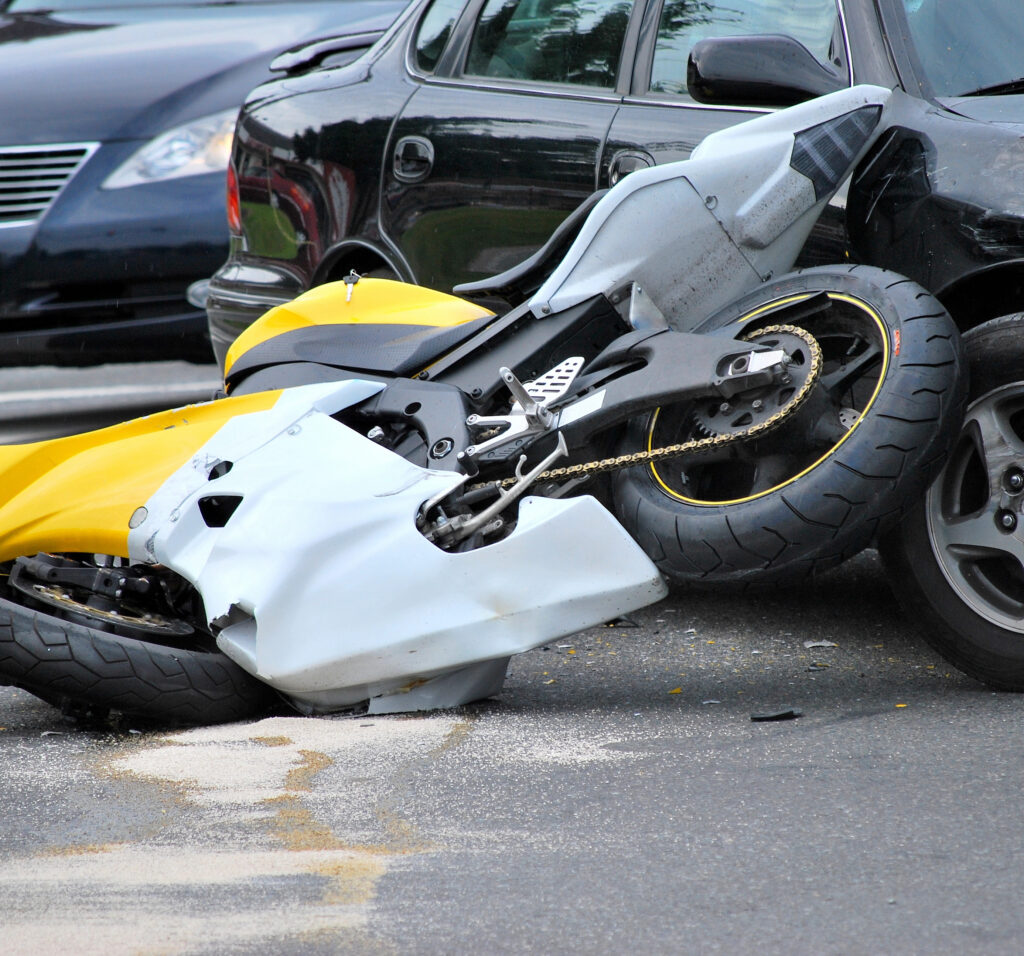
Can You Recover Compensation for Shoulder Injuries After a Motorcycle Dooring Accident?
Yes. A motorcyclist who suffers a shoulder injury because of a negligently opened vehicle door may pursue compensation for legally recoverable damages. A rider may strike the door with the shoulder, land on an outstretched arm, or be thrown onto the roadway. Injuries may include rotator cuff tears, labral tears, shoulder dislocations, fractures, and nerve damage. Some injuries require arthroscopic surgery, physical therapy, injections, or prolonged rehabilitation. The insurer may dispute whether the shoulder condition resulted from the accident or reflects preexisting degeneration. Medical records, MRI findings, surgical reports, and treating physician opinions may be important in establishing causation. The claim may include medical expenses, lost earnings, pain and suffering, and future treatment needs. The value depends on the injury severity, recovery, lasting limitations, and available insurance coverage.
Can You Recover Compensation for a Broken Wrist or Hand?
Yes. Broken wrists and hand injuries are common in motorcycle dooring accidents because riders may instinctively extend their arms to protect themselves during a fall. Injuries may include distal radius fractures, scaphoid fractures, finger fractures, ligament damage, and nerve injuries. Some fractures require surgical fixation with plates, screws, or pins. Others may cause stiffness, weakness, chronic pain, or reduced grip strength even after healing. These limitations can significantly affect employment, particularly for construction workers, mechanics, healthcare professionals, and others who rely on manual dexterity. An attorney should obtain medical records, diagnostic imaging, surgical reports, therapy records, and evidence of work restrictions. Compensation may include medical expenses, lost earnings, pain and suffering, and reasonably established future treatment needs when another person’s negligence caused the accident.
Can You Recover Compensation for Road Rash and Permanent Scarring?
Yes. A motorcyclist injured in a dooring accident may pursue compensation for severe road rash, permanent scarring, and disfigurement when those injuries resulted from another person’s negligence. Road rash can involve deep abrasions, tissue loss, infection, nerve damage, and lasting skin discoloration. Severe injuries may require wound debridement, skin grafts, or reconstructive treatment. Scarring may remain visible on the face, arms, legs, or other areas and may cause lasting discomfort or emotional consequences. Motorcycle operators generally do not have to satisfy the ordinary Insurance Law Article 51 serious-injury threshold to pursue pain-and-suffering damages. However, the injuries and their consequences must be documented. Photographs taken throughout recovery, medical records, surgical reports, and treating physician opinions may help establish the extent and permanence of the scarring.
Can You Recover Compensation for a Traumatic Brain Injury?
Yes. A motorcyclist who suffers a traumatic brain injury in a dooring collision may pursue compensation when another person’s negligence caused the accident. A rider may strike the door, vehicle, or roadway with the head, resulting in a concussion or more serious brain injury. Symptoms may include headaches, dizziness, memory problems, difficulty concentrating, cognitive changes, and emotional or behavioral difficulties. Severe cases may require hospitalization, neurological treatment, cognitive rehabilitation, or long-term care. The absence of an obvious external head injury does not necessarily rule out a concussion, but the diagnosis and causal relationship must be supported by appropriate medical evidence. An attorney should evaluate emergency records, neurological examinations, imaging where appropriate, treatment history, and the effect on work and daily activities. Permanent cognitive limitations may significantly affect the claim’s value.
Does a Motorcyclist Have to Prove a Serious Injury After a Dooring Accident?
Motorcycle operators generally do not have to satisfy New York’s Insurance Law Article 51 serious-injury threshold to pursue pain-and-suffering damages in an ordinary negligence claim arising from motorcycle occupancy. Motorcycles are excluded from the relevant statutory definition of motor vehicle, and motorcycle occupants generally do not receive ordinary No-Fault benefits. However, the rider must still prove that another party was negligent and that the negligence caused the claimed injuries. A minor injury may support a claim, but the amount of compensation depends on the medical evidence and actual consequences. More serious injuries involving surgery, permanent scarring, fractures, or lasting physical limitations may support greater damages. An attorney should distinguish the absence of a statutory threshold from the separate requirements of liability, causation, and proof of damages.
Who Pays Medical Bills After a Motorcycle Dooring Accident?
Medical expenses following a motorcycle dooring accident may initially be paid through private health insurance, Medicare, Medicaid, or applicable optional medical payments coverage. Motorcycle operators generally do not qualify for ordinary New York No-Fault Personal Injury Protection benefits. The liability insurer of the person legally responsible for the dooring accident may ultimately provide compensation through settlement or judgment, but liability insurance generally does not automatically pay medical bills while the claim is pending. This can create financial difficulties when the rider requires emergency treatment, surgery, rehabilitation, or long-term care. An attorney should investigate available insurance coverage, document medical expenses, and evaluate potential liens or reimbursement obligations. Future medical expenses should also be considered when the injuries require additional procedures or ongoing treatment.
Can You Recover Lost Wages After a Motorcycle Dooring Accident?
Yes. A motorcyclist who cannot work because of injuries sustained in a dooring accident may pursue compensation for lost earnings when another person’s negligence caused the collision. Shoulder injuries, wrist fractures, spinal injuries, and traumatic brain injuries may prevent the rider from returning to work for an extended period. Because motorcycle operators generally do not receive ordinary New York No-Fault wage-replacement benefits, the loss of income may create immediate financial hardship. Past earnings losses may be documented through employer records, pay statements, tax returns, and medical work restrictions. Self-employed riders may need business records to establish income loss. When injuries permanently affect the rider’s ability to work, the claim may include diminished future earning capacity supported by appropriate vocational or economic evidence. The available recovery depends on liability, damages, and insurance coverage.
Can You Recover Pain and Suffering After a Motorcycle Dooring Accident?
Yes. A motorcyclist injured by a negligently opened vehicle door may pursue compensation for pain and suffering, including physical pain, emotional consequences associated with the injuries, permanent limitations, disfigurement, and loss of enjoyment of life. Motorcycle operators generally are not subject to the ordinary Insurance Law Article 51 serious-injury threshold. However, the rider must establish the accident-related injuries and legally recoverable damages. The value of the claim depends on factors such as the severity of the injuries, treatment history, recovery period, permanent restrictions, and available insurance coverage. A rider who suffers a fracture requiring surgery may have substantial damages, while a rider with permanent neurological impairment may face even greater long-term consequences. An attorney should document both the medical treatment and the effect of the injuries on the rider’s daily life.
What Evidence Can Prove a Motorcycle Dooring Accident?
Evidence in a motorcycle dooring case may include surveillance footage, witness statements, photographs, vehicle damage, roadway markings, and the physical condition of the motorcycle and door. Video may show when the door opened, the motorcycle’s position, and whether the rider had time to react. Witnesses may describe whether the driver or passenger checked for traffic or opened the door suddenly. Photographs may document the door’s position, impact marks, and nearby parking or traffic conditions. Medical records establish the injuries, while accident reconstruction may assist when the parties dispute speed or timing. An attorney should promptly identify nearby businesses and buildings with cameras because recordings may be overwritten. The motorcycle and damaged protective equipment should be preserved when their condition may help establish how the collision occurred.
What if the Driver or Passenger Denies Opening the Door?
A denial by the driver or passenger does not automatically defeat a motorcycle dooring claim. The injured rider may be able to establish what happened through surveillance footage, independent witnesses, photographs, vehicle damage, and other physical evidence. The location and nature of the impact may help determine whether the door was open at the time of the collision. Witnesses may have observed the person opening the door or the motorcycle’s reaction immediately afterward. An attorney should also investigate whether the driver or passenger made statements at the scene or to police. The rider should provide an accurate account without speculating about details that were not observed. When the evidence is disputed, accident reconstruction may help establish the sequence of events. The legal claim must be supported by evidence of negligence and causation.
What if the Person Who Opened the Door Leaves the Scene?
A motorcycle dooring accident may become a hit-and-run investigation when the responsible driver or passenger leaves without providing identifying information. The injured rider should report the collision promptly and preserve any available description of the vehicle, license plate, driver, or passenger. Nearby surveillance footage and witness statements may help identify the responsible person. If the vehicle or driver remains unidentified, uninsured motorist coverage may warrant investigation, but the applicable statutory and policy requirements must be satisfied. Claims involving an unidentified vehicle may include physical contact, reporting, and notice conditions. A claim against an unidentified passenger may raise additional coverage questions that require careful legal analysis. An attorney should examine whether the collision qualifies under any applicable policy and whether other identifiable parties contributed to the accident.
How Long Do You Have to File a Motorcycle Dooring Accident Lawsuit in New York?
Most negligence-based motorcycle dooring personal injury lawsuits against private defendants in New York must be commenced within three years under CPLR § 214(5). However, shorter deadlines may apply when a governmental vehicle or public entity is involved. Certain claims against New York City require a Notice of Claim within 90 days and commencement of the lawsuit within one year and 90 days, subject to applicable statutory requirements and exceptions. Wrongful death actions generally must be commenced within two years of death. Insurance claims may involve separate notice requirements. Because dooring accidents may involve taxis, rideshare vehicles, commercial vehicles, or unidentified parties, an attorney should determine the correct defendants and deadlines promptly. Waiting may also result in the loss of surveillance footage and witness evidence.
Can Families File a Wrongful Death Claim After a Fatal Motorcycle Dooring Accident?
Yes. When a motorcycle dooring accident causes a rider’s death, the appropriate personal representative may pursue a wrongful death claim against legally responsible parties under New York law. The claim may involve the person who negligently opened the door and any other party whose conduct contributed to the fatal collision. New York wrongful death damages generally address legally recognized pecuniary losses suffered by qualifying distributees, while a separate survival claim may address certain damages sustained by the deceased person before death. The available insurance coverage and the relationship among the parties may affect the recovery. Wrongful death actions generally must be commenced within two years of death, subject to applicable requirements and exceptions. Families should seek prompt legal guidance to preserve evidence, identify responsible parties, and protect applicable deadlines.
How Can a New York City Motorcycle Accident Lawyer Help After a Dooring Collision?
A New York City motorcycle accident lawyer can investigate who opened the door, determine whether the person violated Vehicle and Traffic Law § 1214, identify other negligent parties, and examine available insurance coverage. The attorney may obtain surveillance footage, interview witnesses, review police reports, and preserve vehicle damage evidence. When necessary, accident reconstruction may help determine the motorcycle’s speed, the timing of the door opening, and whether the rider had an opportunity to avoid the collision. Counsel can also investigate claims involving taxis, rideshare vehicles, delivery companies, and commercial insurers. Because motorcycle operators generally do not receive ordinary No-Fault benefits, the attorney should evaluate medical expenses, lost earnings, and potential reimbursement obligations. Early representation may help preserve evidence and address disputed liability before the insurance company assigns fault to the rider.
Why Choose Greenstein & Pittari, LLP?
Motorcycle dooring accidents often involve disputed liability, multiple potentially responsible parties, and insurance companies that attempt to blame the injured rider. A driver or passenger may claim that the motorcycle was speeding, lane splitting, or approaching unexpectedly. The insurer may also dispute whether the door was opened negligently or whether another party’s insurance applies. At Greenstein & Pittari, LLP, our attorneys understand these challenges and investigate the evidence rather than accepting an insurance company’s initial conclusions.
Our firm brings decades of experience representing injured New Yorkers in serious personal injury cases. We investigate motorcycle accidents thoroughly, preserve available surveillance footage, obtain witness statements, examine police reports, and evaluate the medical consequences of serious injuries. When necessary, we work with qualified experts to address disputed accident reconstruction issues, permanent disability, future medical needs, and lost earning capacity. Our attorneys prepare cases with an emphasis on detailed evidence, aggressive negotiation, and trial readiness when defendants or insurance companies refuse to resolve claims fairly.
We believe that injured clients deserve responsive communication, aggressive representation, and personal attention. Greenstein & Pittari, LLP serves motorcycle accident victims throughout Manhattan, Brooklyn, Queens, the Bronx, Staten Island, Long Island, and Westchester County. Our English and Spanish-speaking staff helps make legal representation accessible, and clients can communicate with our team by phone, text, email, or through a secure client portal.
We are committed to treating clients with respect, providing proactive updates, and making sure they understand the progress of their cases. If you were injured when a driver or passenger opened a vehicle door into your motorcycle’s path, do not assume that the insurance company will fairly evaluate your claim. Our attorneys can investigate the collision, identify potentially responsible parties, examine available insurance coverage, and pursue compensation for your injuries and financial losses.
Call Greenstein & Pittari, LLP at 1-800-VICTIM2 (1-800-842-8462) for a free consultation, available 24/7.
Our Fee Guarantee: No Fee Unless Successful.
Don’t Be a Victim Twice.