


Is a Herniated Disc a Serious Injury in NY? (2026 Law)
A herniated disc can qualify as a serious injury after a New York car accident, but an MRI showing a cervical or lumbar disc herniation does not automatically satisfy New York’s serious-injury threshold. For motor vehicle personal injury actions governed by Insurance Law Article 51, the medical evidence must establish that the injury falls within one of the serious-injury categories remaining under Insurance Law § 5102(d). In a herniated-disc case, the categories most frequently at issue may include a significant limitation of use of a body function or system or, when supported by the evidence, a permanent consequential limitation of use of a body organ or member.
This distinction has become particularly important since New York changed its serious-injury law in 2026. For actions and proceedings commenced on or after May 26, 2026, the former 90/180-day category has been eliminated. An injured person can no longer establish serious injury solely through that former category by showing a medically determined nonpermanent injury that substantially prevented usual and customary activities for at least 90 of the first 180 days. A spinal injury must instead satisfy one of the eight remaining categories.
Herniated-disc cases are also frequently contested because insurance companies may argue that MRI findings are degenerative, existed before the collision, do not cause significant functional limitations, or are unrelated to the accident. Building the medical proof can therefore involve much more than obtaining an MRI. Range-of-motion findings, neurological examinations, radiculopathy, EMG testing where medically appropriate, injections, physical therapy, surgery, prior medical records, treatment history, and physicians’ opinions concerning causation and functional impairment can all become important. If you suffered a cervical or lumbar herniated disc in a New York motor vehicle accident, call Greenstein & Pittari, LLP at 1-800-VICTIM2 (1-800-842-8462) for a free consultation. No fee unless successful.

Can a herniated disc meet New York’s serious injury threshold?
Yes. A herniated disc can potentially satisfy New York’s serious-injury threshold when the injury and resulting functional impairment meet one of the categories contained in Insurance Law § 5102(d). However, a herniation on an MRI is not itself a separate statutory category. New York courts have long distinguished between proof that a disc abnormality exists and proof that the abnormality has produced a legally significant physical limitation. Depending on the evidence, a claimant with a cervical or lumbar disc herniation may rely on the significant-limitation category or, where permanence is medically supported, the permanent-consequential-limitation category. Courts should evaluate the particular diagnosis, objective findings, degree and duration of limitation, treatment history, prognosis, and medical evidence connecting the condition to the accident together.
Is an MRI showing a herniated disc enough to prove serious injury?
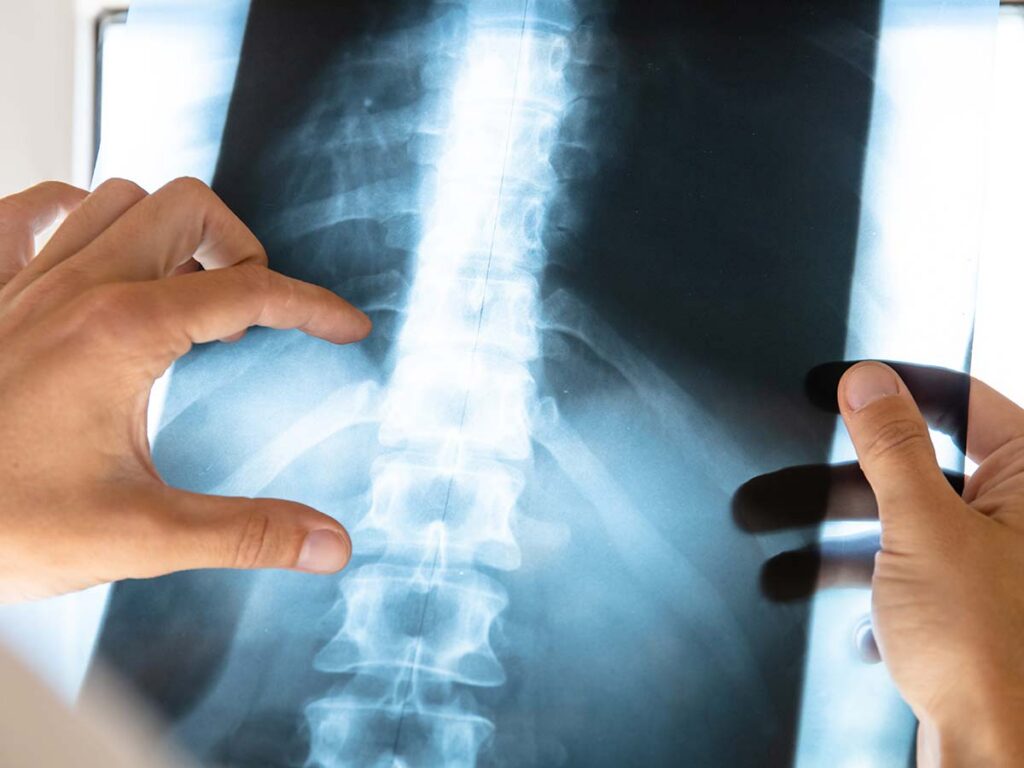
No. An MRI can provide important objective evidence that a disc herniation exists. Still, New York courts have repeatedly held that the mere existence of a herniated or bulging disc does not, by itself, establish serious injury without objective evidence of the resulting physical limitations. The MRI answers an important anatomical question by showing what may have happened to the disc. Still, the serious-injury analysis also asks what the condition has done to the person’s function. Physicians may therefore document restricted cervical or lumbar movement, neurological deficits, weakness, sensory changes, positive clinical findings, radicular symptoms, and other functional consequences. The strongest medical presentation connects the diagnostic finding to the actual limitation rather than treating the MRI report as the entire case.
What is the difference between a herniated disc and a bulging disc in a serious injury case?
The diagnostic terminology can matter medically, but neither a “herniation” nor a “bulge” automatically determines whether the serious-injury threshold has been satisfied. New York’s statute does not contain separate serious-injury categories for herniated discs and bulging discs. The legal question is whether the diagnosed condition results in one of the injuries or limitations recognized by § 5102(d). A more dramatic-sounding MRI diagnosis does not eliminate the need for evidence of functional impairment, and a claimant should not assume that a disc bulge can never support a claim merely because it is described differently from a herniation. Consider the MRI findings, clinical symptoms, neurological evidence, degree of limitation, treatment, causation, and prognosis as a whole.
What serious injury category usually applies to a herniated disc after the 2026 changes?
The significant-limitation and permanent-consequential-limitation categories are frequently important in spinal injury cases, although the appropriate category depends on the individual medical evidence. Insurance Law § 5102(d) defines serious injury to include a “significant limitation of use of a body function or system” and a “permanent consequential limitation of use of a body organ or member.” The permanent category expressly requires permanence, while the significant-limitation category does not expressly require it. This distinction matters more after the 2026 elimination of the 90/180-day category because an injured person should not assume every herniated-disc claim must now be permanent. The question is whether the evidence establishes one of the remaining categories.
Does a herniated disc have to be permanent under the new 2026 law?
No. New York’s amended statute does not require every serious injury to be permanent. Insurance Law § 5102(d) still recognizes significant limitation of use of a body function or system as a serious-injury category without expressly requiring permanence. It separately recognizes permanent consequential limitation and permanent loss of use, which do require permanence. A person with a herniated disc therefore should not be told that the claim necessarily fails unless a doctor declares the condition permanent. At the same time, temporary pain or a minor restriction does not automatically amount to a significant limitation. The applicable category must evaluate the nature, degree, duration, objective basis, and functional consequences of the limitation.
How did the elimination of the 90/180-day rule affect herniated-disc cases?
The 2026 amendment removed an important former route for establishing serious injury. Previously, § 5102(d) included a category for a medically determined nonpermanent injury or impairment that prevented an injured person from performing substantially all of the material acts constituting usual and customary daily activities for at least 90 of the first 180 days following the injury. That category is no longer available in actions and proceedings commenced on or after May 26, 2026. Someone with a herniated disc who missed months of work or experienced substantial temporary restrictions must therefore establish one of the eight remaining categories. Evidence concerning lost activities can still be relevant to functional impact and damages, but the former 90/180 test is no longer an independent serious-injury category under the amended law.
How can range-of-motion testing help prove a herniated-disc injury?
Range-of-motion testing can provide objective evidence of how much a cervical or lumbar injury restricts movement. A physician may measure flexion, extension, rotation, lateral bending, or other movements and compare the findings with normal values. New York’s Court of Appeals has recognized quantitative proof, such as a measured percentage loss of range of motion, as one way to substantiate a serious-injury claim. The Court has also recognized that a qualitative medical assessment may be sufficient when it has an objective basis and compares the claimant’s limitation with normal function, purpose, and use. Range-of-motion evidence should therefore be viewed as part of the complete medical record, together with diagnostic findings, clinical examinations, symptoms, treatment, prognosis, and causation.
Does radiculopathy strengthen a herniated-disc case?
Radiculopathy can be significant evidence when a spinal condition affects or irritates a nerve root and produces symptoms such as radiating pain, numbness, tingling, weakness, or other neurological abnormalities. However, radiculopathy does not automatically establish serious injury merely because the term appears in a medical record. New York courts have emphasized the importance of objective evidence demonstrating the extent of the physical limitations resulting from the spinal injury. Neurological examinations, motor and sensory findings, reflex changes, positive clinical testing, MRI findings, and electrodiagnostic testing where medically appropriate may help establish the nature of the condition. The medical evidence should also connect the neurological findings to the accident and explain their functional significance.
Can an EMG help prove a serious spinal injury?
An EMG or other electrodiagnostic study can be useful when medically appropriate because it may provide objective evidence concerning nerve dysfunction associated with a cervical or lumbar condition. It is not required in every herniated-disc case, and whether the test is medically indicated is a decision for the treating medical professional, not a litigation checklist. When an EMG shows findings consistent with radiculopathy, those results may be considered alongside the MRI, neurological examination, range-of-motion findings, symptoms, and treatment history. As with any individual diagnostic test, the important question is not merely whether an abnormal result exists but how the medical evidence establishes the nature, cause, and functional consequences of the injury.
Do I need surgery for a herniated disc to qualify as a serious injury?
No. Surgery is not required to establish a serious injury. A person can potentially satisfy the significant-limitation or another applicable category through sufficient medical evidence even if treatment remains conservative. Surgery can still be powerful evidence in an appropriate case because operative findings may confirm structural pathology and show that conservative treatment did not adequately resolve the condition. A claimant who undergoes a discectomy, laminectomy, fusion, or another spinal procedure still must establish the applicable statutory category and causation. Conversely, a claimant should not undergo medically unnecessary surgery merely to strengthen a legal claim. Treatment decisions should be based on medical need, not litigation strategy.
Can physical therapy help establish a herniated-disc serious injury claim?
Physical therapy records can help document symptoms, restrictions, progress, and the course of conservative treatment, but therapy attendance alone does not establish serious injury. Records may show reduced movement, difficulty performing exercises, persistent pain, weakness, functional restrictions, and whether the patient’s condition improved or remained limited over time. Therapy also helps create a longitudinal medical history showing how the injury behaved after the accident. The legal significance of those records depends on the complete evidence, including physician examinations, objective findings, diagnostic studies, causation, and the statutory category claimed. Repeated treatment without meaningful objective medical documentation should not be confused with proof of a qualifying serious injury.
Do epidural steroid injections prove that a herniated disc is serious?
Epidural steroid injections or other spinal procedures can be relevant because they may demonstrate that physicians considered the patient’s symptoms sufficiently persistent to warrant treatment beyond medication and routine therapy. The procedure itself, however, is not a statutory serious-injury category and does not automatically meet the threshold. The medical record should explain why the injection was recommended, what condition was being treated, whether diagnostic findings supported the treatment, how the patient responded, and what functional limitations persisted. Injections can therefore form part of a persuasive treatment history without replacing the need to establish a qualifying injury and its relationship to the motor vehicle accident.
Does spinal surgery automatically establish a serious injury?
No. Spinal surgery can be substantial evidence of an injury’s nature and severity, but it does not automatically resolve every serious-injury or causation issue. An insurer may argue that the procedure treated a degenerative condition, a prior injury, or pathology unrelated to the collision. The operative report, surgeon’s findings, preoperative imaging, reason surgery was recommended, postoperative limitations, prognosis, and medical opinion concerning causation can therefore be critical. The question is not simply whether surgery occurred. It is whether the evidence demonstrates that the accident caused or aggravated a condition producing a limitation that satisfies one of the serious-injury categories under § 5102(d).
What if the MRI says my herniated disc is degenerative?
A degenerative finding can create a causation dispute, but it does not automatically mean that the accident caused no compensable injury. Spinal imaging frequently identifies age-related or preexisting changes, and an accident may be alleged to have caused a new injury or aggravated an existing condition. When the defense presents evidence attributing the claimed condition to degeneration or a preexisting problem, the plaintiff’s medical evidence may need to address that alternative explanation directly. Prior medical records, earlier imaging, the presence or absence of pre-accident symptoms, the onset of symptoms after the collision, post-accident objective findings, surgical observations, and a physician’s reasoned causation opinion can all become important.
Can I recover if I already had a herniated disc before the accident?
A preexisting disc condition does not automatically prevent a personal injury claim. The key issue is whether the collision caused a new injury, aggravated the preexisting condition, produced new symptoms, or created additional functional limitations. Comparing pre-accident and post-accident records can be particularly important. Earlier MRIs may show the spine’s condition before the collision, while later imaging and examinations may document changes. Medical records can also establish whether the person was asymptomatic, receiving treatment, experiencing limitations, or functioning normally before the new accident. The causation analysis should address the prior condition directly rather than pretending it did not exist.
What if I injured my neck or back in an earlier car accident?
A prior neck or back accident can become a significant issue because the defense may argue that the current herniation, symptoms, or limitations resulted from the earlier event. The plaintiff’s medical evidence should distinguish the prior condition from the injuries claimed in the new accident where medically supportable. Relevant evidence can include earlier diagnostic studies, prior treatment records, the length of any symptom-free period, pre-accident functional status, new imaging, changes in the level or severity of disc pathology, and physician opinions concerning causation or aggravation. A full evaluation of the prior history lets the claim address the defense directly, rather than allowing prior medical records to be presented without explanation.
Can a gap in treatment hurt a herniated-disc serious injury claim?
Yes, an unexplained cessation of treatment can become an important defense issue, particularly when the claimant alleges continuing significant or permanent limitations. The New York Court of Appeals has held that a plaintiff claiming serious injury who stops treatment may need to provide a reasonable explanation. That does not mean an injured person must continue unnecessary treatment indefinitely. Treatment may stop because additional therapy would provide no further benefit, No-Fault benefits were denied, the patient was instructed to continue exercises at home, surgery was recommended, or another medically supported reason existed. The key issue is whether the evidence reasonably explains a significant cessation of treatment.
What if No-Fault stops paying for my physical therapy?
Termination of No-Fault benefits can be relevant when explaining why treatment stopped, but the facts should be documented rather than assumed. New York law does not require an injured person to undergo endless or medically unnecessary treatment merely to create a litigation record. If treatment ends because insurance stops paying, further therapy would be only palliative, a physician determines the patient has reached maximum benefit from conservative treatment, or another legitimate reason exists, that explanation may matter if the defense later argues the treatment gap shows the injury was not serious. Correspondence, medical recommendations, denial records, and treating physicians’ documentation may help explain the treatment history.
What if I went back to work even though I still had a herniated disc?
Returning to work does not automatically mean that a person did not sustain a serious injury. The former 90/180-day category has been eliminated for actions governed by the 2026 amendment, and the remaining significant-limitation category does not turn solely on whether the claimant could work. Someone may return because of financial necessity, work with restrictions, perform lighter duties, or continue working despite significant symptoms and functional limitations. The serious-injury analysis should focus on the applicable statutory category and supporting medical evidence. Employment limitations can remain relevant to damages and functional impact, but the ability to return to work is not by itself dispositive of whether a spinal injury satisfies § 5102(d).
What if I never missed work after the accident?
A claimant does not automatically fail the serious-injury threshold merely because they did not miss work. Under the current statute, significant limitation of use is a separate serious-injury category and does not require proof that the claimant stopped working for a specified number of days. A person may continue working while experiencing substantial medically documented restrictions in spinal function. The evidence should focus on the injury, objective findings, degree of limitation, treatment, causation, and the category being claimed. Eliminating the 90/180-day category makes it especially important not to confuse time lost from employment with the statutory requirements of the remaining serious-injury categories.
How soon should I receive medical treatment for a herniated disc after an accident?
Prompt medical evaluation matters for both health and documentation because it can identify symptoms, neurological deficits, functional limitations, and the condition’s progression close to the collision. Some disc-related symptoms can evolve after an accident, so the absence of immediate severe pain does not necessarily resolve causation. Nevertheless, a lengthy unexplained delay between the collision and treatment can give an insurer an argument that the condition was unrelated or not initially significant. Medical records should accurately document when neck or back symptoms began, whether they changed over time, what testing was ordered, and why particular treatment became necessary.
Are complaints of neck or back pain enough to establish serious injury?
Subjective complaints of pain alone generally are not enough to establish a serious injury under the limitation categories. New York’s Court of Appeals has emphasized the need for objective medical proof. Depending on the case, that proof can include diagnostic imaging, measured restrictions in range of motion, neurological findings, clinical testing, electrodiagnostic studies, operative findings, or a qualitative medical assessment with an objective basis that compares the claimant’s limitations with normal function, purpose, and use. Pain remains important because it describes the person’s experience, but the medical case should demonstrate the underlying injury and its functional consequences rather than rely solely on subjective complaints.
Can a defense medical examination challenge my herniated-disc claim?
Yes. During litigation, a defendant may have a physician examine the plaintiff and evaluate cervical or lumbar range of motion, neurological findings, strength, reflexes, diagnostic studies, medical history, prior accidents, and current complaints. The resulting report may contend that the claimant has normal movement, no objective neurological deficit, a resolved sprain or strain, degenerative changes, or no accident-related disability. Plaintiff’s counsel should compare those opinions with the treating physicians’ examinations, MRI findings, prior and current diagnostic studies, operative reports where applicable, and the claimant’s treatment history. Conflicting medical opinions frequently become central to serious-injury litigation.
What happens if the insurance company moves to dismiss my herniated-disc claim for lack of serious injury?
A defendant may seek summary judgment arguing that the plaintiff did not sustain a serious injury within the meaning of Insurance Law § 5102(d). The parties’ burdens depend on the motion and evidence submitted, and the court determines whether a triable factual dispute exists rather than deciding disputed medical facts as though conducting a trial. Herniated-disc cases frequently involve competing medical evidence concerning range-of-motion limitations, diagnostic findings, causation, degeneration, prior conditions, and treatment history. A well-developed record matters long before a serious-injury motion is made. Medical evidence should explain not only the diagnosis but also the resulting limitation and its relationship to the collision.
Does proving a herniated disc mean the other driver is liable?
No. Serious injury and accident liability are separate issues. Medical evidence may establish that a person sustained a qualifying cervical or lumbar injury without establishing who caused the collision. Under New York’s 2026 reforms, fault has become particularly important because CPLR § 1411(b) can bar recovery in an Article 51 personal injury action when the claimant’s culpable conduct is greater than the culpable conduct of the person against whom recovery is sought or greater than the combined culpable conduct of the persons against whom recovery is sought. A strong herniated-disc case therefore requires both medical proof of the injury and evidence establishing a viable liability claim.
Does a serious herniated disc determine how much my case is worth?
No. Establishing serious injury addresses an important threshold for recovering non-economic damages, but it does not establish a predetermined case value. Compensation depends on numerous factors, including the nature and severity of the injury, treatment, surgery where medically necessary, functional limitations, prognosis, pain and suffering, lost earnings, medical expenses, liability, comparative fault, medical causation, prior conditions, and available insurance coverage. Two people with MRI reports describing similar disc herniations may have very different cases because their symptoms, limitations, treatment, prognosis, liability facts, and insurance coverage differ substantially. Case valuation therefore requires analysis of the entire claim rather than assigning a dollar figure to an MRI diagnosis.
Why Choose Greenstein & Pittari, LLP?
Herniated-disc cases are among the motor vehicle injury claims insurance companies most frequently challenge. An insurer may acknowledge that an MRI shows a disc abnormality while arguing that it is degenerative, preexisting, unrelated to the accident, or insufficiently limiting to satisfy New York’s serious-injury threshold. The 2026 elimination of the 90/180-day category makes careful development of the remaining statutory categories even more important for actions governed by the amended law.
Greenstein & Pittari, LLP has decades of experience representing people with serious cervical and lumbar spine injuries throughout New York. Our attorneys examine the complete medical history rather than relying on an MRI report alone. We review diagnostic imaging, specialist examinations, range-of-motion findings, neurological evidence, physical therapy, injections, surgical recommendations and operative records, treatment gaps, prior injuries, preexisting conditions, and medical opinions concerning causation and prognosis.
We also develop the liability and insurance sides of the case from the beginning. Our attorneys investigate how the collision occurred, preserve video and electronic evidence, identify all potentially responsible parties, and investigate all available liability, excess, umbrella, UM, and SUM insurance coverage. Under New York’s 2026 automobile reforms, strong medical evidence must be developed alongside the evidence concerning fault and comparative negligence.
Greenstein & Pittari, LLP represents injured people throughout Manhattan, Brooklyn, Queens, the Bronx, Staten Island, Westchester, Long Island, and throughout New York. Our attorneys and English- and Spanish-speaking staff provide personalized attention while preparing serious spinal injury cases for aggressive litigation when necessary.
Don’t Be a Victim Twice. If you suffered a cervical or lumbar herniated disc in a New York motor vehicle accident, call Greenstein & Pittari, LLP at 1-800-VICTIM2 (1-800-842-8462) for a free consultation. No fee unless successful.